
Learn
How it all works
Short lessons, each written more than once. Start with the first look, which needs nothing but curiosity. If you want the numbers and the reasons, the next level down is on the same page.
New here? Start here
Space in ten lessons
The shortest way round the whole subject. Ten first looks, from how big it all is to how it began, each needing nothing but curiosity. 10 lessons, about five minutes each.
Lesson packs
Everything on one subject, in the best order to read it.
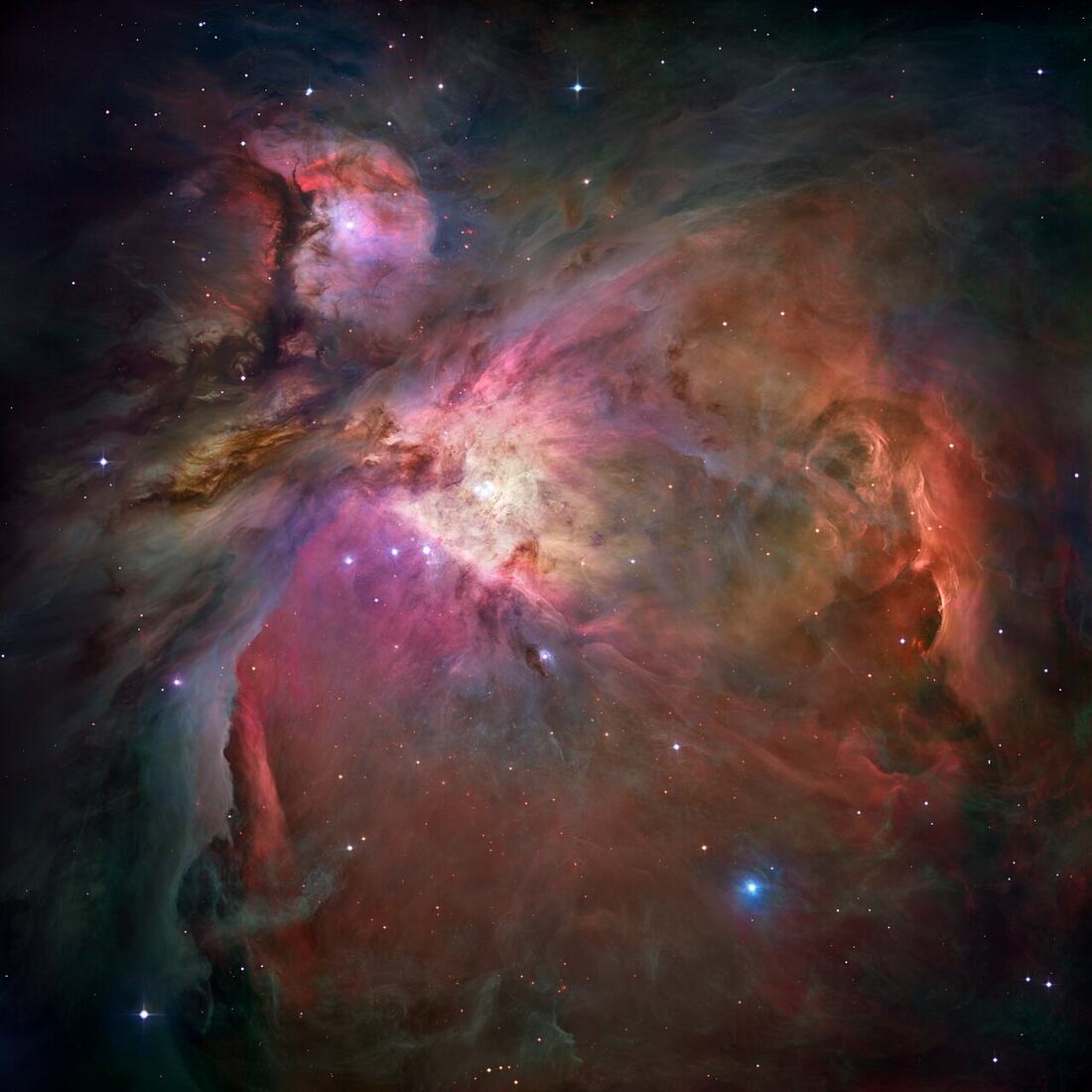 12 lessonsThe sky above you
For anyone who wants to go outside and understand what they are looking at: why the sky changes, what the patterns are, and which of the lights are which.
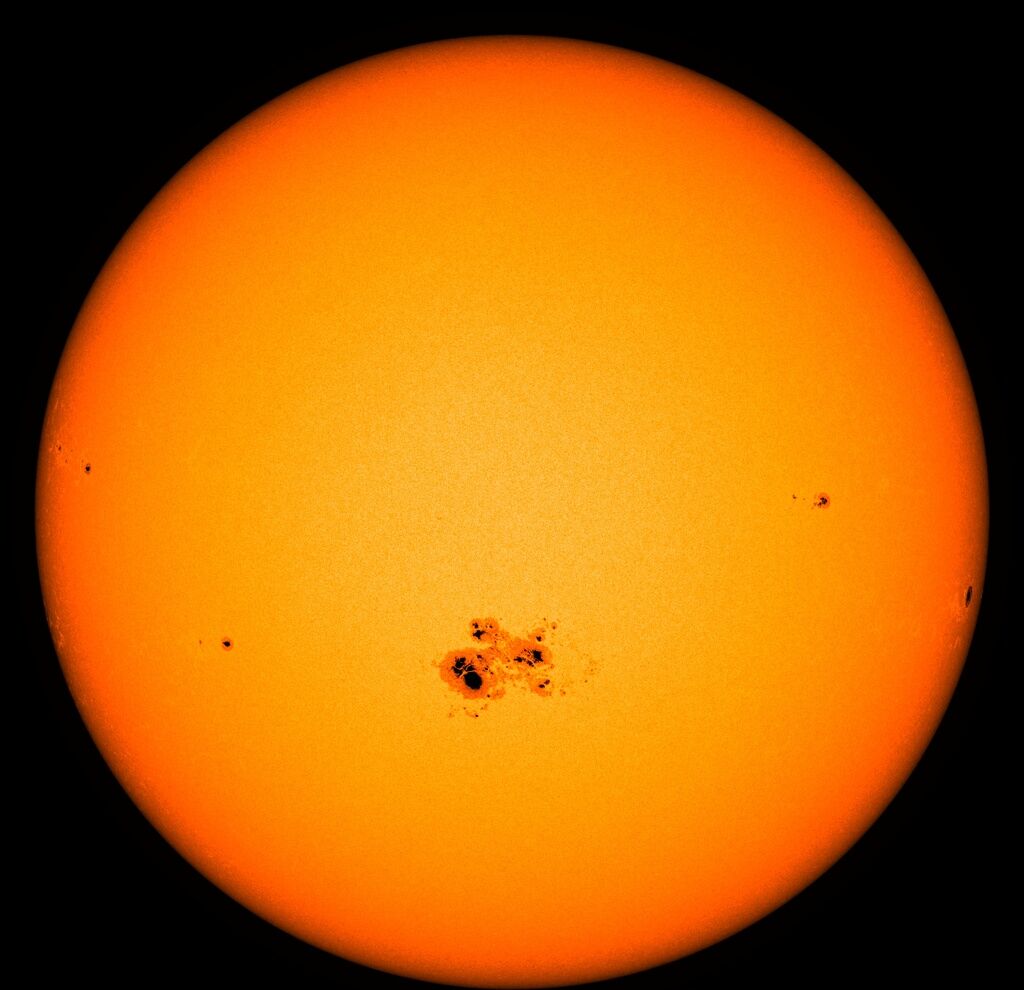 26 lessonsEverything about the Solar System
The Sun and all that goes round it: planets, moons, rings, comets and the cold edge, and the rules that keep them moving.
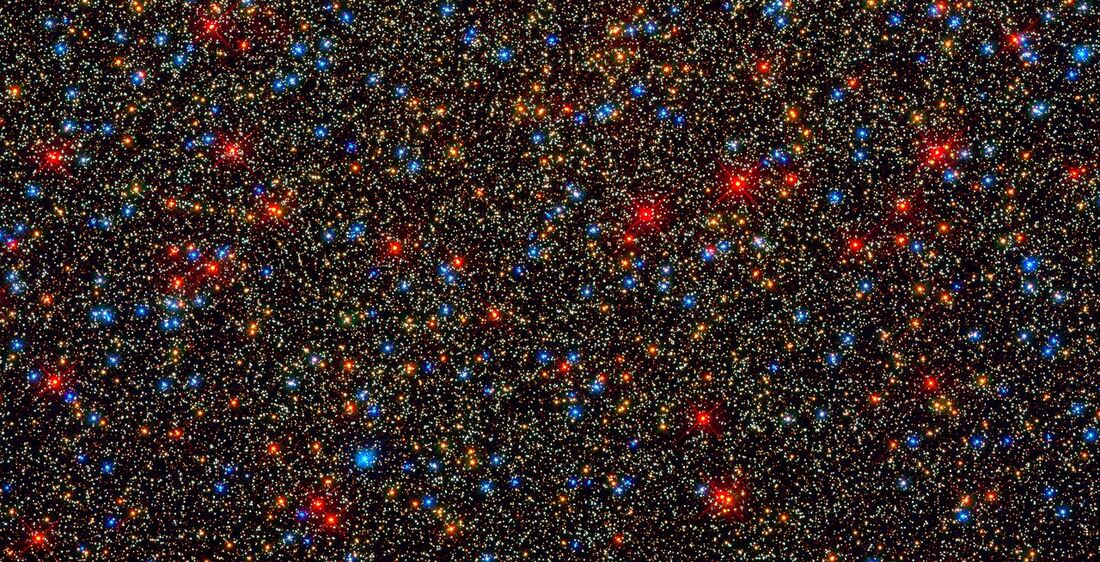 22 lessonsEverything about stars
What a star is, how to read one from its light, the stars round us, and how they are born, live and die. Start at the top and each lesson sets up the next.
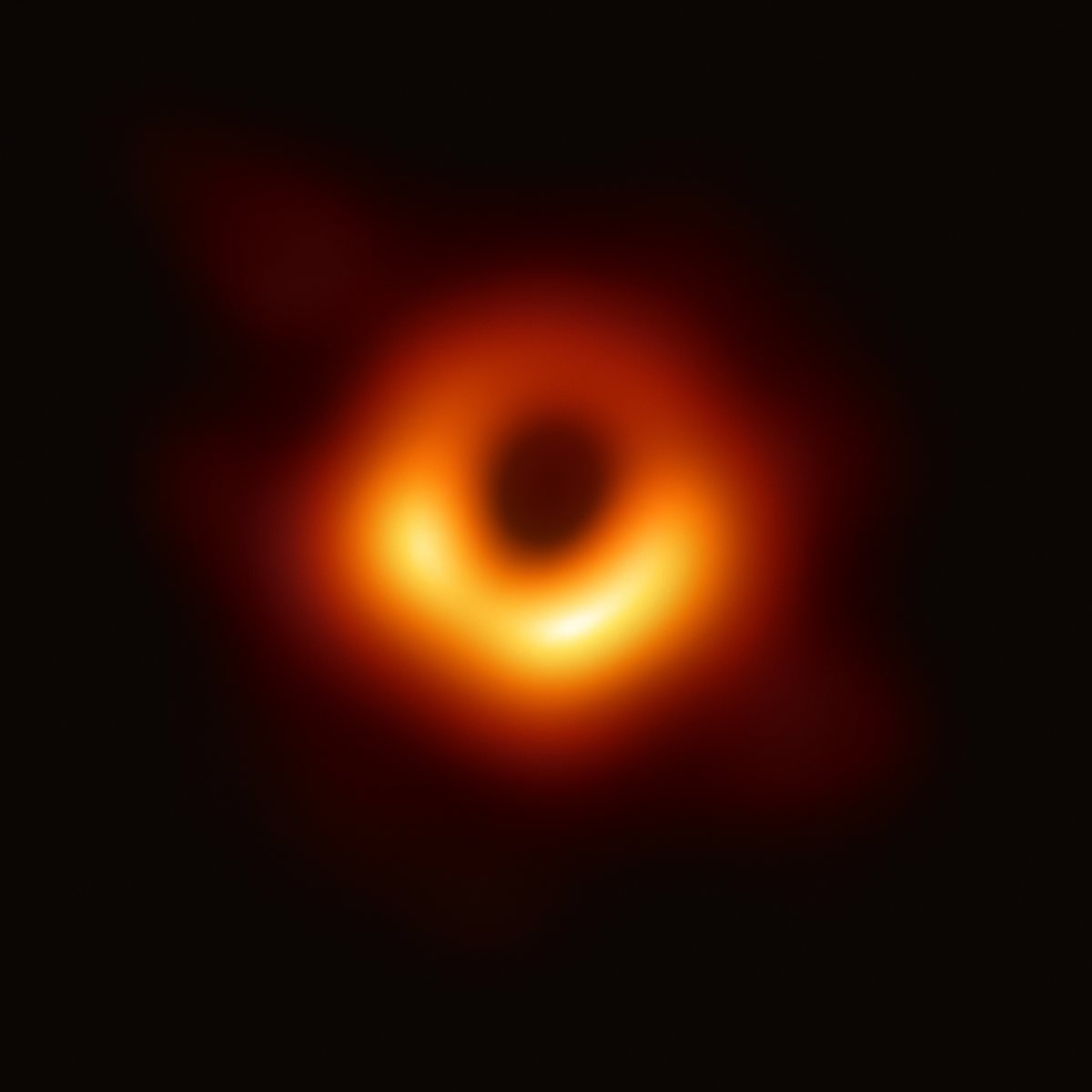 12 lessonsBlack holes and dead stars
What is left when a star dies, from an ember the size of the Earth to a place light cannot leave, and how we came to photograph one.
 12 lessonsGravity and getting about
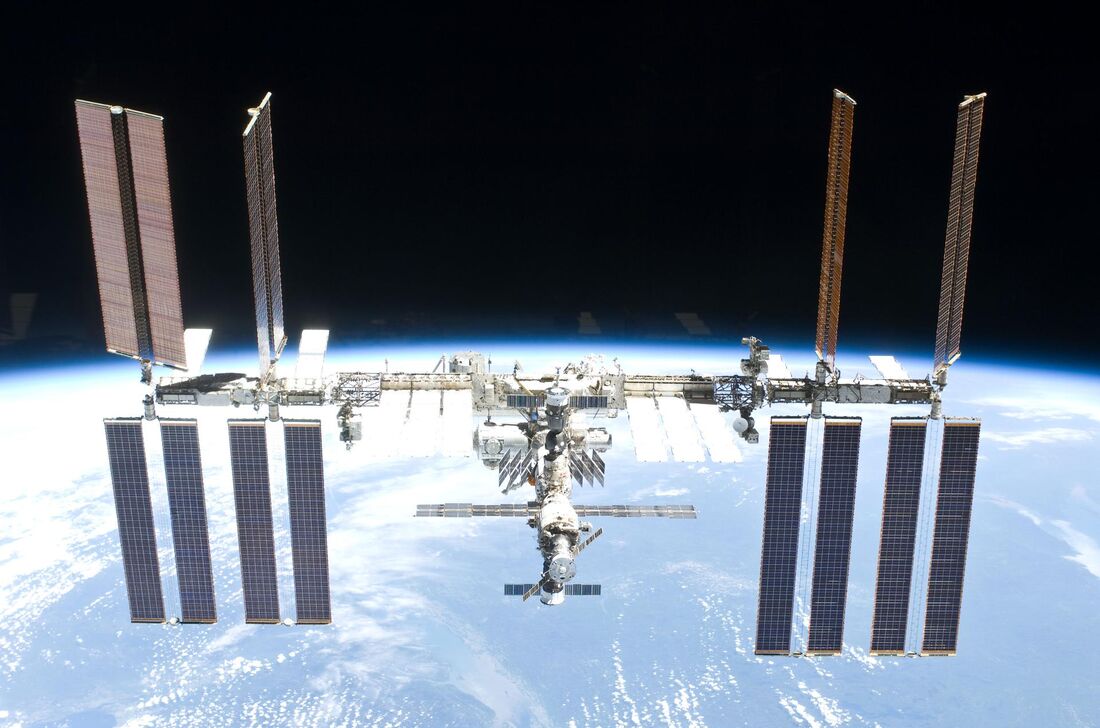
One rule that covers a dropped ball, the Moon, the tides and every spacecraft ever flown.
 10 lessonsLight, and how we know
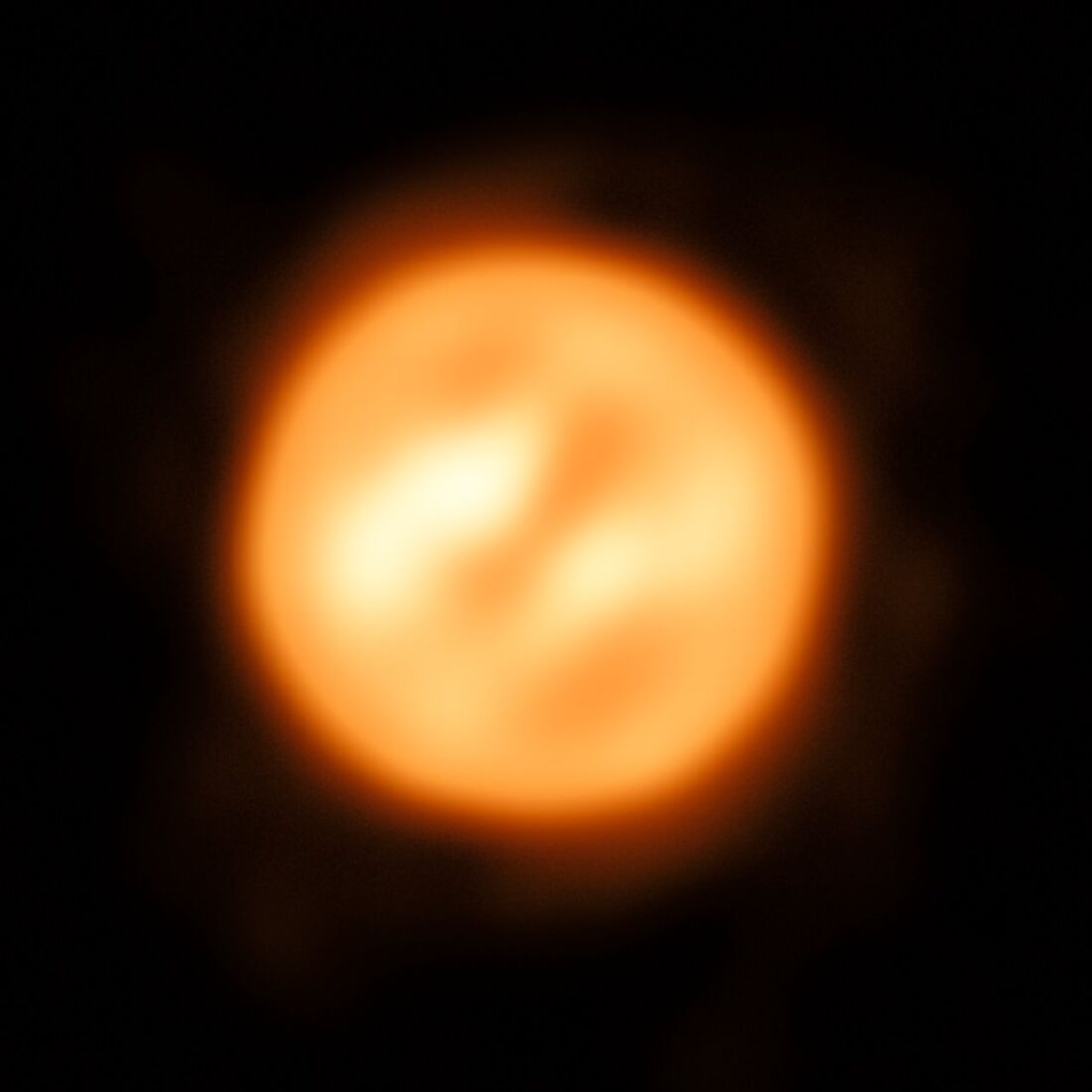
Almost everything known about space was learnt from light alone. These lessons show how much a beam of it can tell you.
 19 lessonsGalaxies and the universe
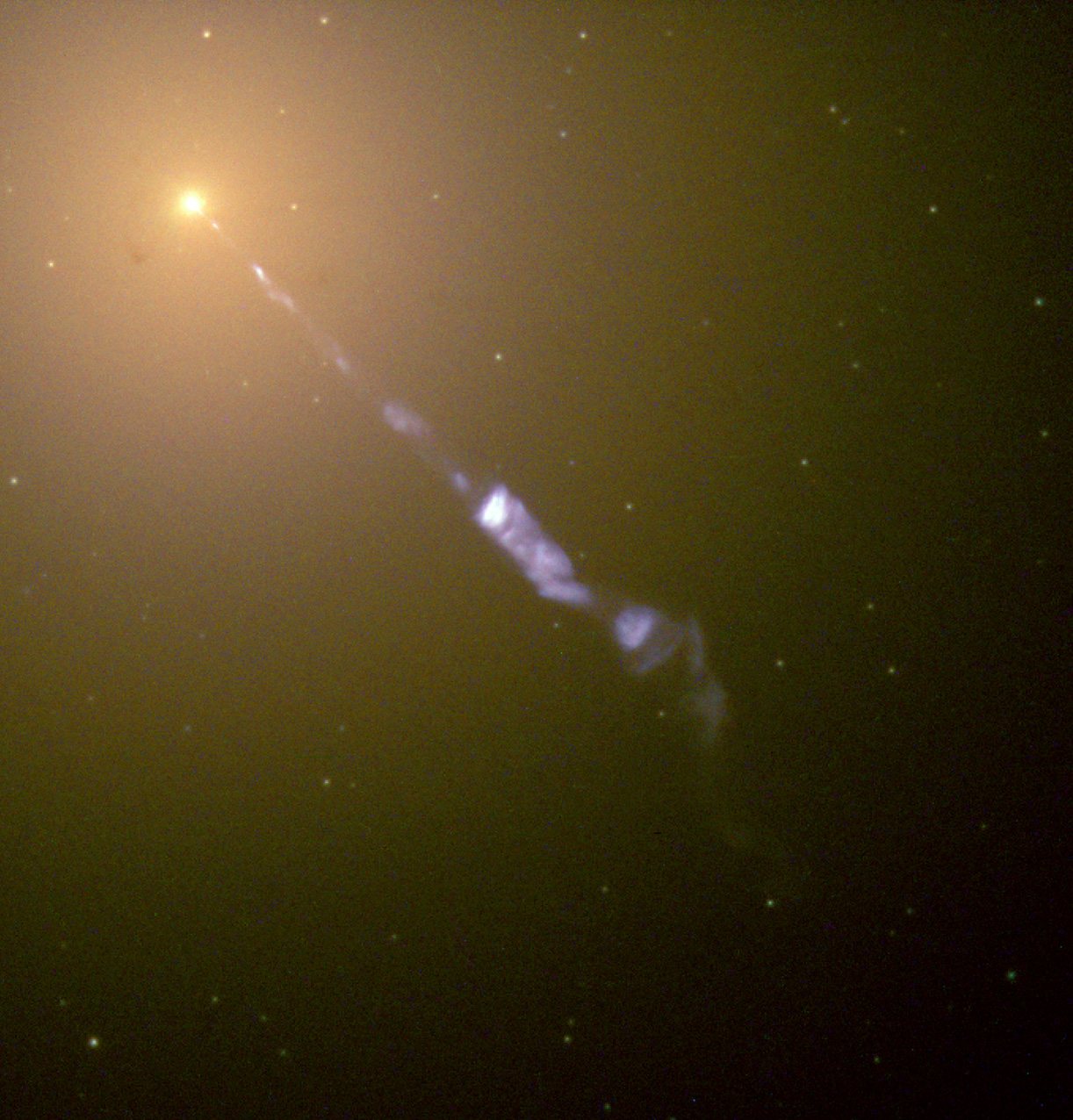
From our own galaxy outward to the largest structures there are, and back in time to the first few minutes.
 11 lessonsOther worlds and life
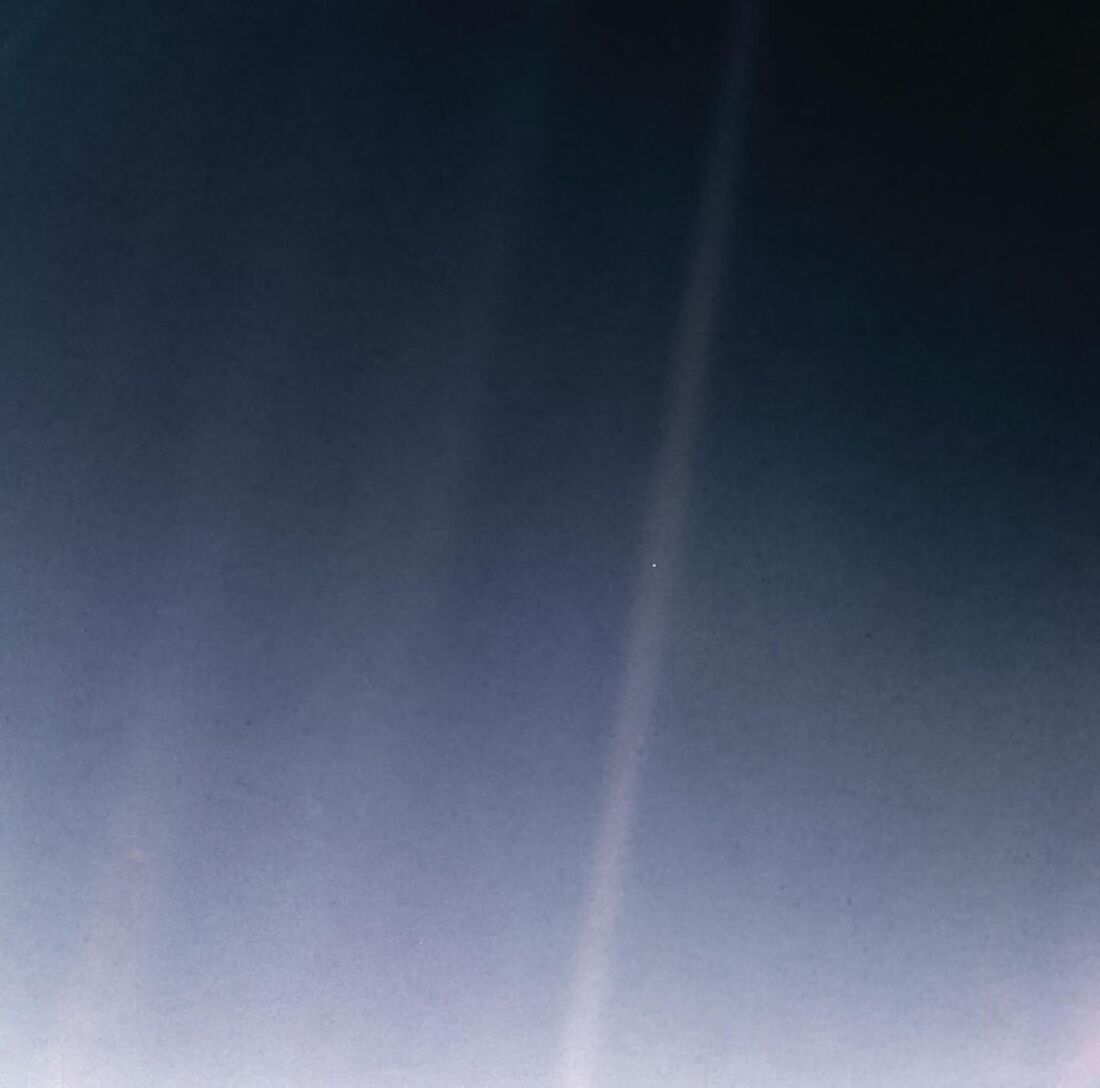
Planets round other stars, the places nearer home where there may be water, and the oldest question of all.
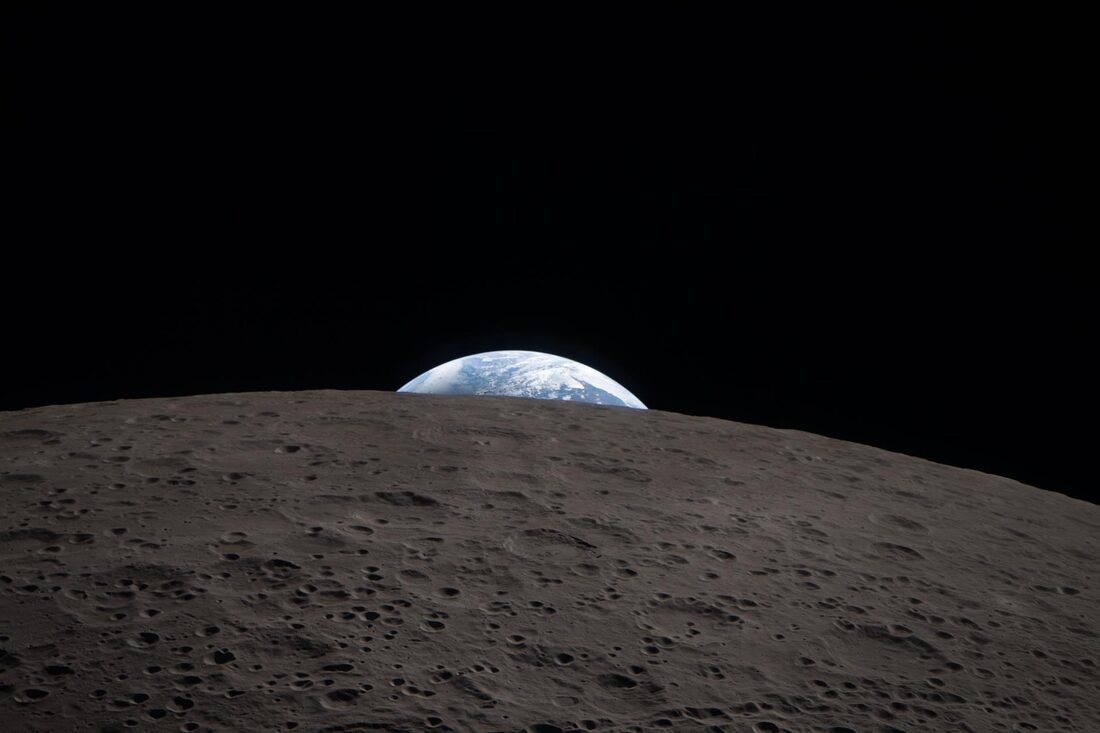 8 lessonsGoing there
How people and machines leave the Earth, where they have been so far, and what it is like to live off the planet.
 11 lessonsHow we found all this out
Nobody has been further than the Moon. This is the story of how the rest was worked out from here, and of what everything turned out to be made of.
Every lesson, by subject
101 lessons in 17 subjects.
- Finding your way8
- Gravity and orbits10
- Light, and how we know anything7
- The Sun4
- Planets7
- Moons4
- Asteroids, comets and the far edge5
- Stars14
- White dwarfs, neutron stars and black holes7
- Planets round other stars5
- The Milky Way4
- Galaxies7
- The universe8
- Life4
- Exploring space4
- How we found out2
- What everything is made of1
Finding your way
8 lessons
- How big is space
The true spacing of the Solar System and the stars, on a scale you can walk.
 Measuring distance: kilometres, au, light years and parsecs
Why astronomers keep four different rulers, and when each one is used.
- Seasons
Why it is the tilt of the Earth, and not its distance from the Sun, that makes summer and winter.
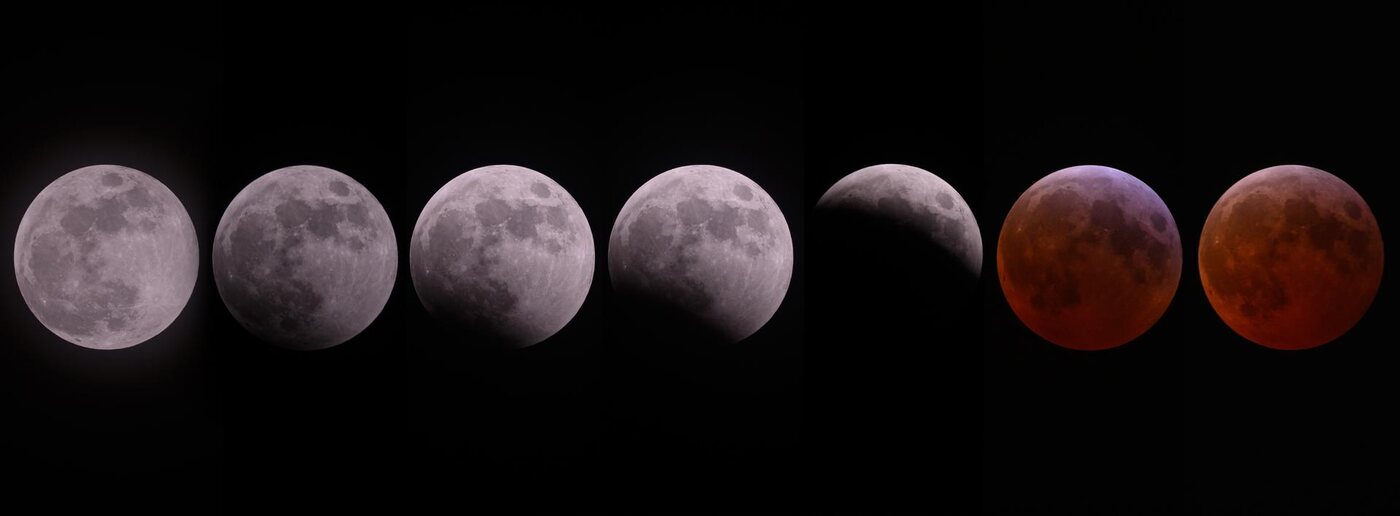
- Phases and eclipses
Why the Moon changes shape every month, and why eclipses are much rarer than that.
- Constellations
A constellation is a pattern of stars as seen from the Earth, and one of 88 areas the sky is divided into. Its stars are rarely together in space.
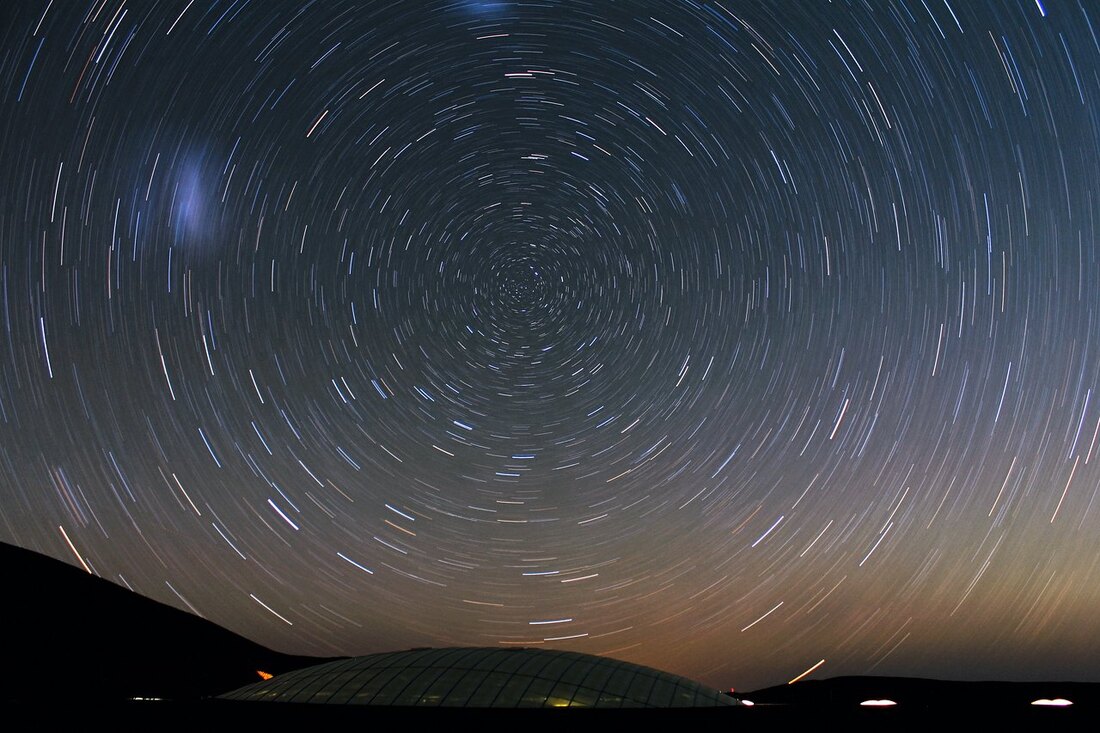 Why the sky turns
The stars wheel overhead every night because the ground under you is turning. One point in the sky stays still, and how high it sits tells you where you are.
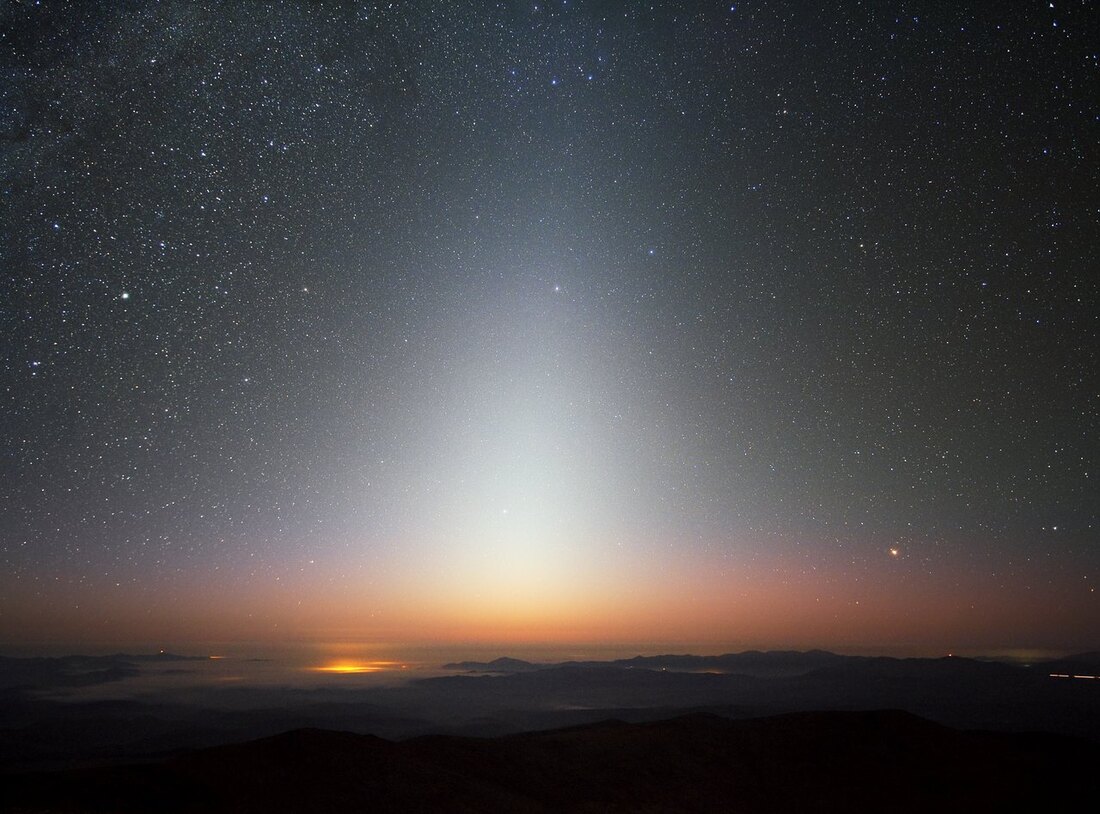 The sky through the year
Winter and summer have different stars because the Earth's night side looks out a different way each season. The Sun's path among them is the zodiac.
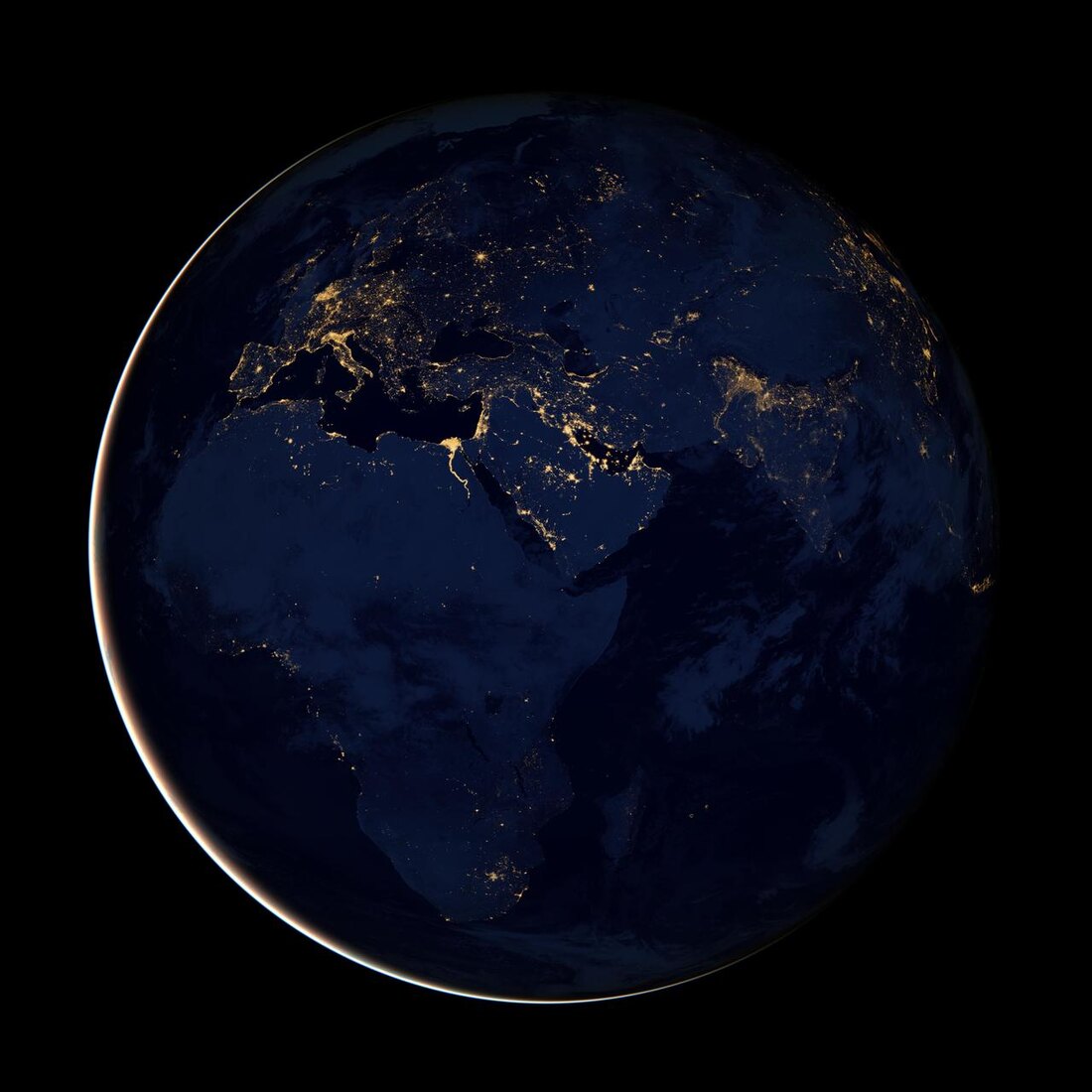 Looking up for yourself
You need no telescope to begin. Find somewhere dark, give your eyes half an hour, and know what to look for.
Gravity and orbits
10 lessons
- What an orbit is
An orbit is a fall that never reaches the ground. Newton's cannonball shows how.
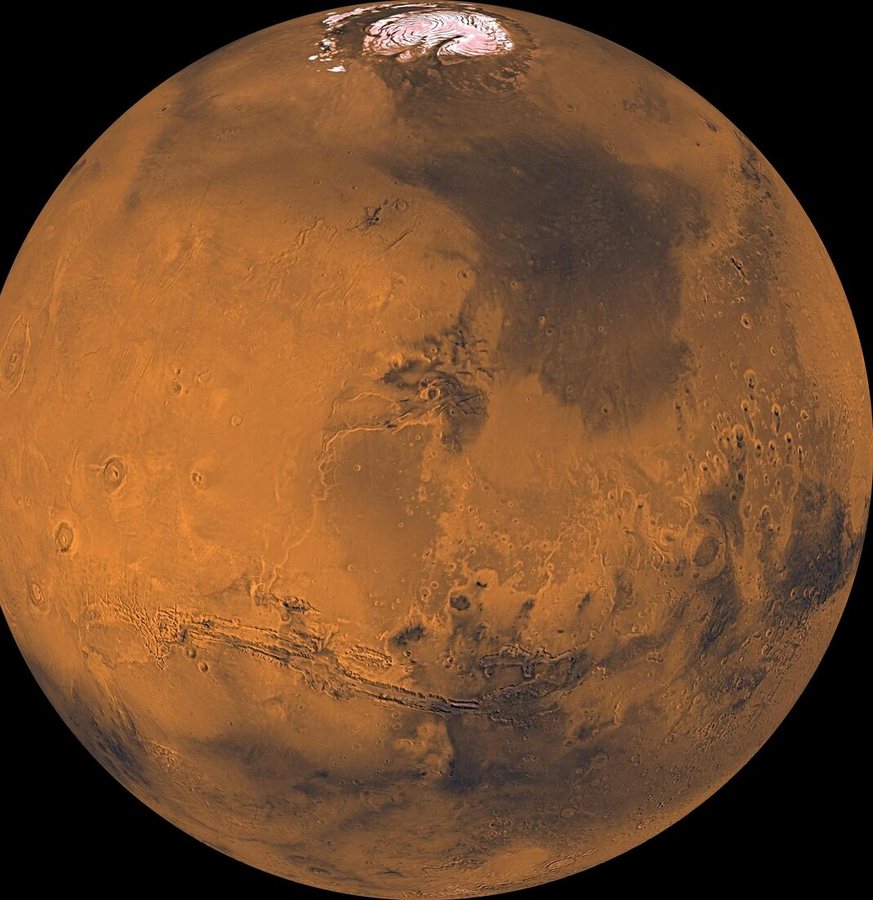 Kepler's three laws
Three short rules that describe every orbit, found from years of watching Mars.
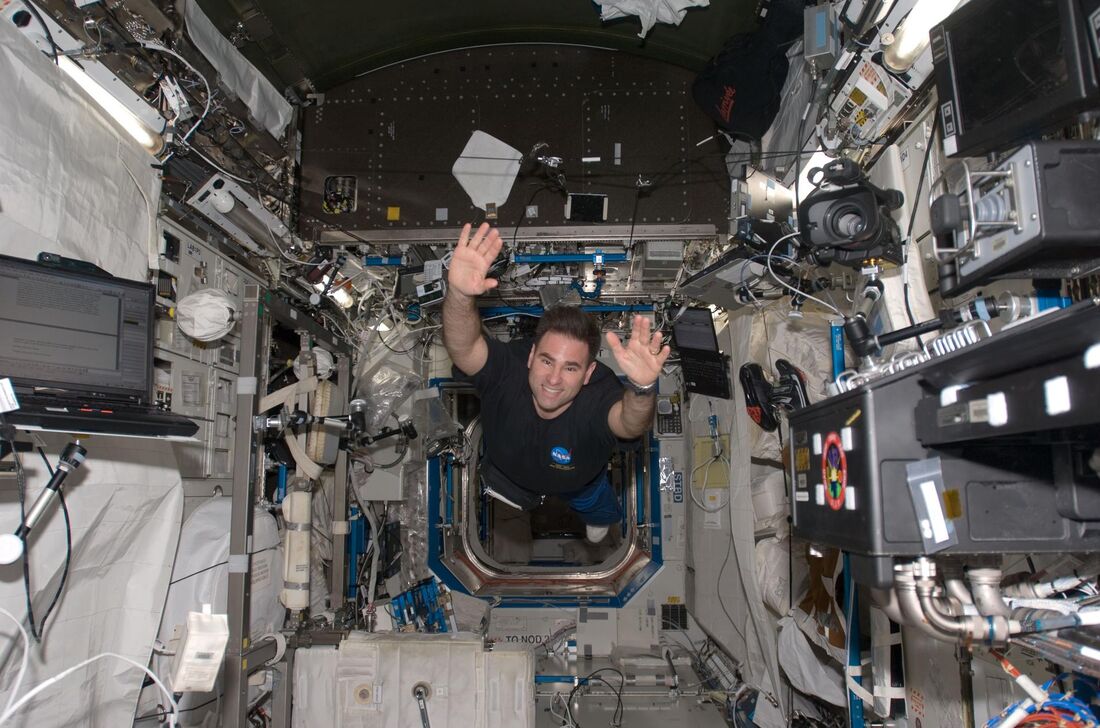 What gravity is
Everything pulls on everything else. The pull grows with mass and fades with distance, and it never quite reaches zero.
- Tides
Why there are two high tides a day, why the Moon keeps one face to us, and what keeps Io erupting.
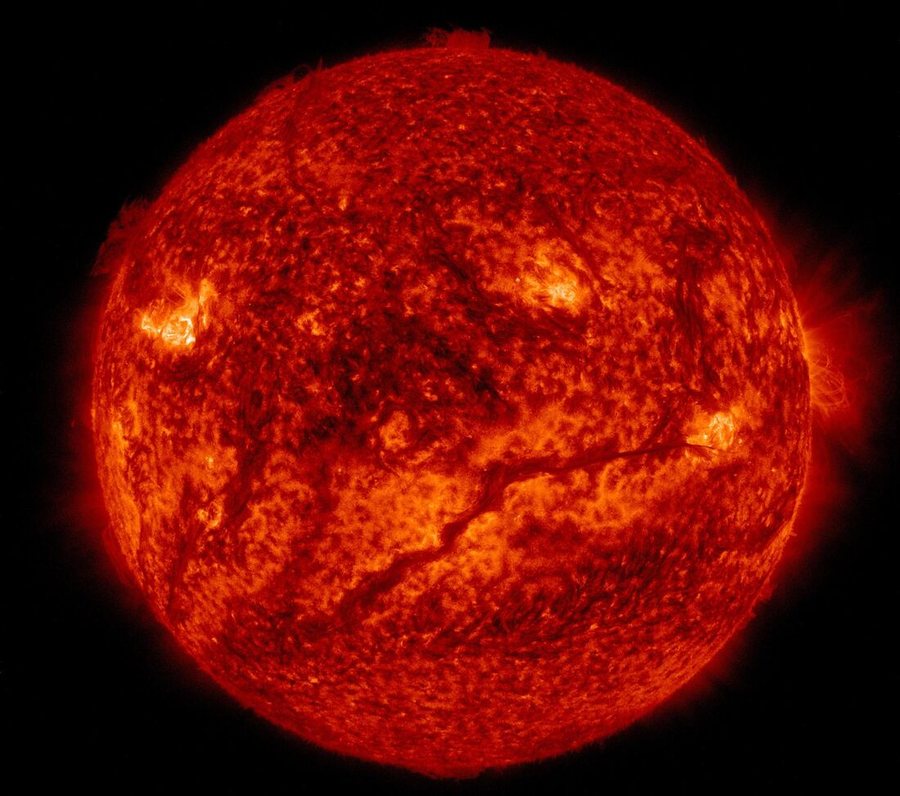 Leaving and arriving: how spacecraft get about
Getting into space is about speed, not height. After that a spacecraft mostly coasts, and borrows speed from planets on the way.
- Balance points: where gravity holds things still
Near any two orbiting bodies there are five places where a small object can keep station. Telescopes are parked at two of them, and asteroids gather at two more.
- Gravitational waves
When very heavy things swing round each other, space itself ripples. Since 2015 those ripples can be caught, a way of studying the universe that uses no light.
- Space and time are not fixed
Light always travels at the same speed, whoever measures it. To make that true, moving clocks have to run slow, and nothing can go faster than light.
- Gravity as bent space and time
Einstein's second idea: mass bends space and time, and what we call gravity is things following that bend. It has passed every test for more than a century.
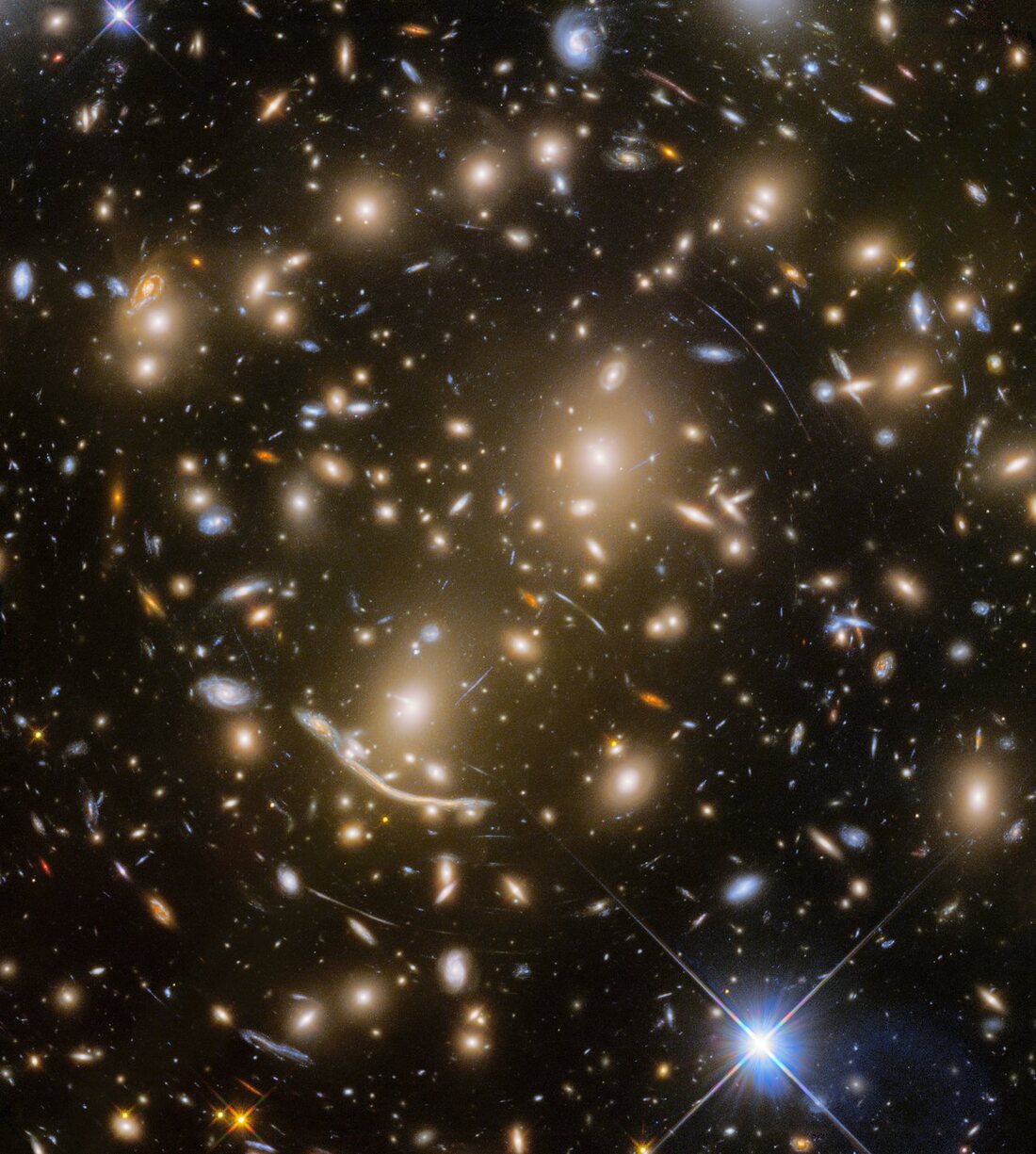 Gravity as a lens
A galaxy's gravity bends the light passing it, so it can stretch, copy and brighten whatever lies behind. Astronomers use it as a telescope.
Light, and how we know anything
7 lessons
- Light is the only messenger
Nearly everything known about space arrived as light, and light always brings old news.
- The whole spectrum: light we cannot see
The colours we see are a thin slice of light. Radio waves, infrared, ultraviolet, X-rays and gamma rays are the same thing at other wavelengths.
- Reading starlight
Spread a star's light into a rainbow and it is crossed by dark lines. They tell you what the star is made of, how hot it is and how it is moving.
- Telescopes
A telescope's first job is to collect light, not to magnify. Bigger mirrors see fainter and sharper, and that has driven four centuries of building.
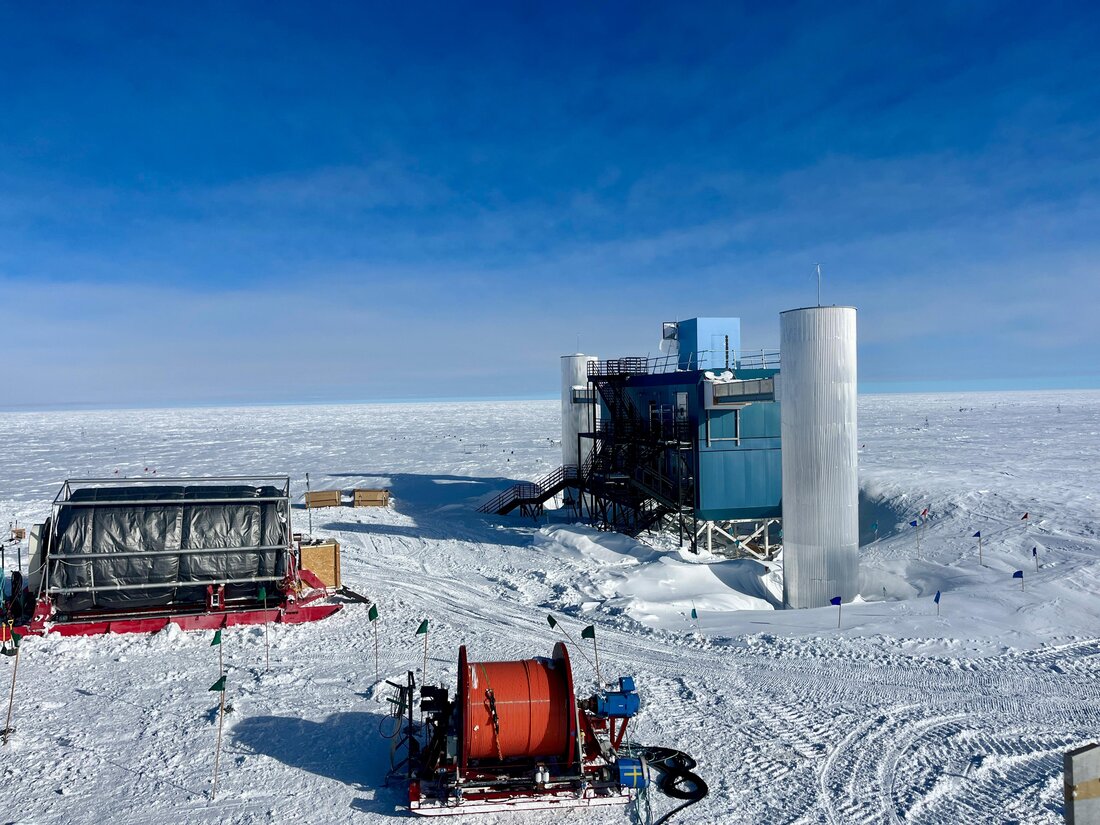 Messengers other than light
Three other things reach the Earth from deep space: neutrinos, cosmic rays and ripples in space itself. Each brings news that light cannot.
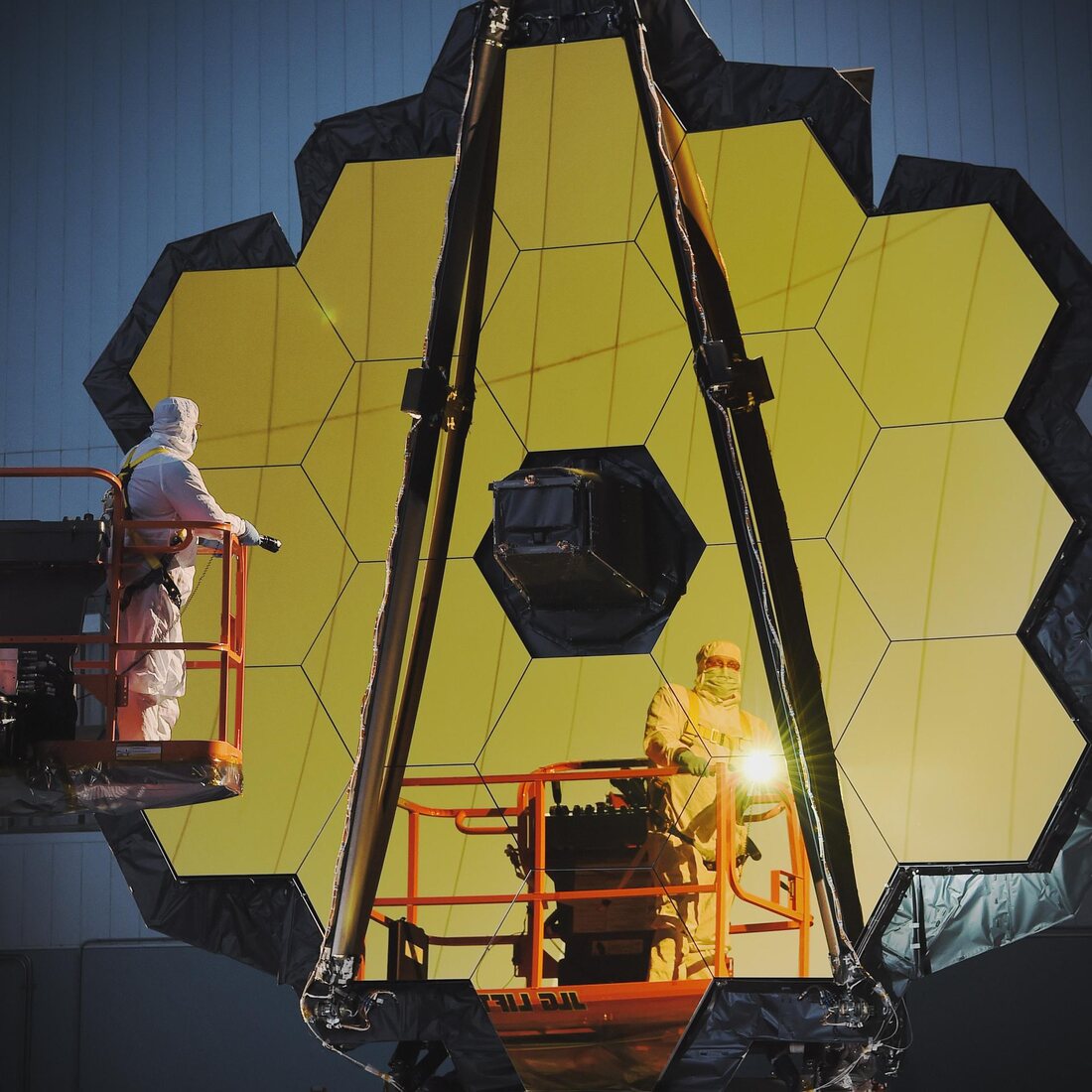 Telescopes in space
The air blocks most kinds of light and blurs the rest. Lifting a telescope above it costs a fortune, and has changed what is known about almost everything.
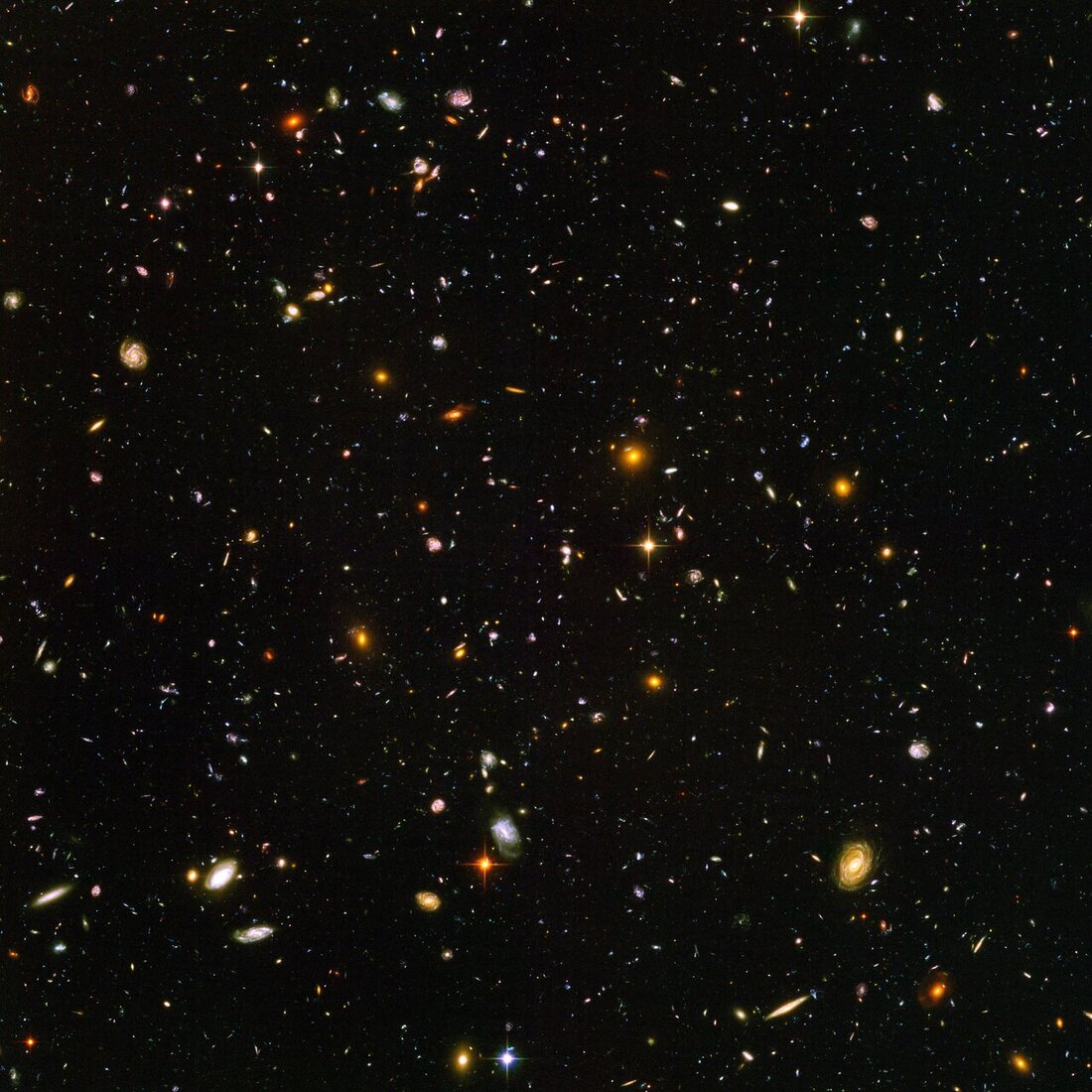 Redshift and the Doppler effect
A siren drops in pitch as it passes you. Light does the same thing, and that small shift is how the speed of a star and the growth of the universe are measured.
The Sun
4 lessons
- What the Sun is
The Sun is a star seen close up: a ball of glowing gas, layered like an onion, with a furnace in the middle.
- How the Sun shines
The Sun turns matter into light in its core. The light then takes many thousands of years to find its way out.
- The active Sun
The Sun has weather: dark spots, sudden flares and vast eruptions that follow an eleven-year rhythm and can reach the Earth.
- The Sun's reach: the solar wind and the edge
The Sun blows a thin wind past every planet. Far beyond Neptune the wind stops, and two spacecraft have crossed the place where it does.
Planets
7 lessons
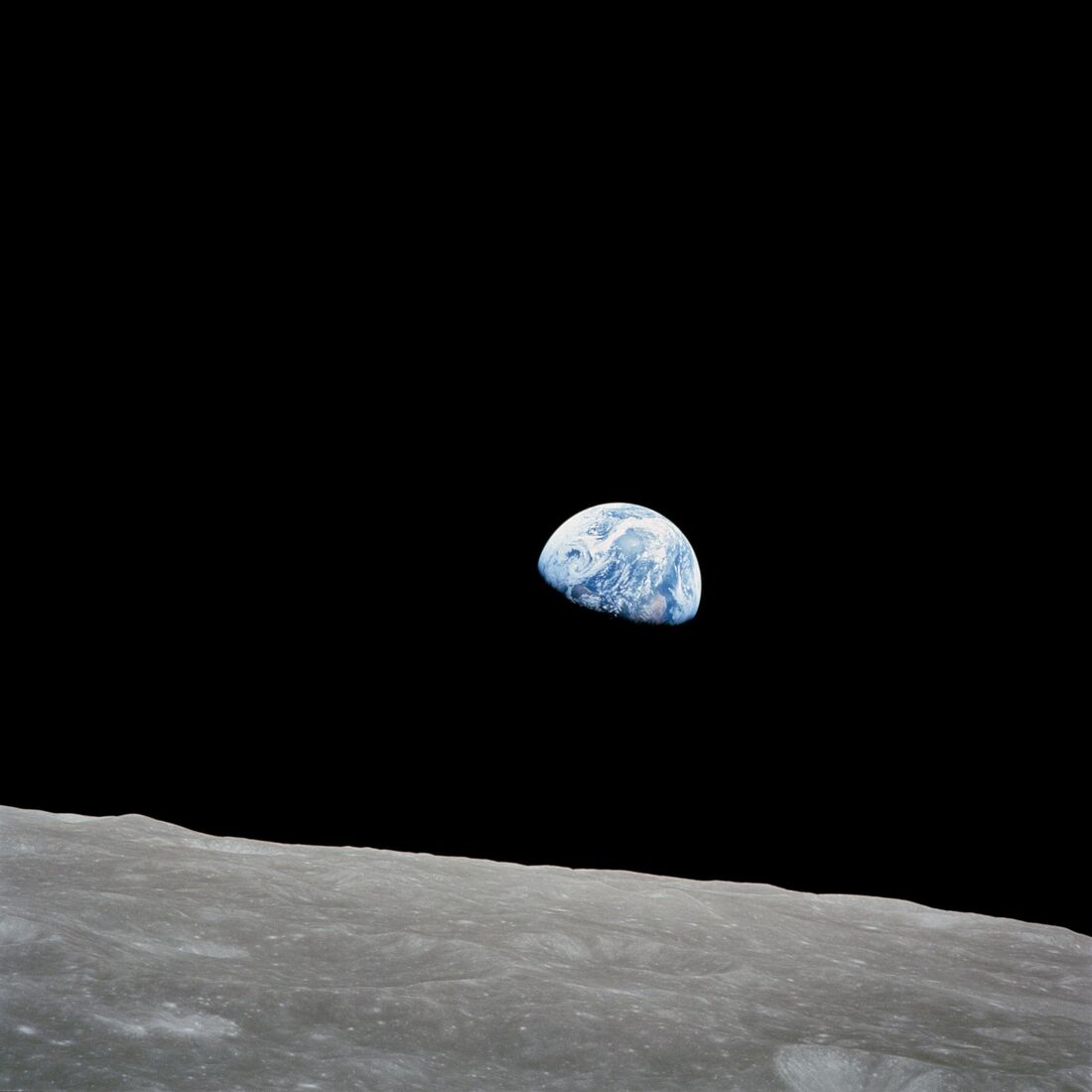 Rock, gas, ice: three kinds of planet
The eight planets come in three sorts, and where each one formed explains which sort it is.
- How the planets formed
The planets grew from a disc of gas and dust around the young Sun, from specks to boulders to worlds, in a few tens of millions of years.
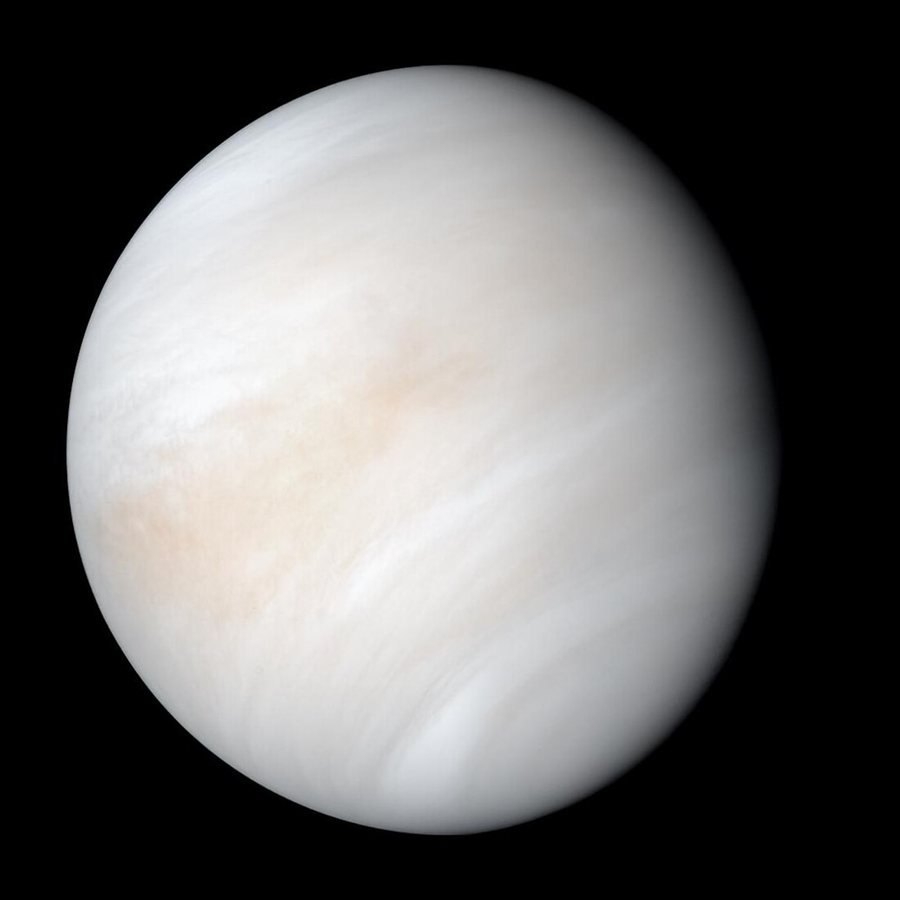 Air and the greenhouse: Venus, Earth and Mars
Three rocky planets began much alike and ended as a furnace, a home and a frozen desert. The difference is their air.
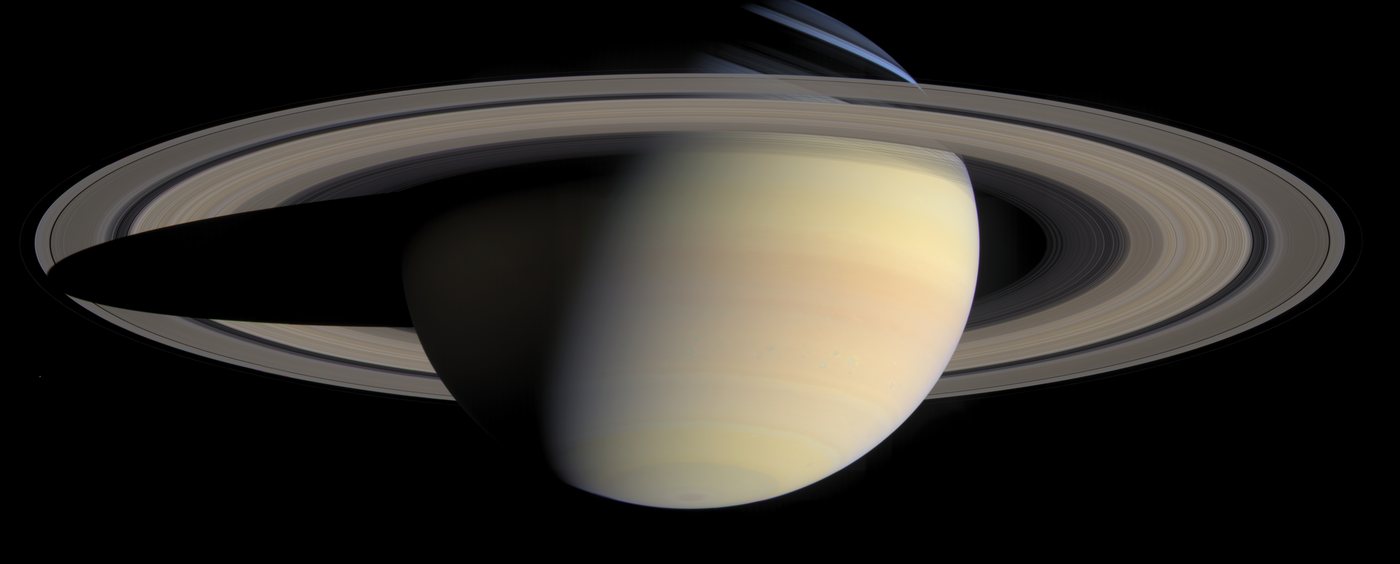 Rings
All four giant planets have rings. They are countless separate pieces of ice and rock, each on its own orbit, and astonishingly thin.
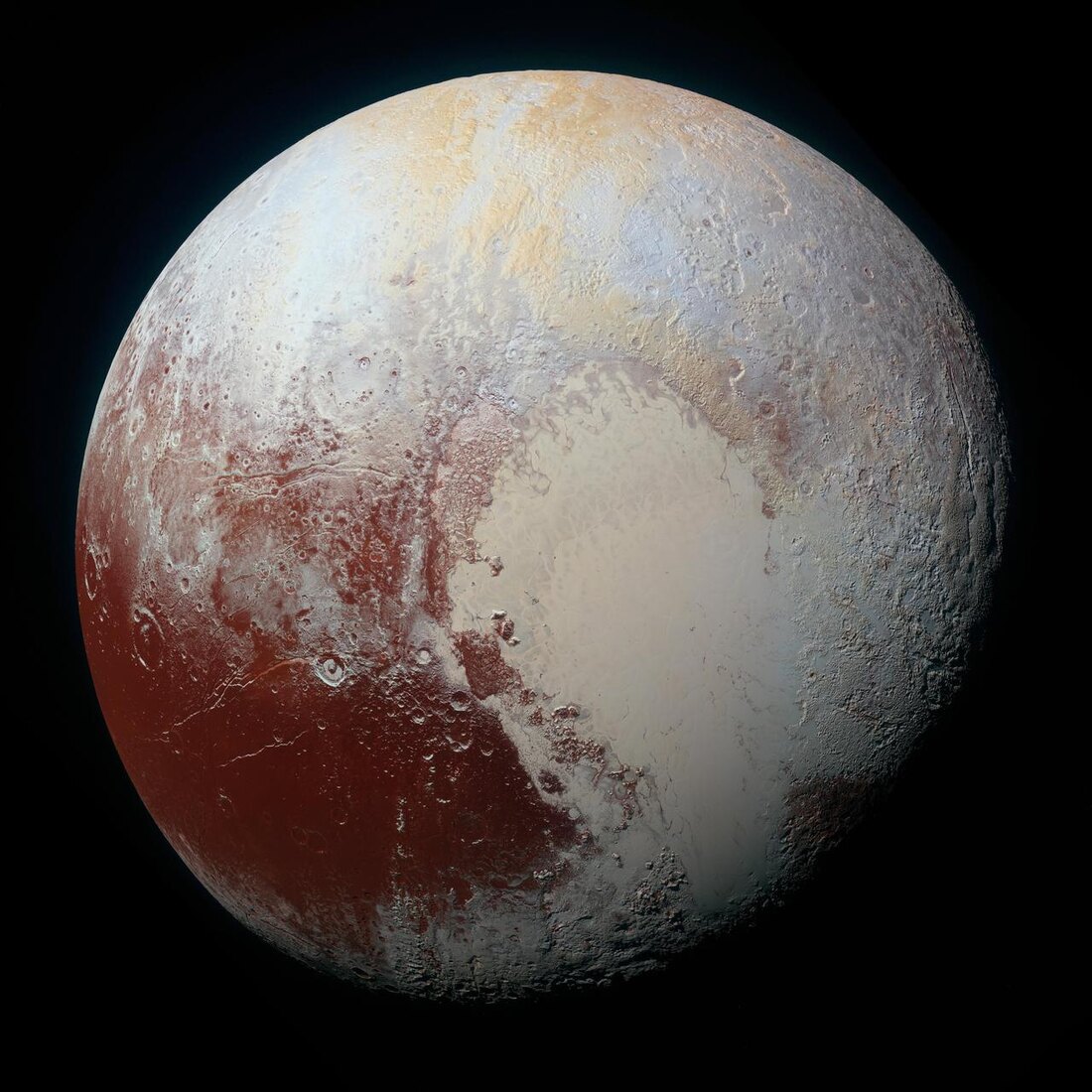 What counts as a planet
For 76 years the Solar System had nine planets. In 2006 astronomers agreed on what the word means, and Pluto no longer fitted.
- The Earth as a planet
Seen from outside, the Earth is one rocky planet among four. It is also the only one with seas on its surface, and the only place known to have life.
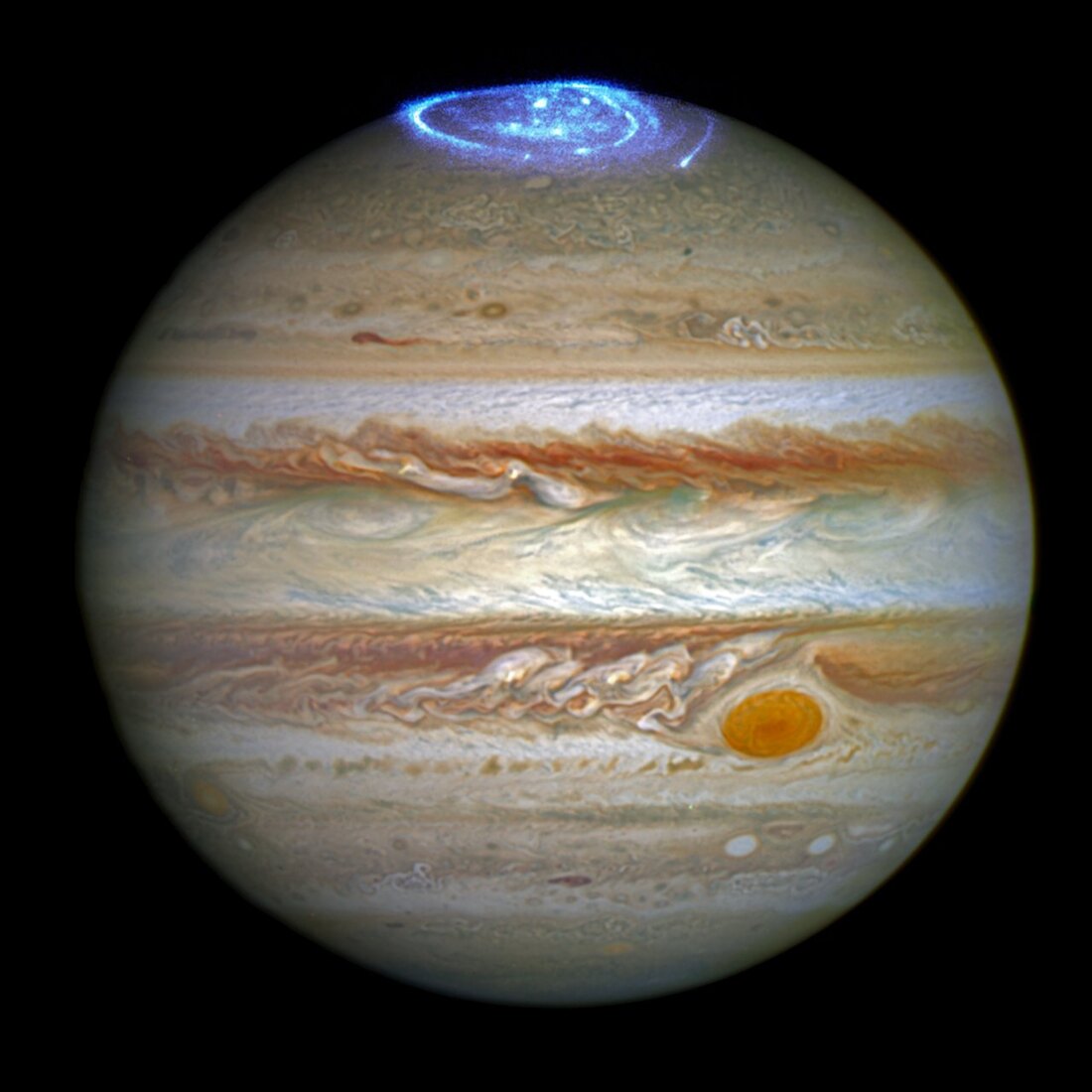 Inside planets and their magnetic shields
Nobody has been more than a scratch below the ground, yet earthquakes show what is inside the Earth. The moving metal at its centre makes a shield round the planet.
Moons
4 lessons
- What a moon is
Anything that orbits a planet is a moon. There are more than 400, from worlds bigger than Mercury to rocks a kilometre across.
- Moons with oceans
Several icy moons hide seas of liquid water under their crusts, kept warm by tides. They are the likeliest places to look for life.
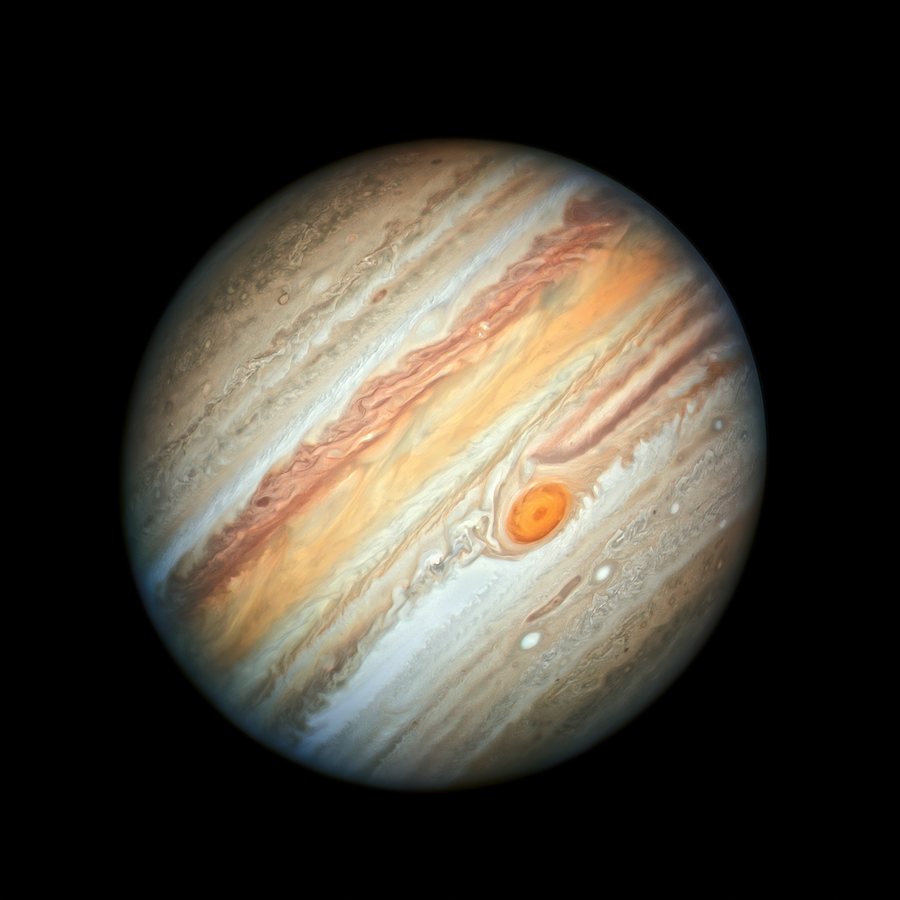 Moons in step
Some moons keep time with each other, lapping their neighbours in exact whole numbers. That rhythm heats Io, carves gaps in rings and makes two moons swap places.
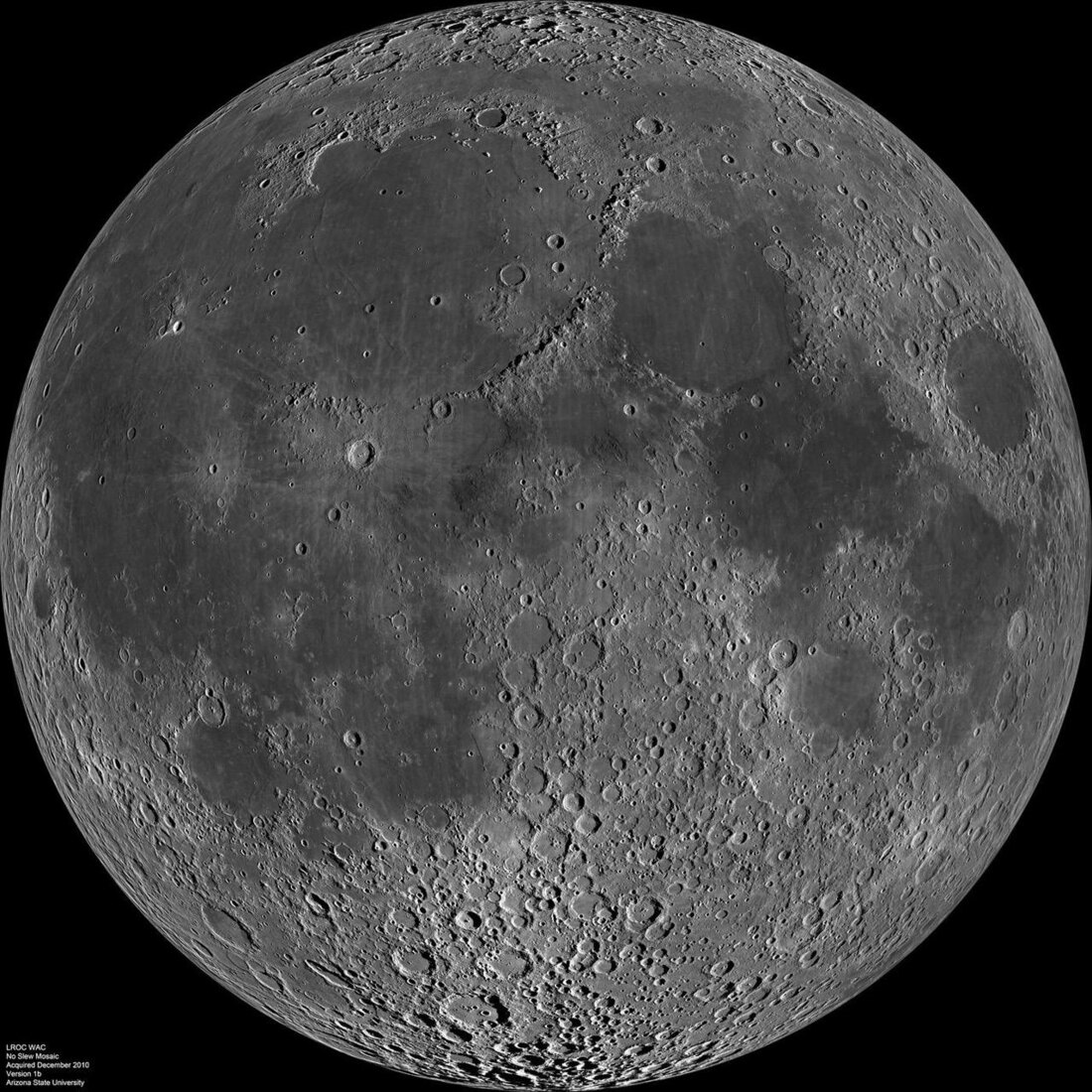 The Moon
Our nearest neighbour: a quarter as wide as the Earth, made from the wreckage of a collision, and the only other world people have stood on.
Asteroids, comets and the far edge
5 lessons
- Rubble and ice: the small bodies
Asteroids, comets and the icy bodies beyond Neptune are what was left over when the planets were made. Where each kind lives tells you what it is made of.
- Comets
A comet is a small dark lump of ice and dust. Near the Sun it boils off a cloud bigger than a planet and tails millions of kilometres long.
- Falling rocks: meteors, meteorites and impacts
A shooting star is a grain of dust burning up. Bigger pieces reach the ground, and once in a long while one is big enough to change the world.
- The Oort cloud
Far beyond the planets, a vast round shell of icy bodies is thought to surround the Sun. Nobody has seen it. Comets are the evidence.
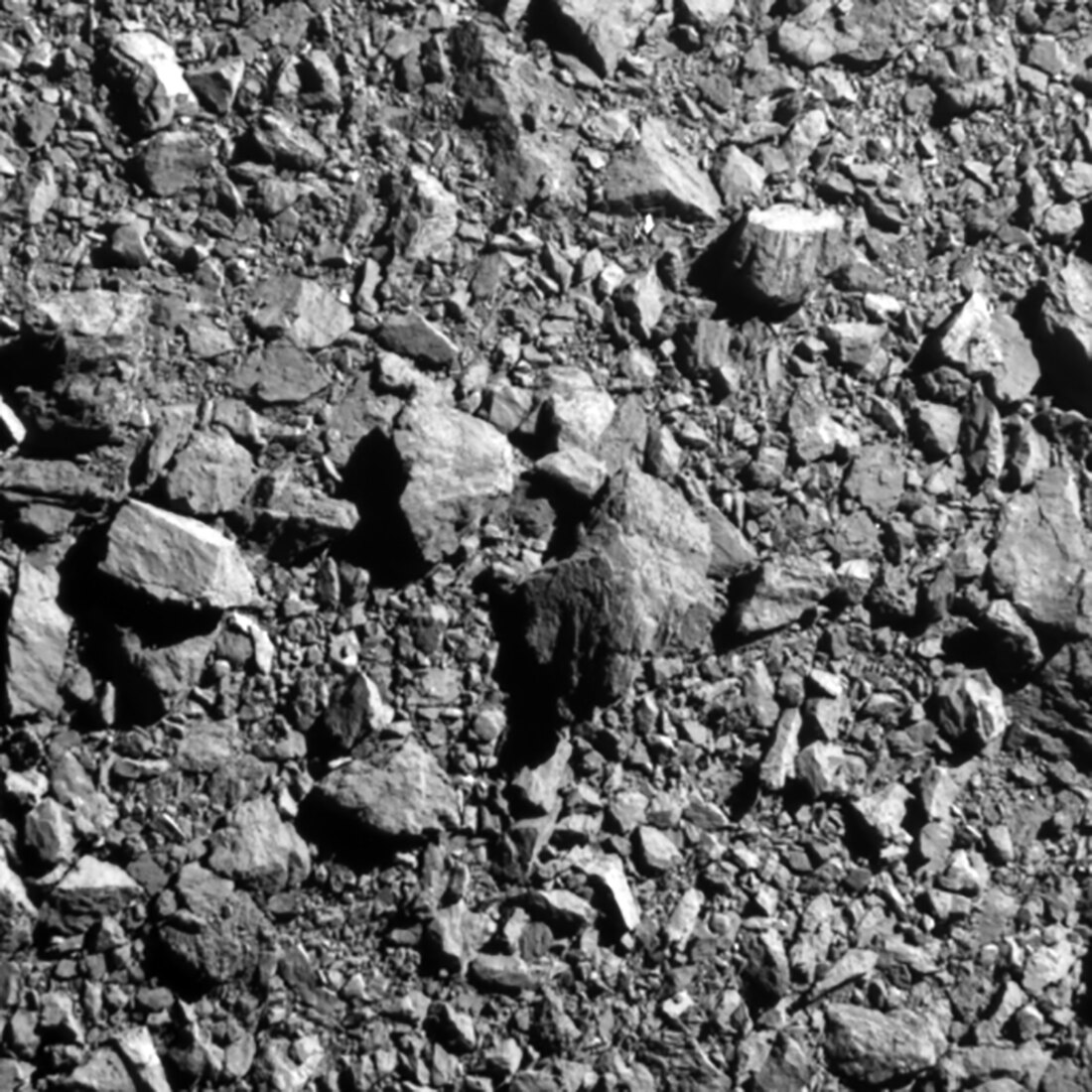 Things that hit the Earth
Rocks from space have hit the Earth before and will again. We now watch for them, and in 2022 a spacecraft moved one on purpose.
Stars
14 lessons
- What a star is
A star is a ball of gas heavy enough to light its own fire. How heavy it is decides almost everything else about it.
- Colour and brightness
A star's colour tells you how hot it is, and its true brightness tells you how big. Plot one against the other and the stars fall into order.
- How stars live and die
Stars form in clouds of gas, shine steadily for most of their lives, and end as white dwarfs or in explosions, depending on their mass.
- The nearest stars
The stars next door are light years away, and most are small red ones too faint to see. The bright stars of the night sky are the unusual ones.
- The stars you can see
A few thousand stars are bright enough to see by eye. All belong to our galaxy, most lie within 1,000 light years, and the patterns they make are only patterns.
- Double and multiple stars
Many stars come in pairs, threes or more, circling one another. Their orbits are the only direct way to weigh a star.
- Nebulae and star birth
A nebula is a cloud of gas and dust between the stars. Some are where stars are being born, and others are what dying stars leave behind.
- Star clusters
Stars are born in groups. Some groups drift apart within the galaxy's disc, and some are tight balls of very old stars that have held together for most of the age of the universe.
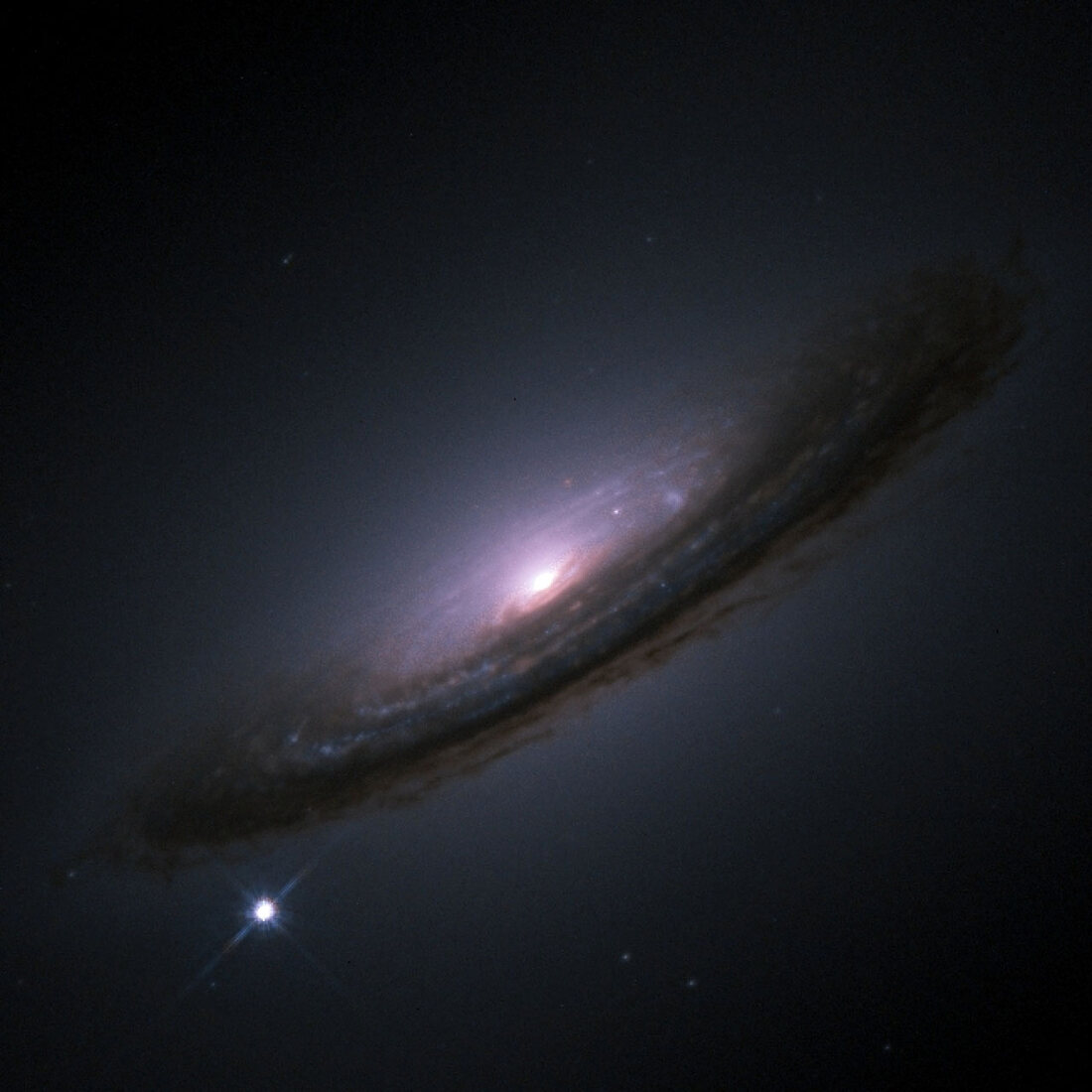 Supernovae
A supernova is a star blowing up. There are two ways it can happen, and for a few weeks one can outshine a whole galaxy.
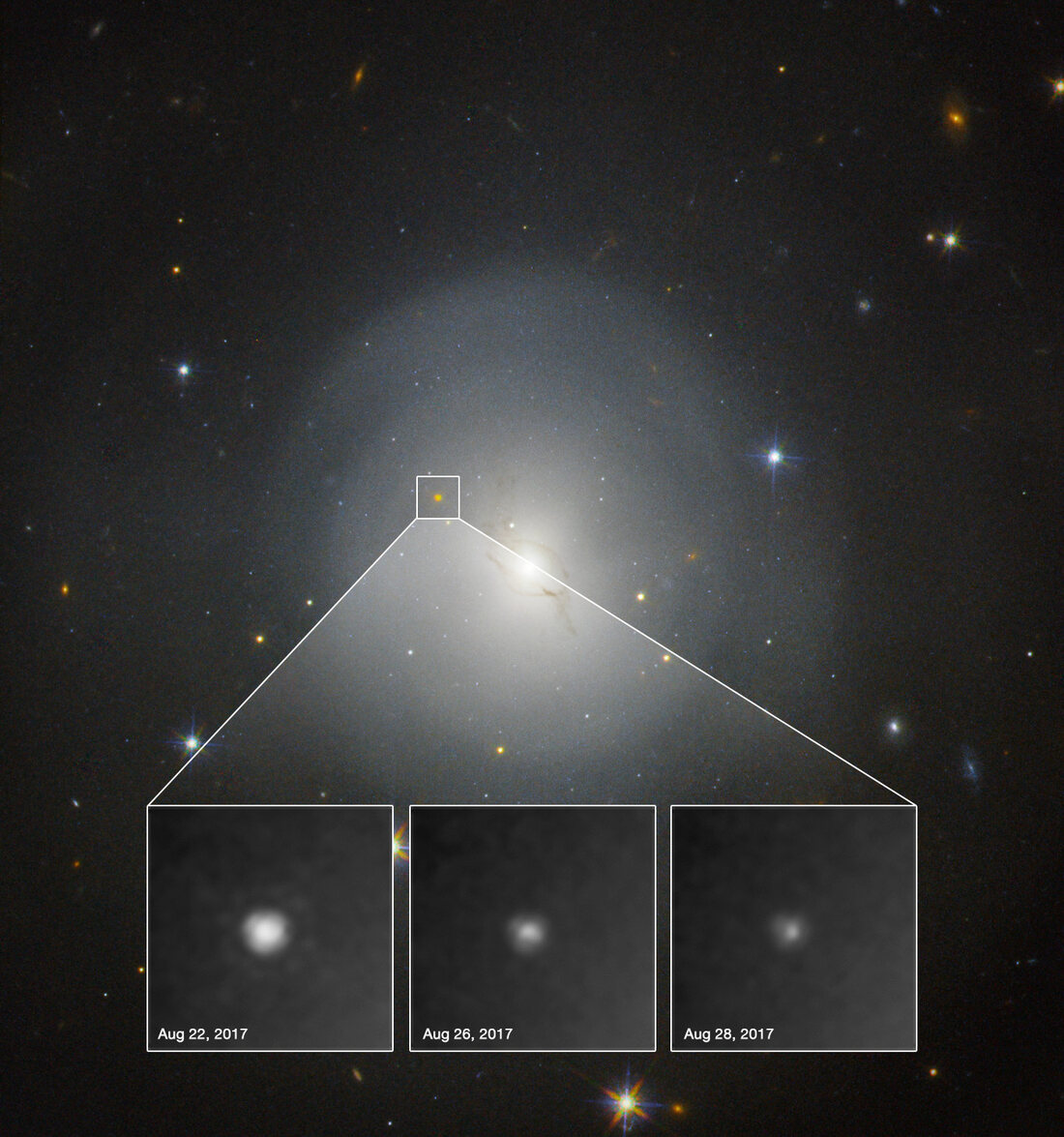 Where the elements come from
The first minutes of the universe made hydrogen and helium. Almost every other kind of atom, in the Earth and in you, was made by a star.
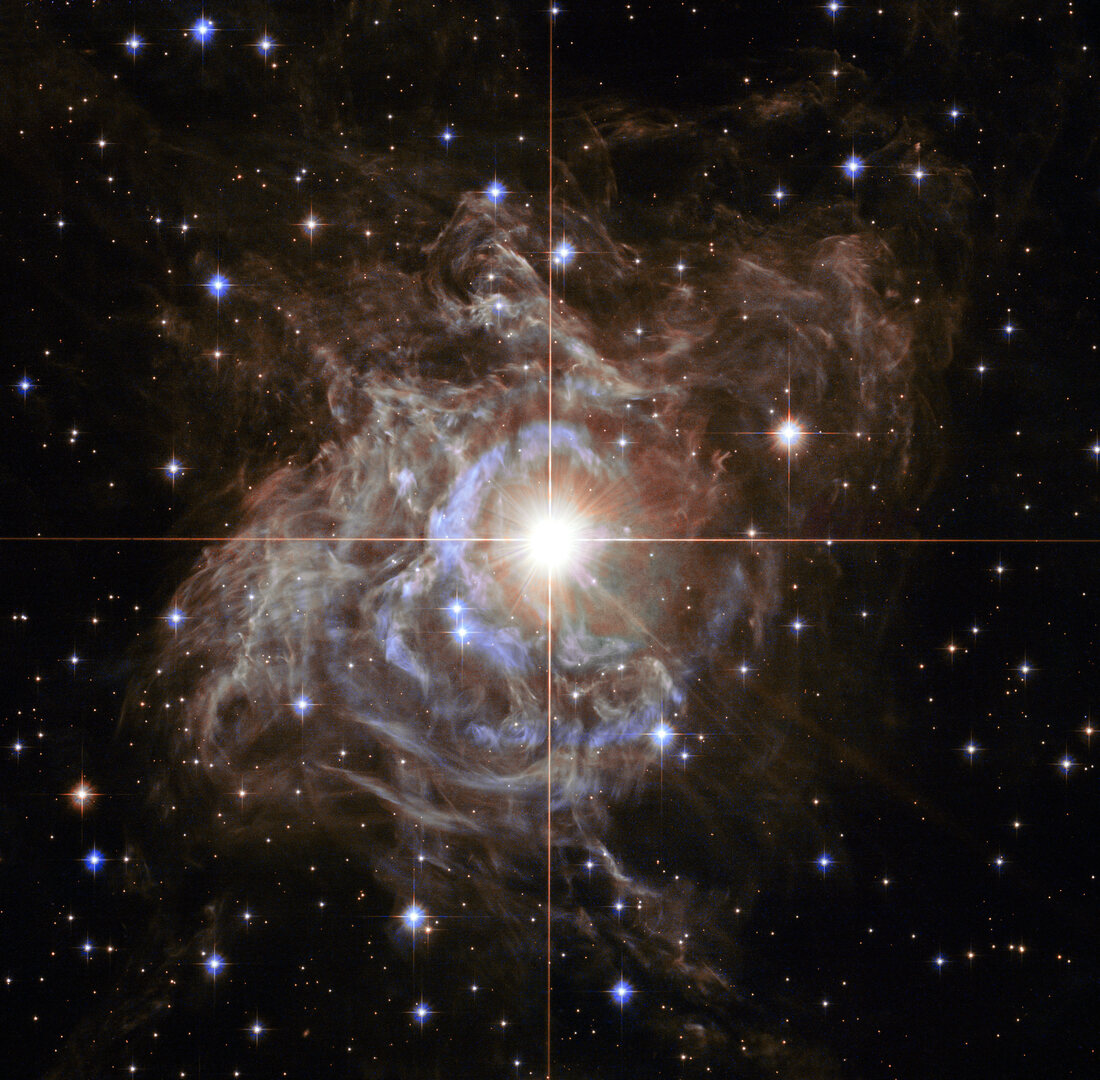 Stars that change
Some stars swell and shrink, some are hidden by a partner every few days, and in 2019 one of the brightest in the sky faded for months.
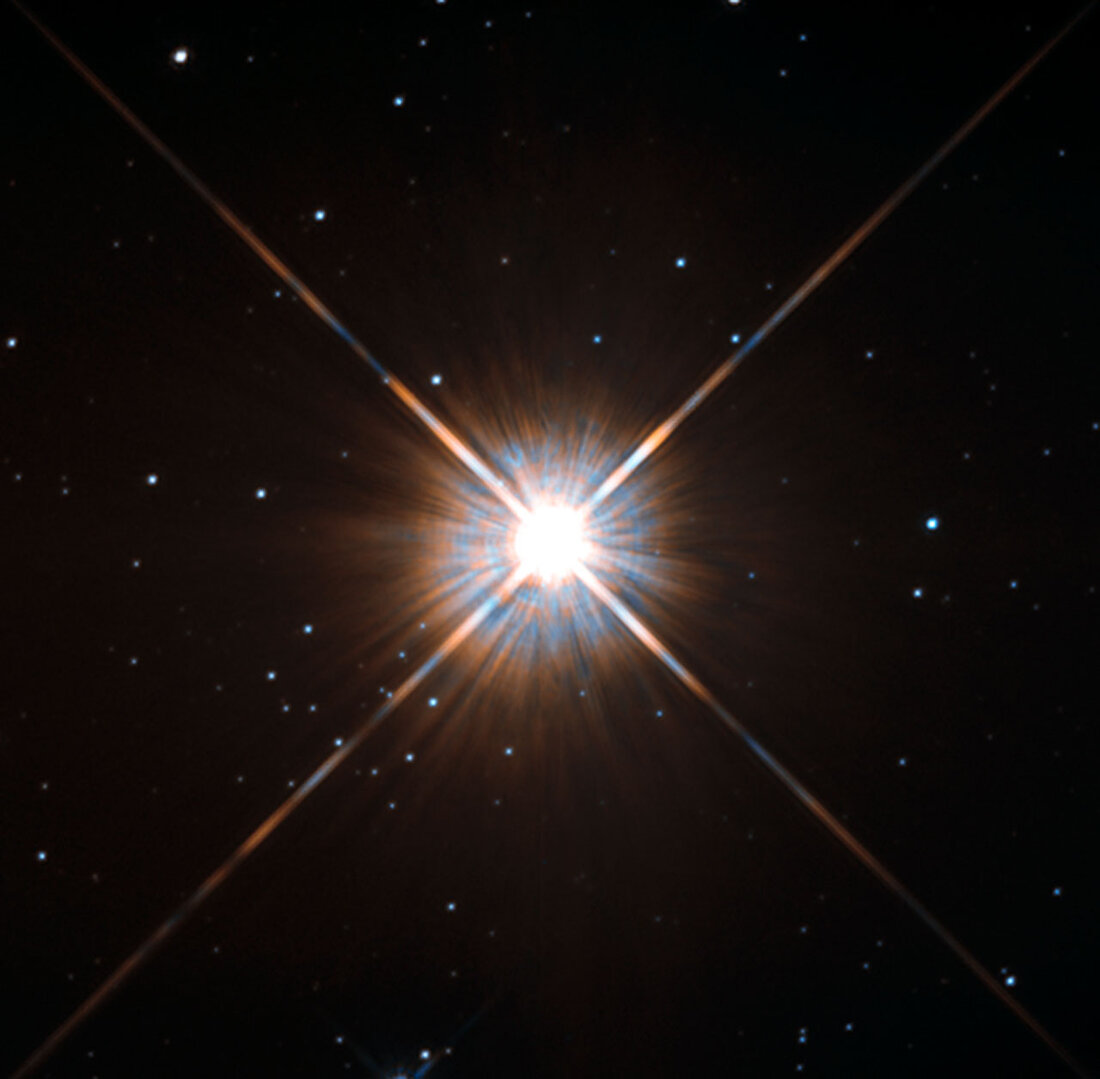 Red dwarfs, the commonest stars
Most stars are small, cool and red, and too faint to see without a telescope. They will still be shining when every star you can see tonight has gone out.
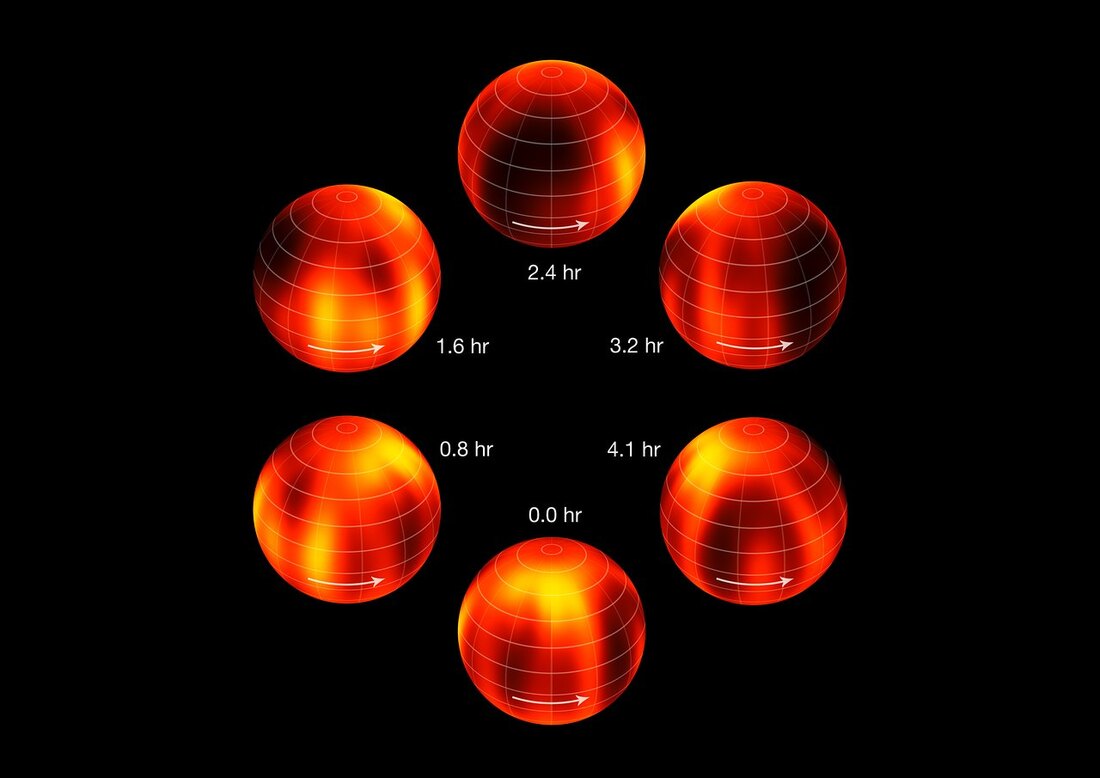 Brown dwarfs
Too heavy to be planets and too light to shine as stars, brown dwarfs glow faintly with leftover heat and slowly go dark. Our galaxy may hold tens of billions.
- Giants and supergiants
A star near the end of its life swells to a size that is hard to believe. The biggest would swallow the inner planets whole, yet are thinner than the air you breathe.
White dwarfs, neutron stars and black holes
7 lessons
- White dwarfs
A white dwarf is the core a star like the Sun leaves behind: the mass of a star in a ball the size of the Earth, with no fuel left, slowly cooling.
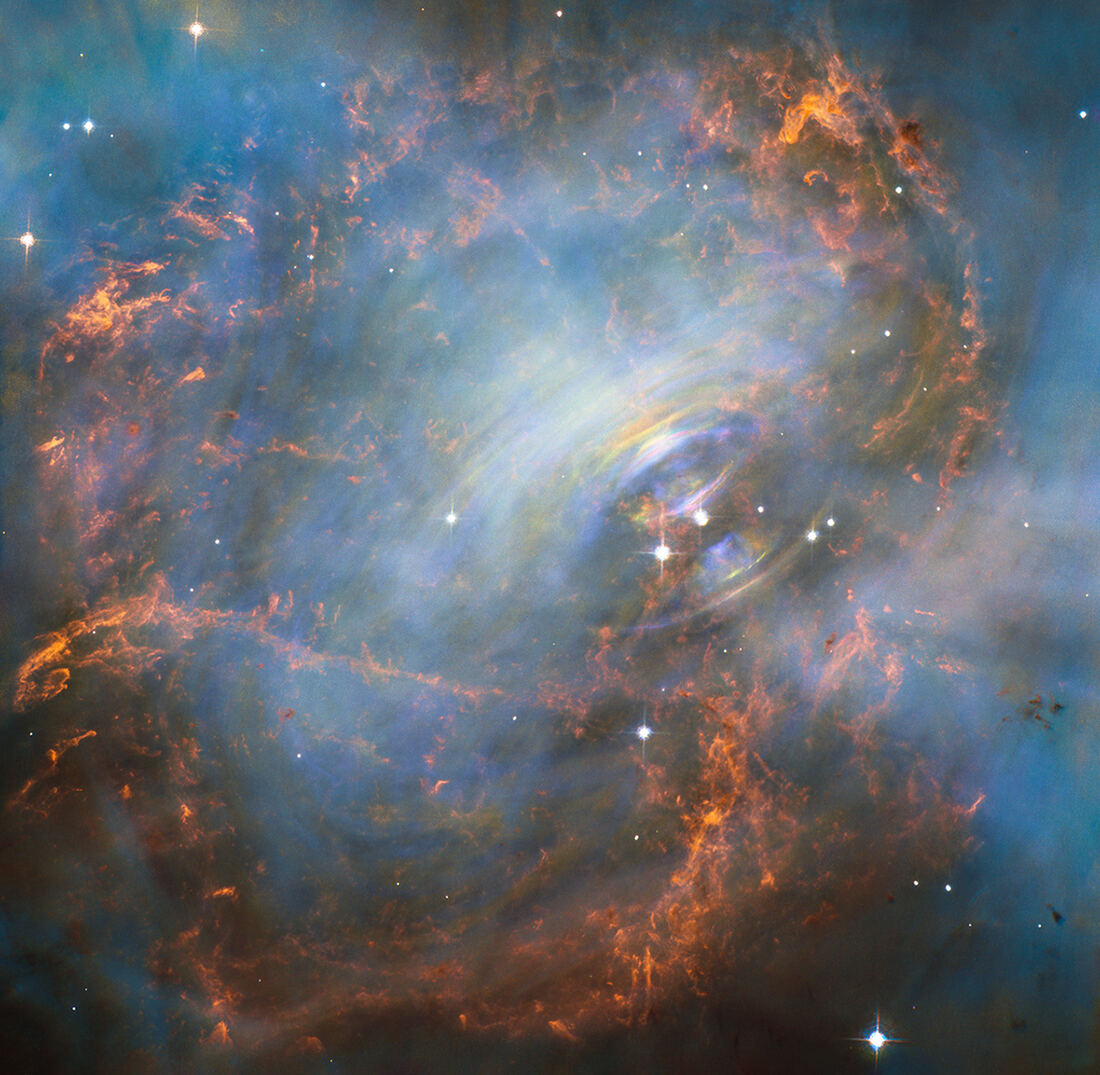 Neutron stars and pulsars
When a massive star dies, its core can be crushed into a ball the size of a city with more mass than the Sun. Some sweep beams past us like lighthouses.
- What a black hole is
A black hole is what is left when gravity wins completely. We cannot see one, but we can see what it does to everything near it.
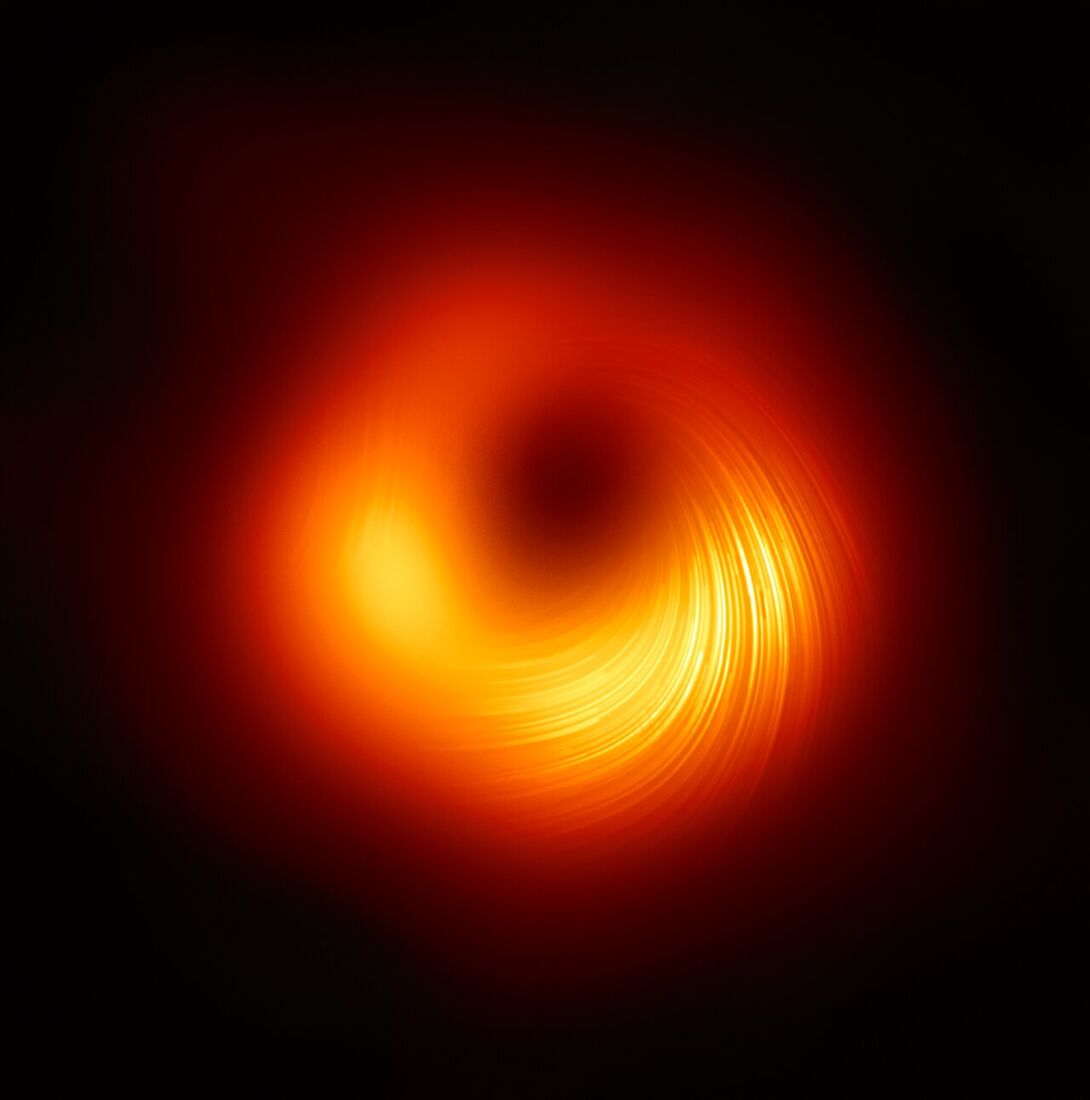 The event horizon
The edge of a black hole is not a surface but a point of no return. What happens there depends on who is watching.
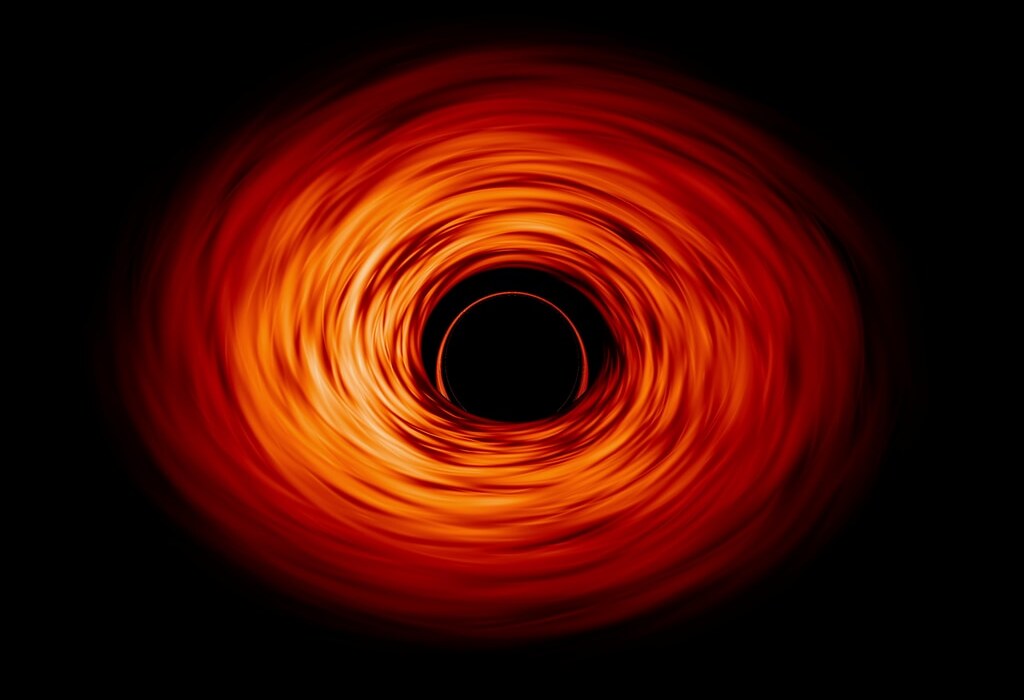 Falling into a black hole
Nobody can go and look, but Einstein's equations say what a fall into a black hole would be like. In 2024 NASA ran them on a supercomputer.
- Magnetars and gamma-ray bursts
The strongest magnets and the brightest explosions there are both come from dying stars. One burst can give out more energy in seconds than the Sun will in its whole life.
 Do black holes last for ever?
Nothing gets out of a black hole, and yet theory says each one glows very faintly and will slowly shrink away to nothing. Nobody has seen it happen.
Planets round other stars
5 lessons
- Planets round other stars
More than 6,000 planets are now known round other stars. Almost none has been seen directly. Here is how they are found.
- TRAPPIST-1
Seven planets the size of the Earth circle one small red star, all of them closer in than Mercury is to the Sun.
- The kinds of planet out there
More than 6,000 planets are known round other stars, and most are nothing like ours. The commonest kind found so far is one the Solar System does not have.
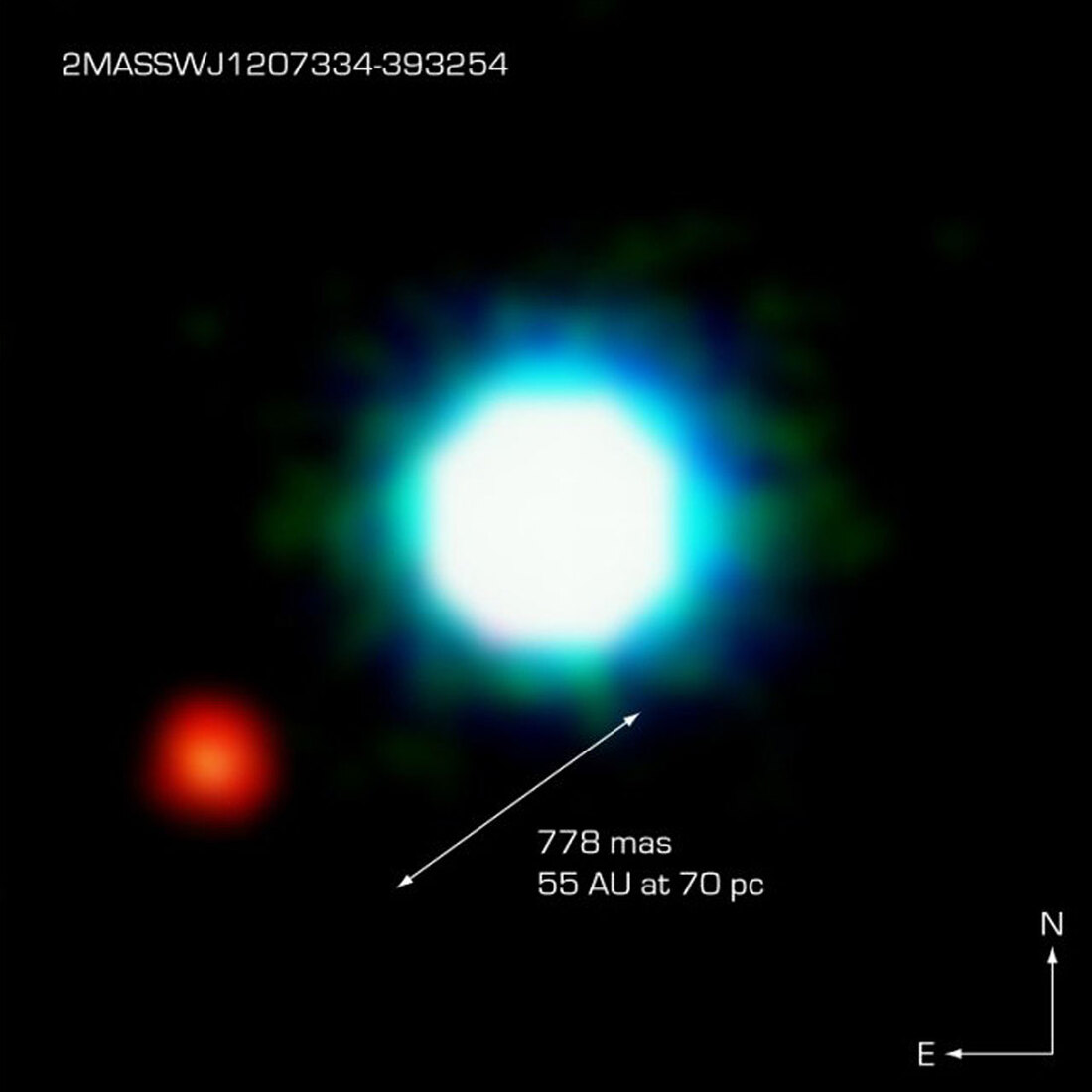 How planets are found
Four ways of finding a planet round another star: the star's wobble, its dimming, a direct picture, and a flicker of bent light. Each finds a different kind.
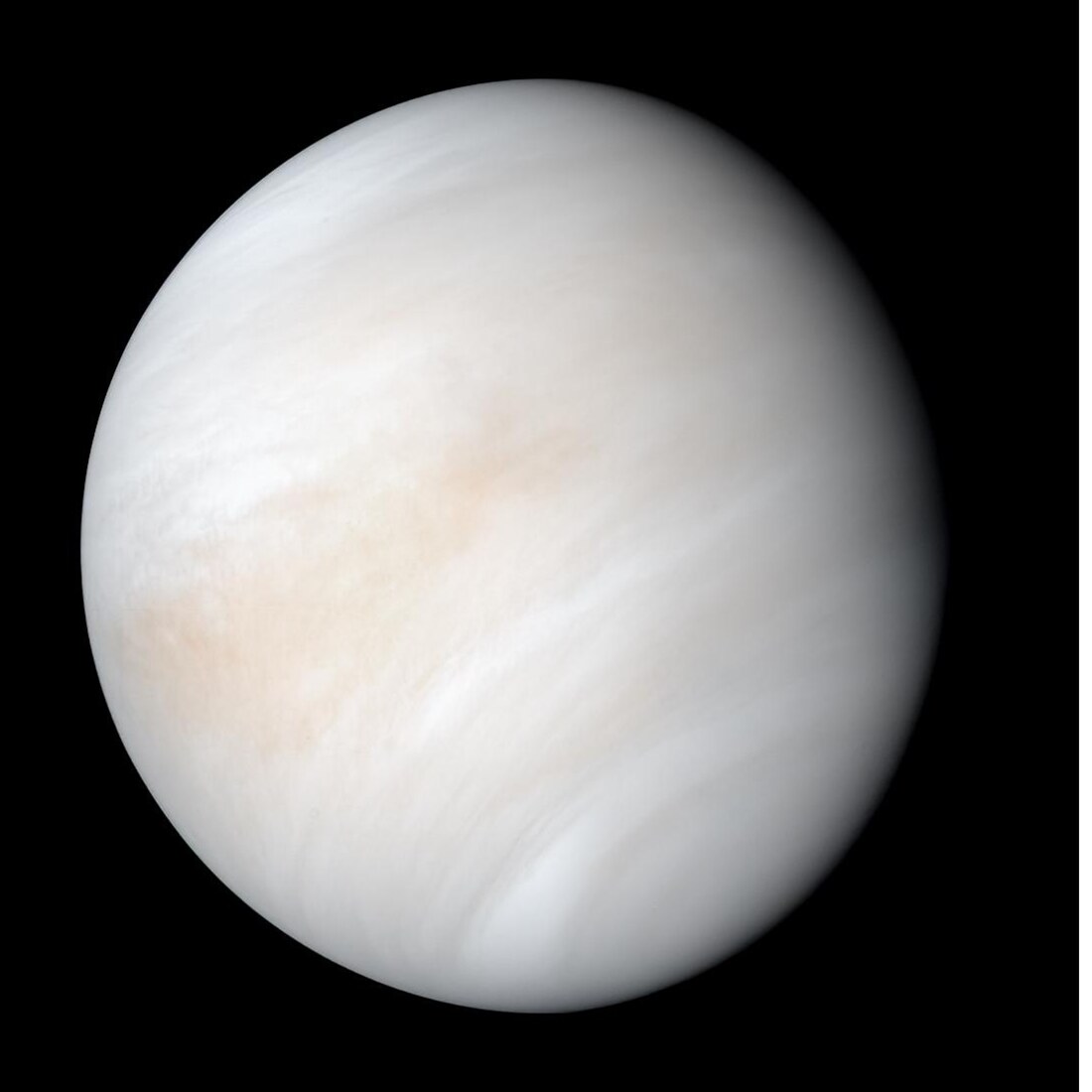 The habitable zone
The band round a star where a planet could keep liquid water on its surface. It is a useful first guide, and our own Solar System shows how much it leaves out.
The Milky Way
4 lessons
- The Milky Way
Our galaxy is a flat, turning disc of a few hundred billion stars. We live inside it, about half way out, and have never seen it from outside.
- The centre of the galaxy
The middle of the Milky Way is hidden behind dust. Seen in other kinds of light, it is a crowd of stars whirling round a black hole of four million Suns.
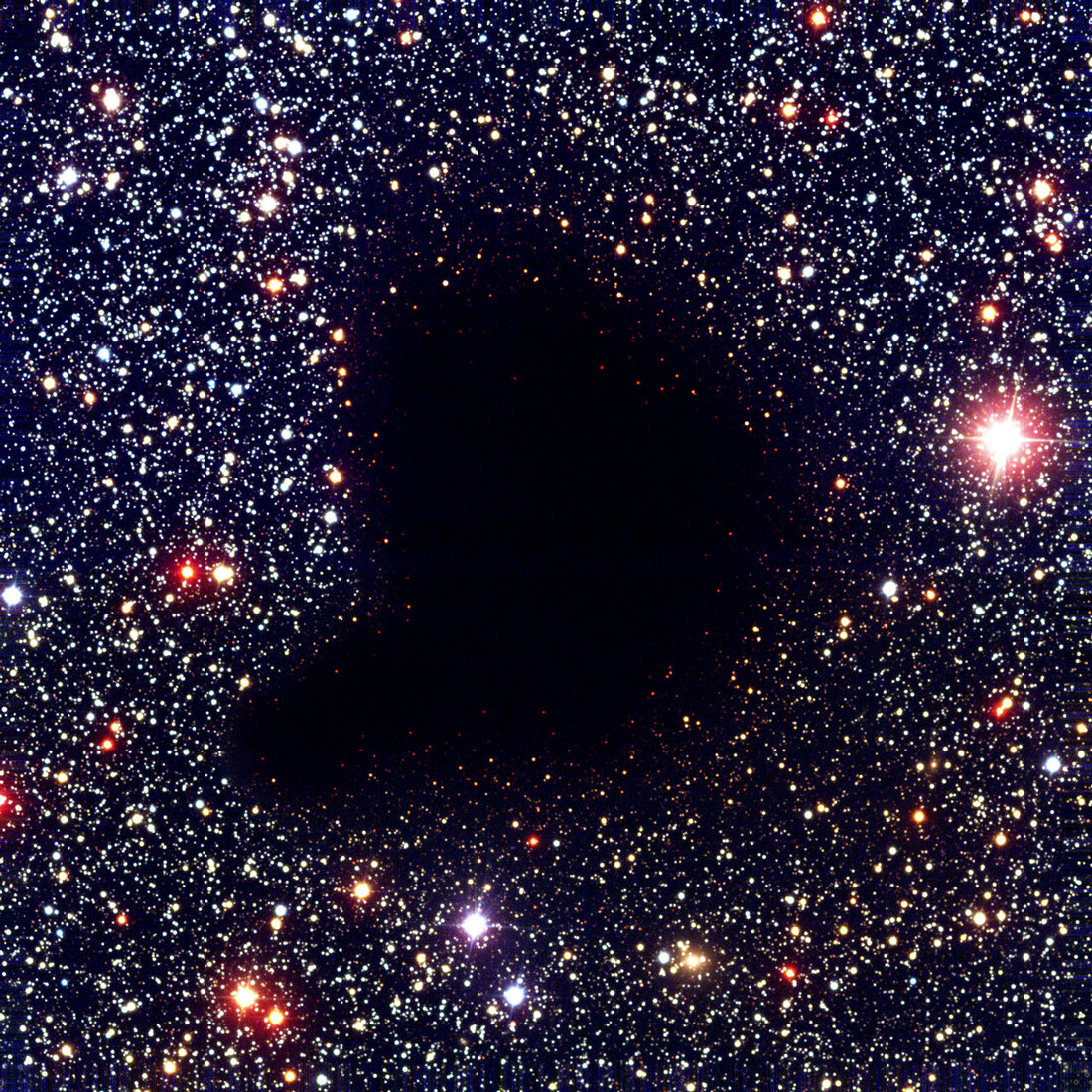 The stuff between the stars
The space between the stars holds thin gas and a little dust. It is emptier than any vacuum made on the Earth, and it is what every star is made from.
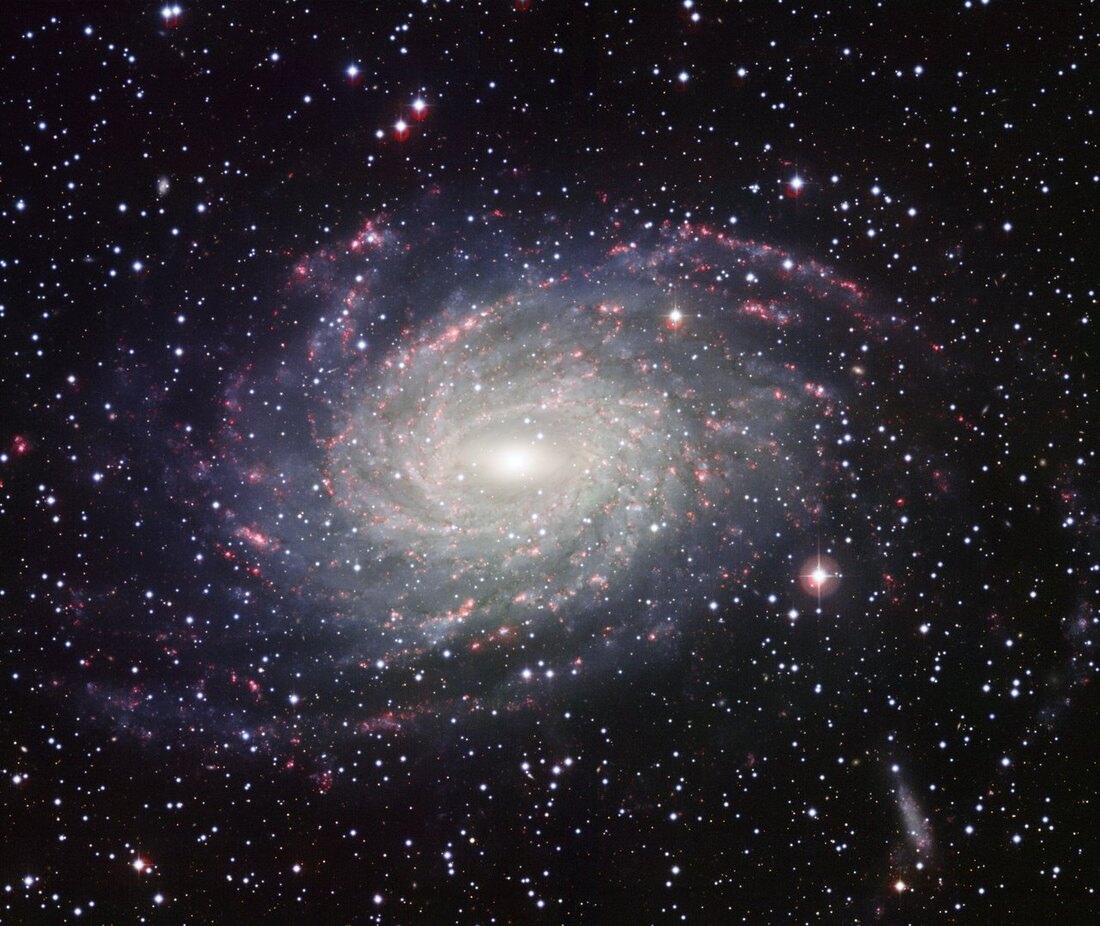 Spiral arms
The arms of a spiral galaxy are not fixed strings of stars. They are patterns that stars pass through, lit up by the young stars born inside them.
Galaxies
7 lessons
- Kinds of galaxy
Galaxies come as spirals, smooth ellipticals and ragged irregulars. They gather into groups and clusters, strung across space like a web.
- The cosmic web
Galaxies are not scattered evenly. They gather into groups, clusters and long threads, with huge empty spaces between, like the walls of a foam.
- Variable stars and the distance ladder
Some stars brighten and fade on a steady beat, and the beat gives away how bright they truly are. That is how the distances to other galaxies were first measured.
- When galaxies collide
Galaxies grow by pulling in their neighbours. A collision takes hundreds of millions of years, hardly any stars touch, and both galaxies come out a different shape.
- Active galaxies and quasars
In about one galaxy in ten, the centre outshines all the stars put together. The light comes from gas heating up as it falls towards a giant black hole.
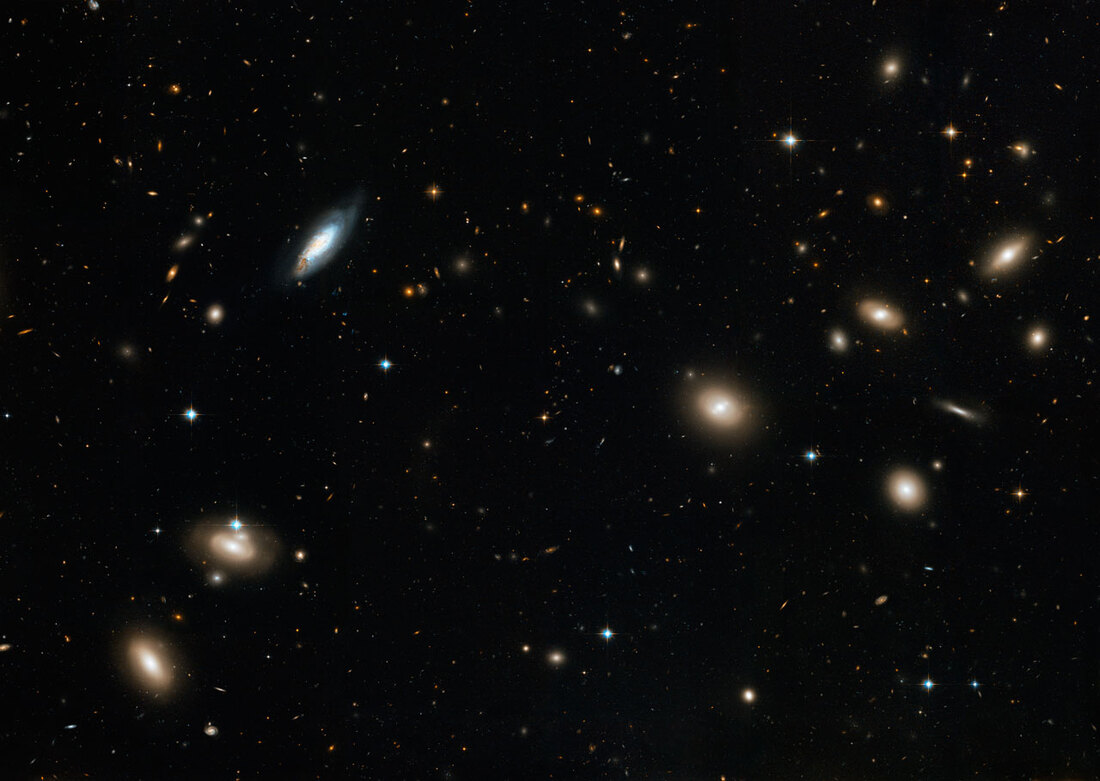 Galaxy clusters
A cluster is hundreds or thousands of galaxies held together by gravity. Most of what is in one is not galaxies at all: it is hot gas and dark matter.
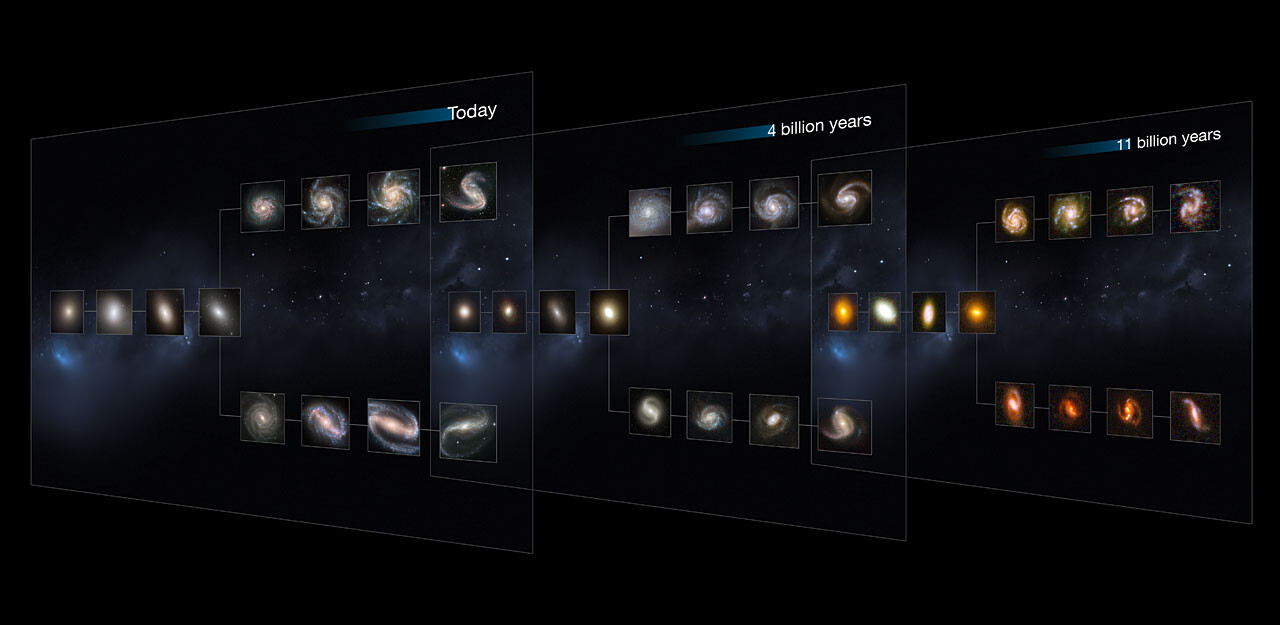 How galaxies form and change
Galaxies were not always as they are now. They began small and ragged, grew by pulling in gas and swallowing each other, and made most of their stars long ago.
The universe
8 lessons
- The expanding universe
Distant galaxies are all moving away from us, and from each other. Run the film backwards and you arrive at a hot, dense beginning 13.8 billion years ago.
- The first minutes and the oldest light
In its first few minutes the universe made its hydrogen and helium. After 380,000 years it turned clear, and the light set free then is still arriving.
- Dark matter and dark energy
Everything we can see adds up to about 5 per cent of the universe. The rest is known only by what it does, and nobody knows what it is.
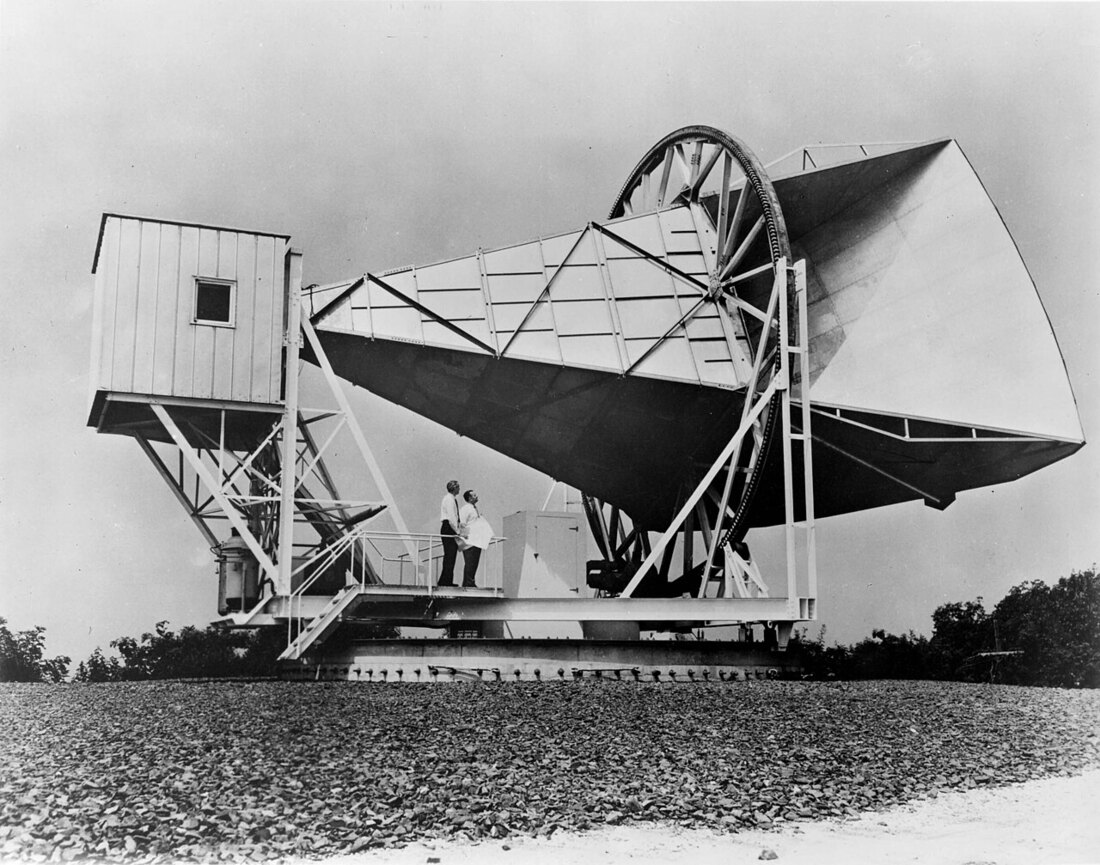 The oldest light
A faint glow of microwaves comes from every direction in the sky. It is the light of the young universe, and its pattern holds the age and make-up of everything.
- How we know there was a Big Bang
Nobody watched the universe begin. Four separate lines of evidence, found in different ways by different people, all point to the same hot, dense start.
- The history of the universe on one timeline
13.8 billion years, from the first light to this evening, squeezed into a single calendar year so that the gaps between events can be felt.
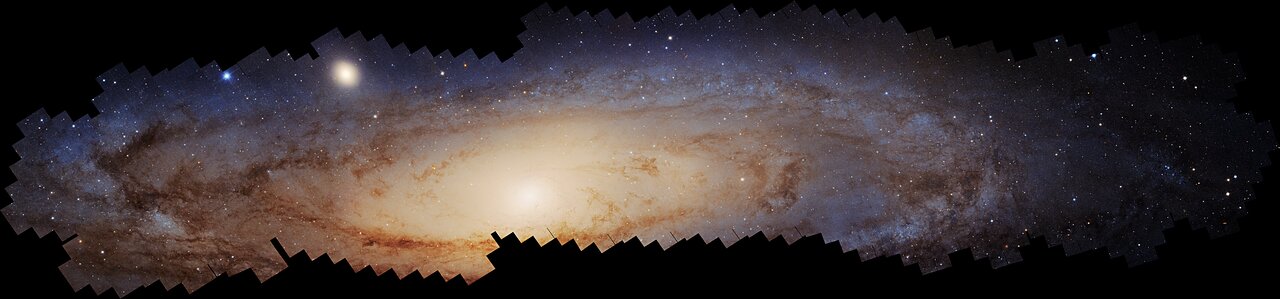 How it all ends
The Sun will die, the galaxies will run out of gas, and the last stars will go out. What happens after that depends on something nobody yet understands.
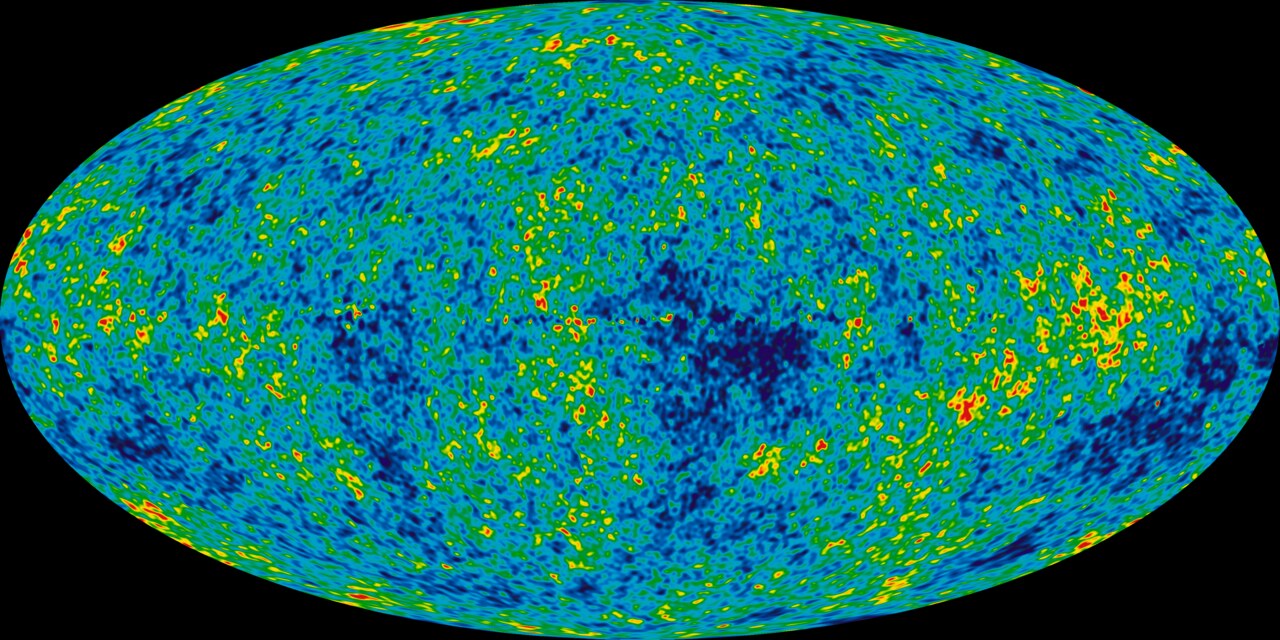 How big is the universe?
There is an edge to what can be seen, 46 billion light years away in every direction. It is not the edge of the universe, and nobody knows how far the rest goes.
Life
4 lessons
- Are we alone?
Life is known on one planet only. Where else might it be, how would we recognise it, and what has the search found so far?
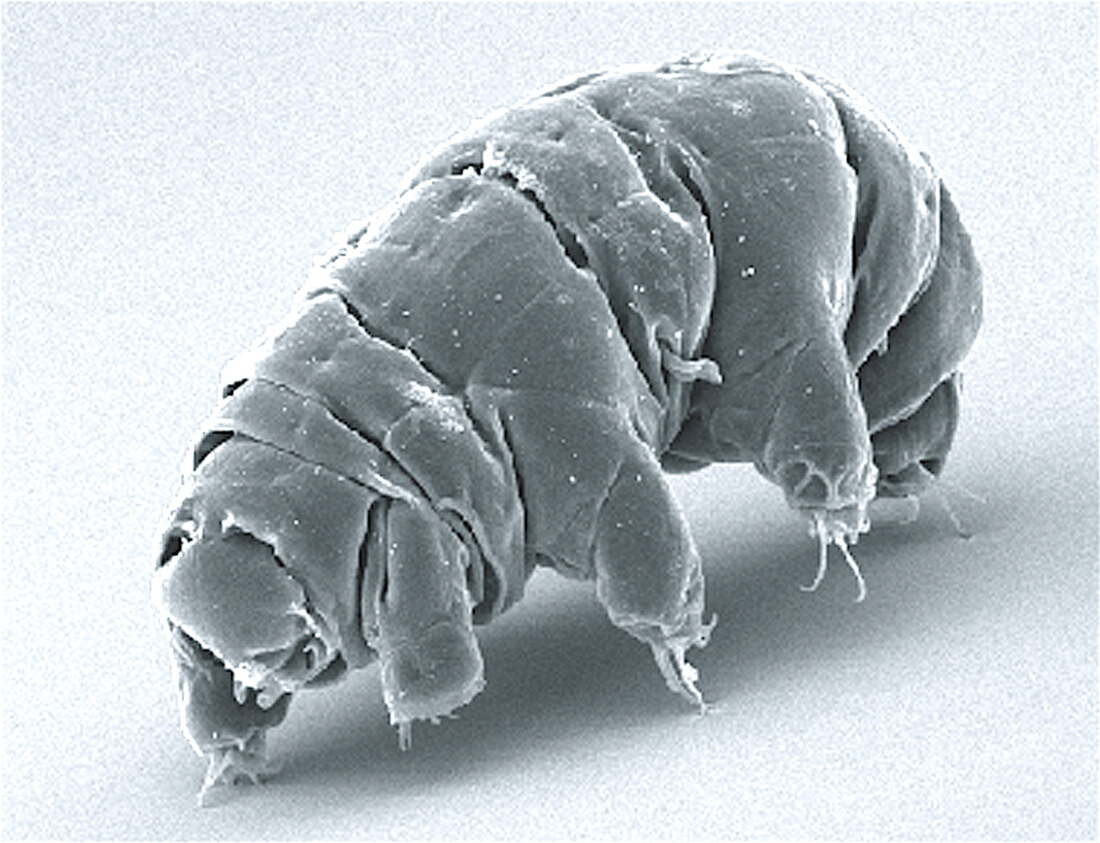 What life needs
Life on Earth needs liquid water, a few common elements and a supply of energy. Given those, it turns up in boiling springs and in the dark of the sea floor.
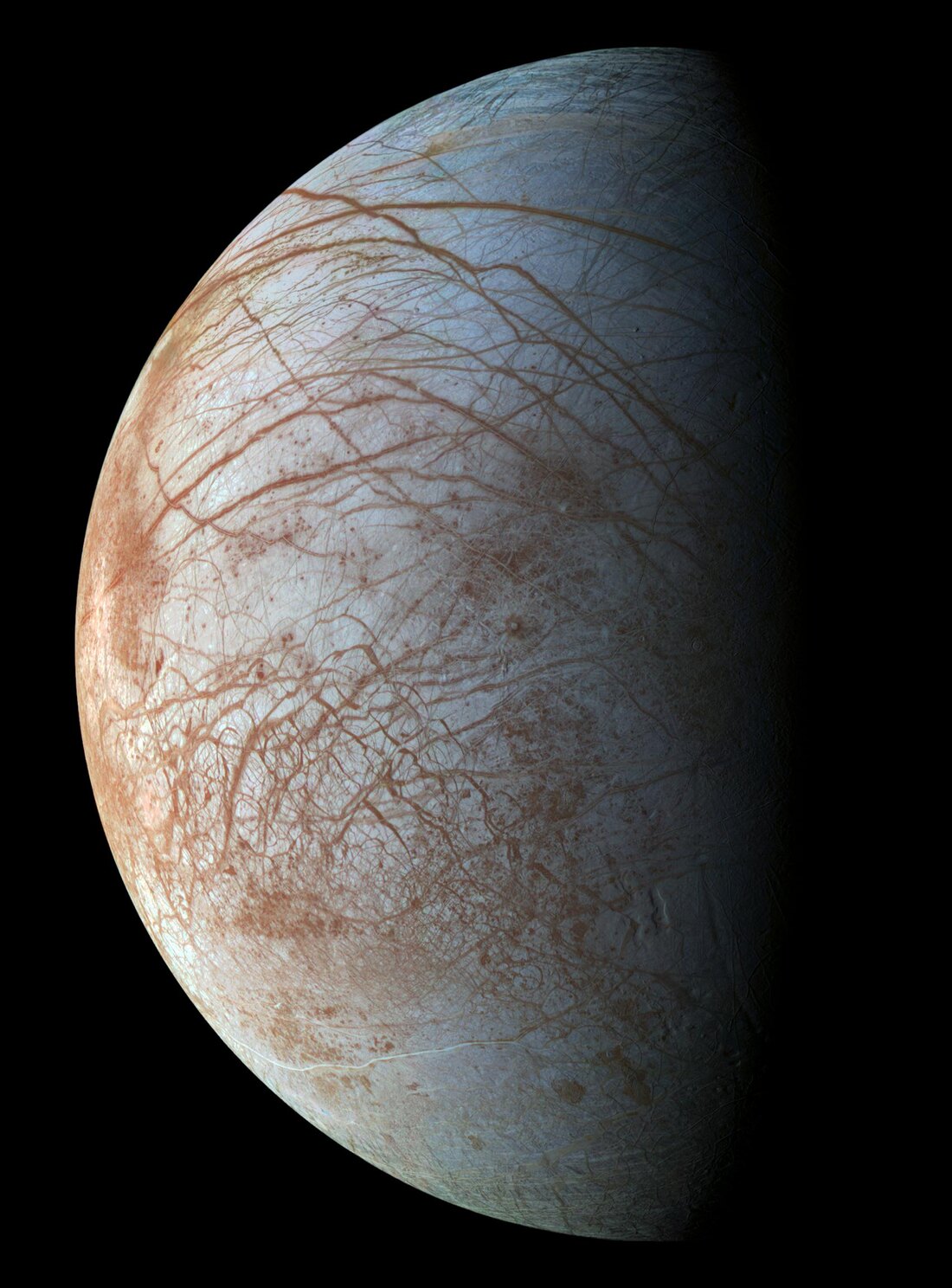 Looking for life in the Solar System
Four places near home might hold life or the remains of it: Mars, Europa, Enceladus and Titan. Spacecraft have been to all four, and more are on the way.
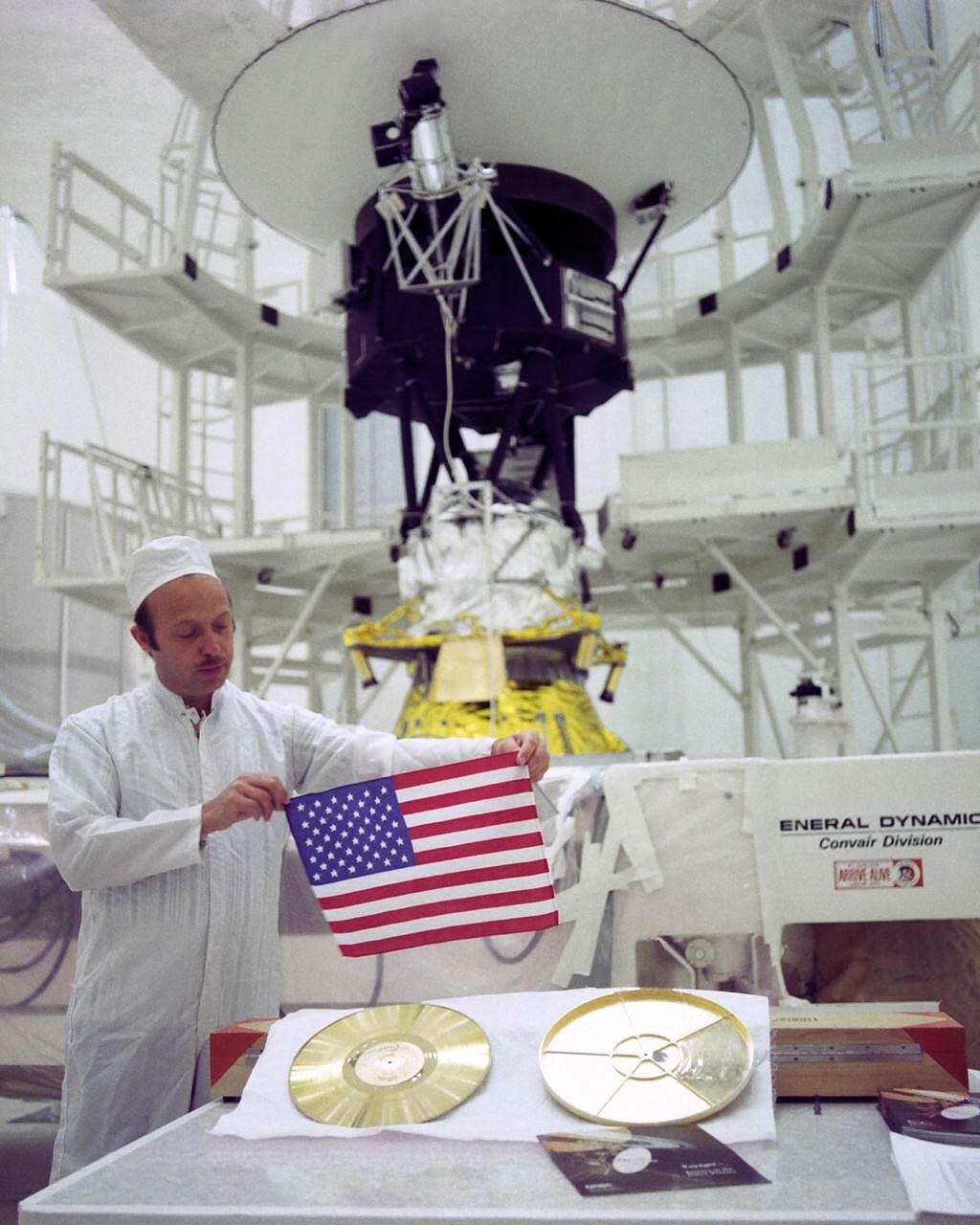 Listening for someone else
Since 1960 radio telescopes have listened for a signal from another civilisation. Nothing confirmed has been heard. That silence is itself a puzzle.
Exploring space
4 lessons
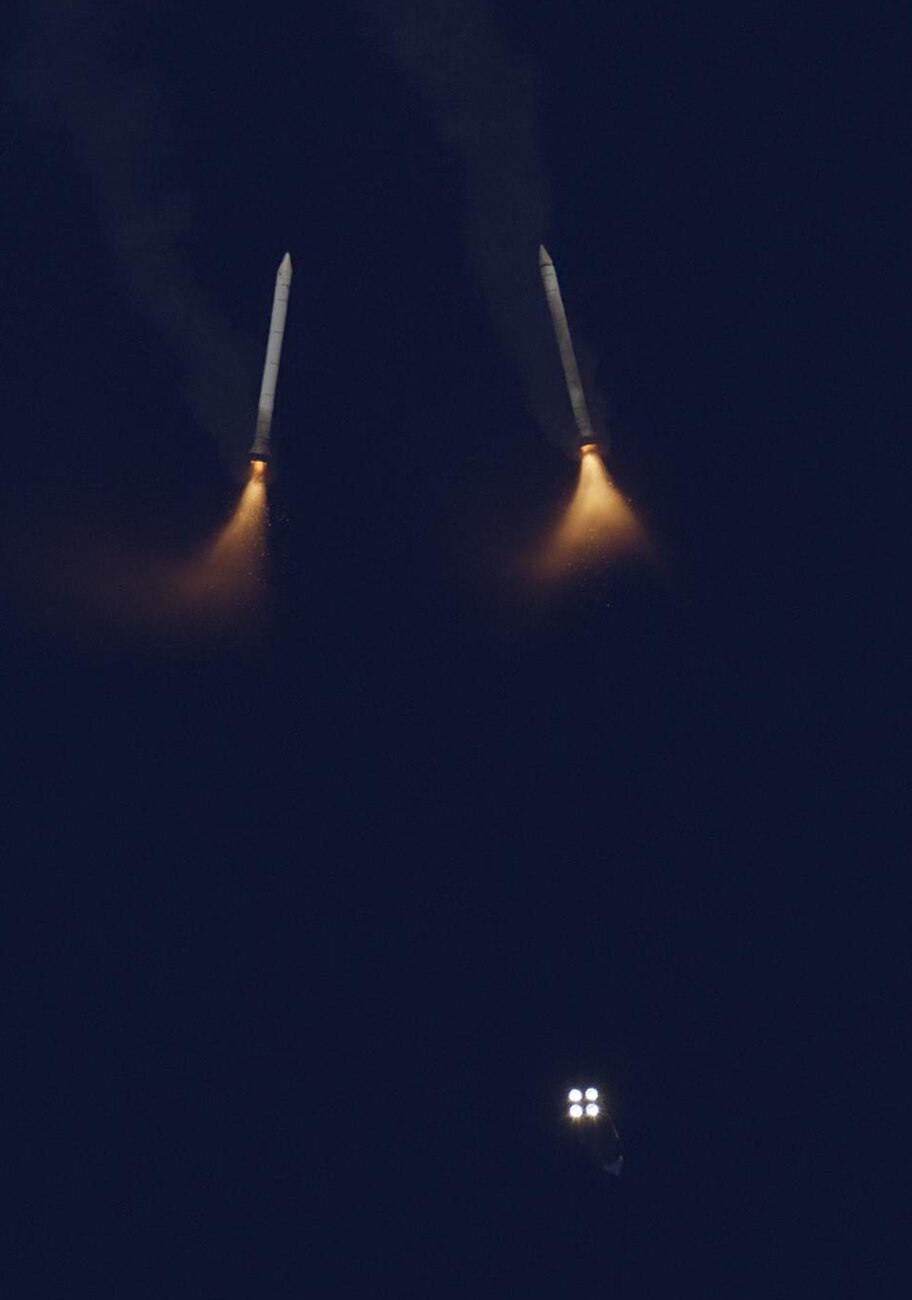 How a rocket works
A rocket moves by throwing hot gas out of its back. Reaching orbit takes so much speed that nine tenths of a big rocket is fuel, and most of it is dropped on the way.
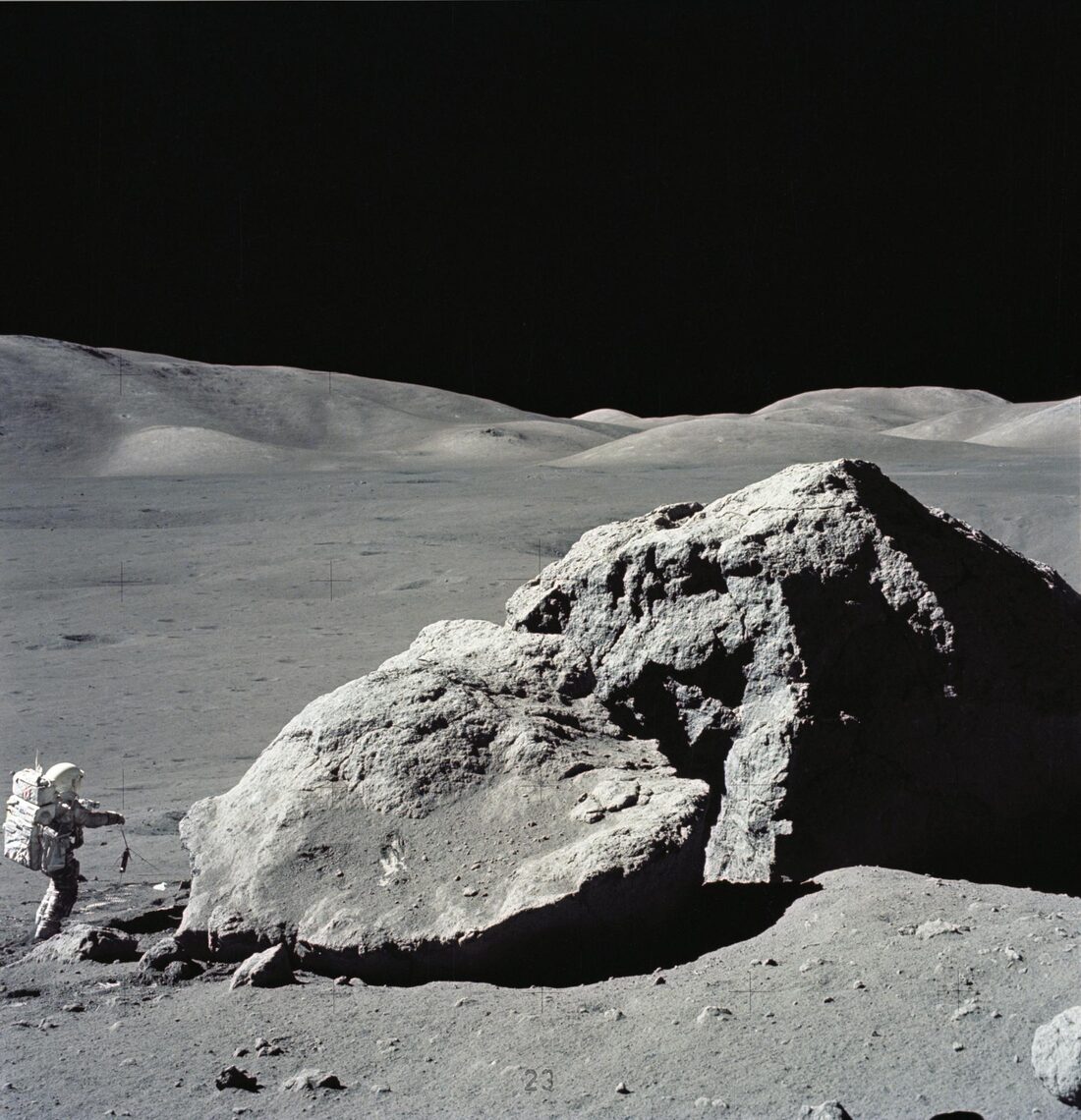 The first journeys: Sputnik, Gagarin and the Moon
From a beeping metal ball in 1957 to twelve people on the Moon took fifteen years. Then nobody left Earth orbit for more than half a century, until 2026.
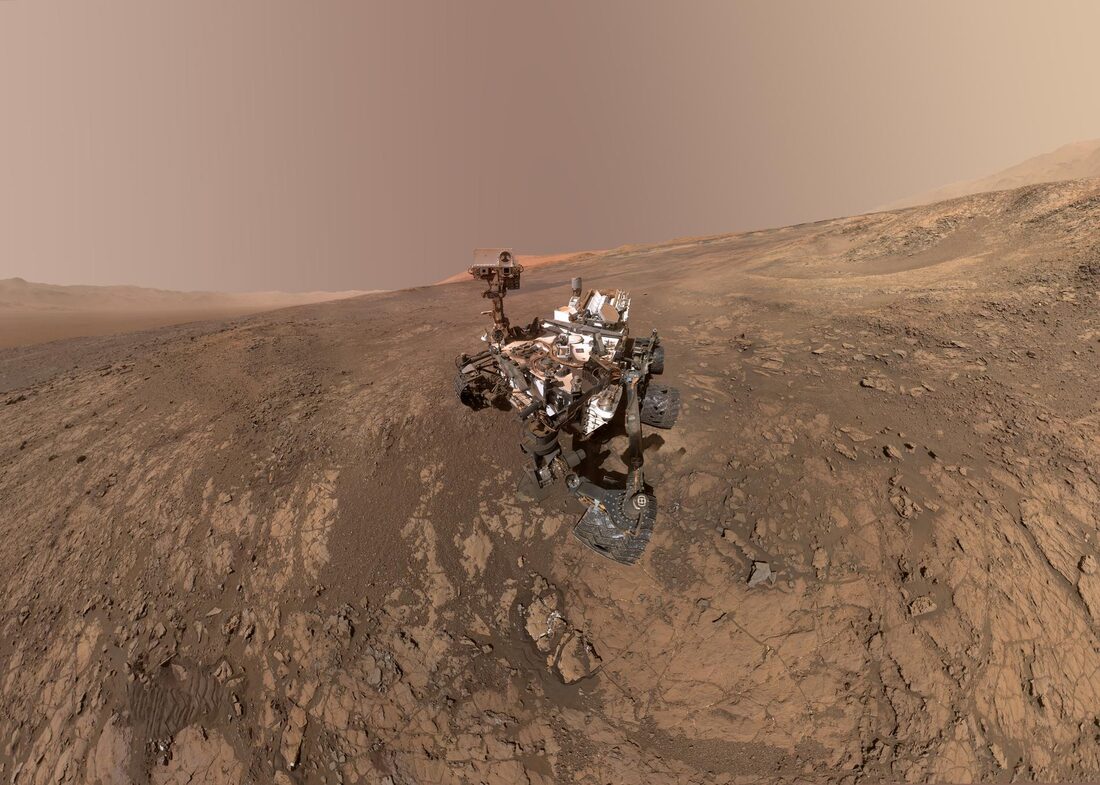 Robot explorers
No person has been further than the Moon. Everything known from close up about the planets, their moons, comets and asteroids was found by machines sent in our place.
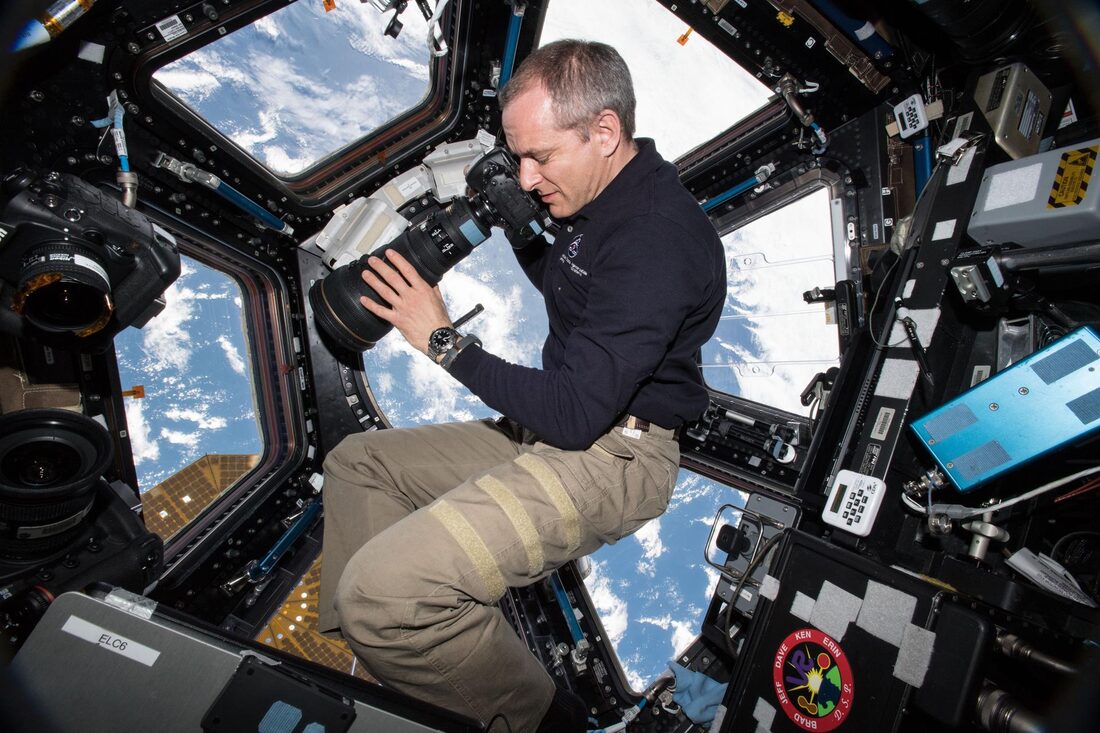 Living in space
People have lived aboard the International Space Station without a break since November 2000. Floating is fun, but the human body was built for the ground.
How we found out
2 lessons
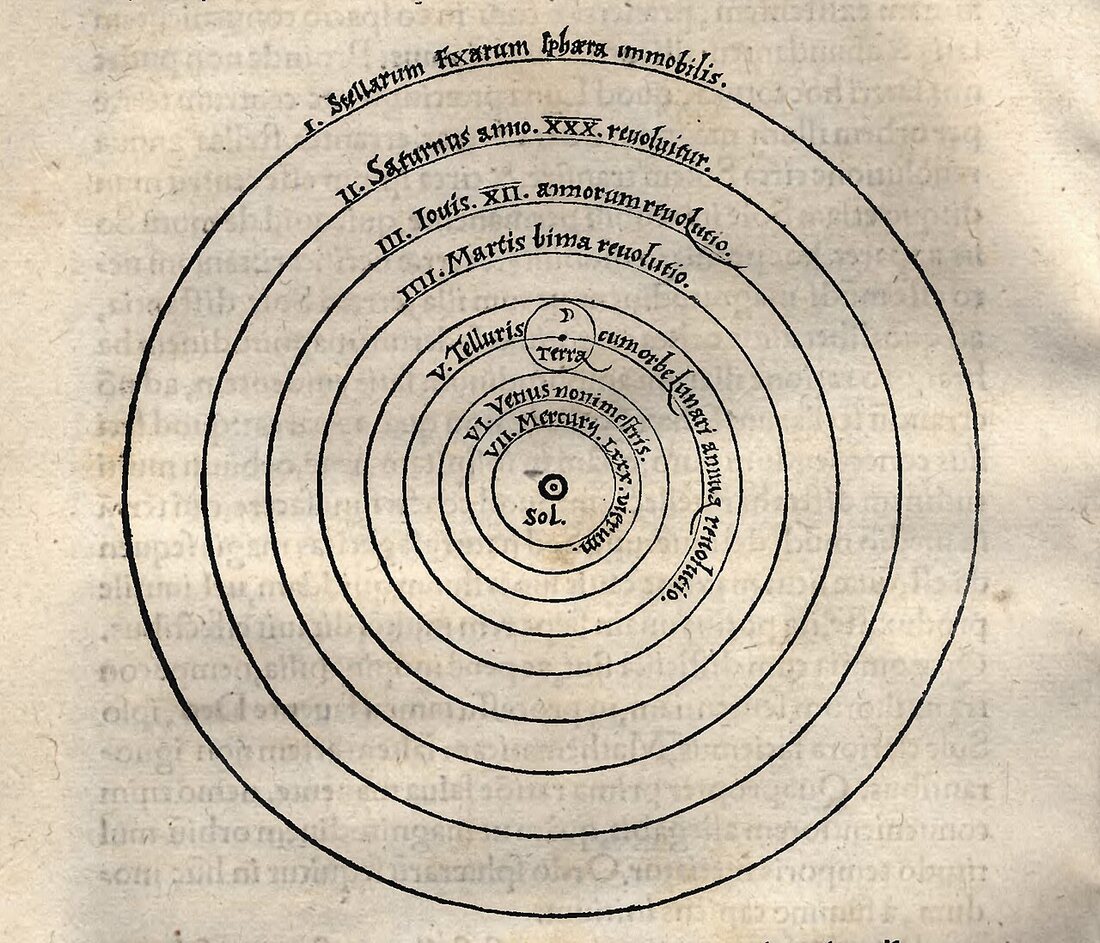 From a still Earth to a moving one
For two thousand years almost everyone was sure the Earth stood still in the middle of everything. Five people, a telescope and one stubborn planet changed that.
 Finding the size of everything
Nobody can stretch a tape to the stars. The size of the universe was found one step at a time, over two thousand years, and every step made it far bigger.
What everything is made of
1 lesson
Still being written
. There are 101 lessons so far, at 3 levels each, with two deeper levels to follow.