
Planets
The Sun and its eight planets
Each has its own page: a fall from orbit down to the ground, or as near to a ground as that world has, with the story of what you pass on the way. Every photograph here is real, taken by a spacecraft or by astronauts.
Our star
The Sun
The star that holds everything else in place.
- Width
- 1,392,700 km
- Surface
- about 5,500 °C
- One turn
- 25 to 35 days
- Light to the Earth
- 8 min 20 s
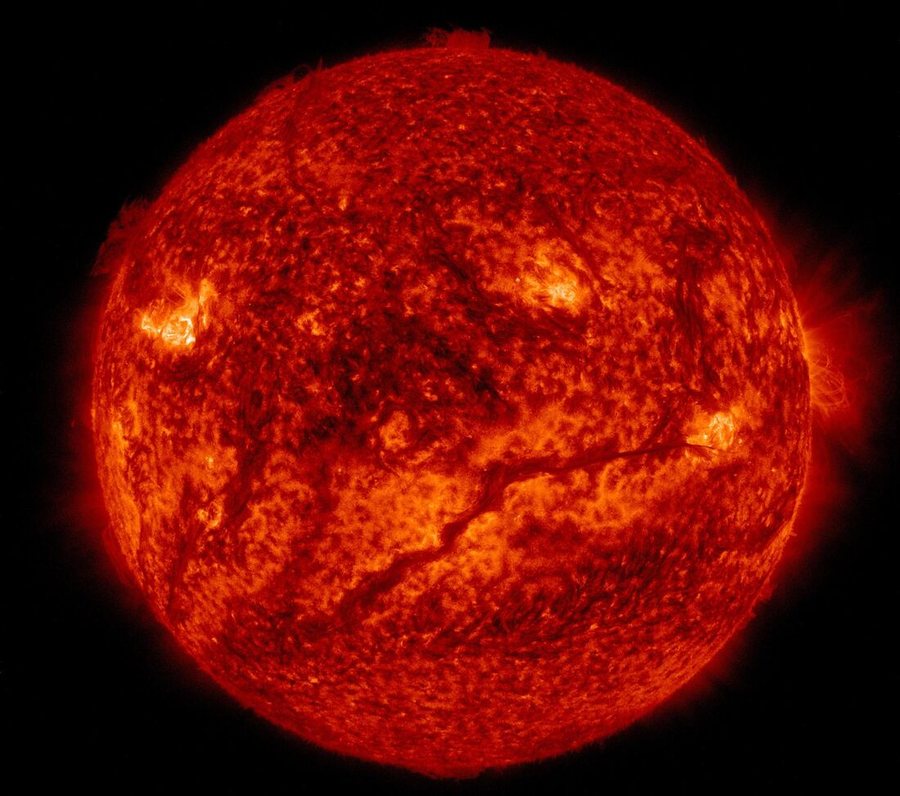
Drift a few thousand kilometres over the boiling surface, towards a sunspot.
Fall to the surfaceSee it in 3D
The Sun in extreme ultraviolet light by NASA’s Solar Dynamics Observatory. The colour is chosen: the light is invisible to the eye. Credit: NASA/SDO.
Rocky planet
Mercury
Small, fast and cooked on one side.
- Width
- 4,879 km
- From the Sun
- 0.387 au
- Year
- 88 days
- Day
- 176 days
- Moons
- 0
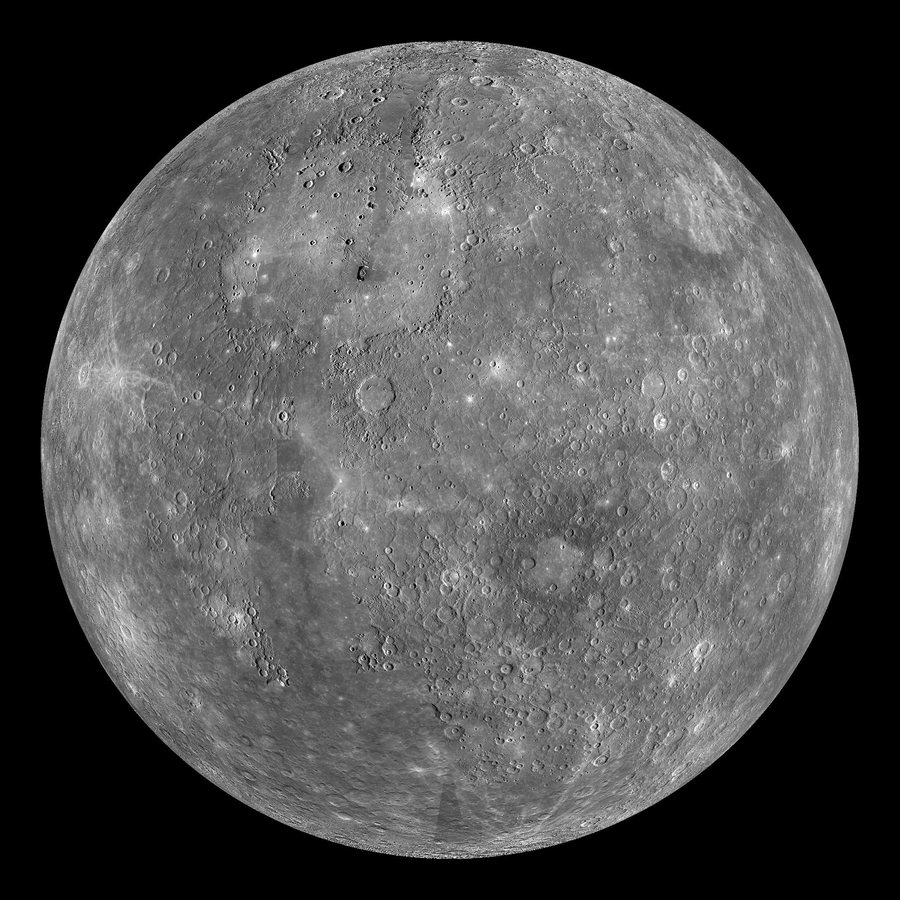
Stand on a crater rim near the north pole, the Sun low on the horizon.
Fall to the surfaceSee it in 3D
Mercury, a globe made from thousands of pictures taken by NASA’s MESSENGER spacecraft, 2011. Credit: NASA/Johns Hopkins University Applied Physics Laboratory/Carnegie Institution of Washington.
Rocky planet
Venus
Earth's twin in size, and a furnace in every other way.
- Width
- 12,104 km
- From the Sun
- 0.723 au
- Year
- 225 days
- Day
- 117 days
- Moons
- 0
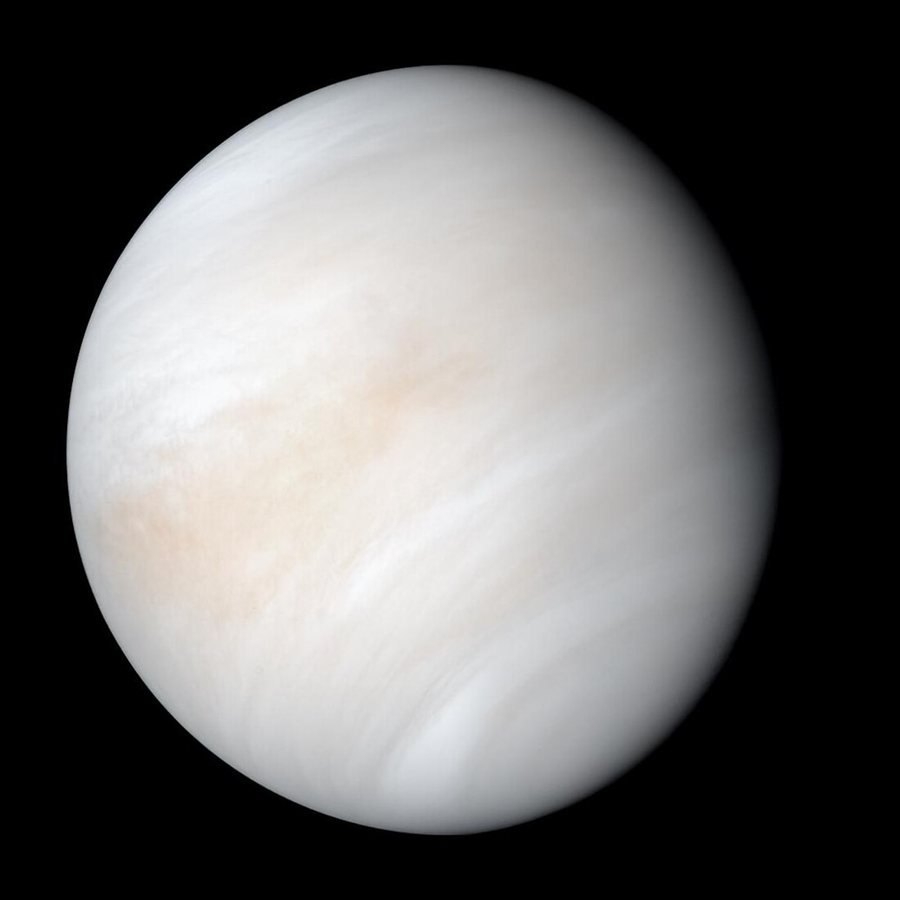
Sink through the acid cloud to the orange ground the Venera landers saw.
Fall to the surfaceSee it in 3D
Venus by NASA’s Mariner 10 in February 1974, built from pictures taken through orange and ultraviolet filters. Credit: NASA/JPL-Caltech.
Rocky planet
The Earth
The only place we know of with life.
- Width
- 12,742 km
- From the Sun
- 1 au
- Year
- 365 days
- Day
- 24 hours
- Moons
- 1
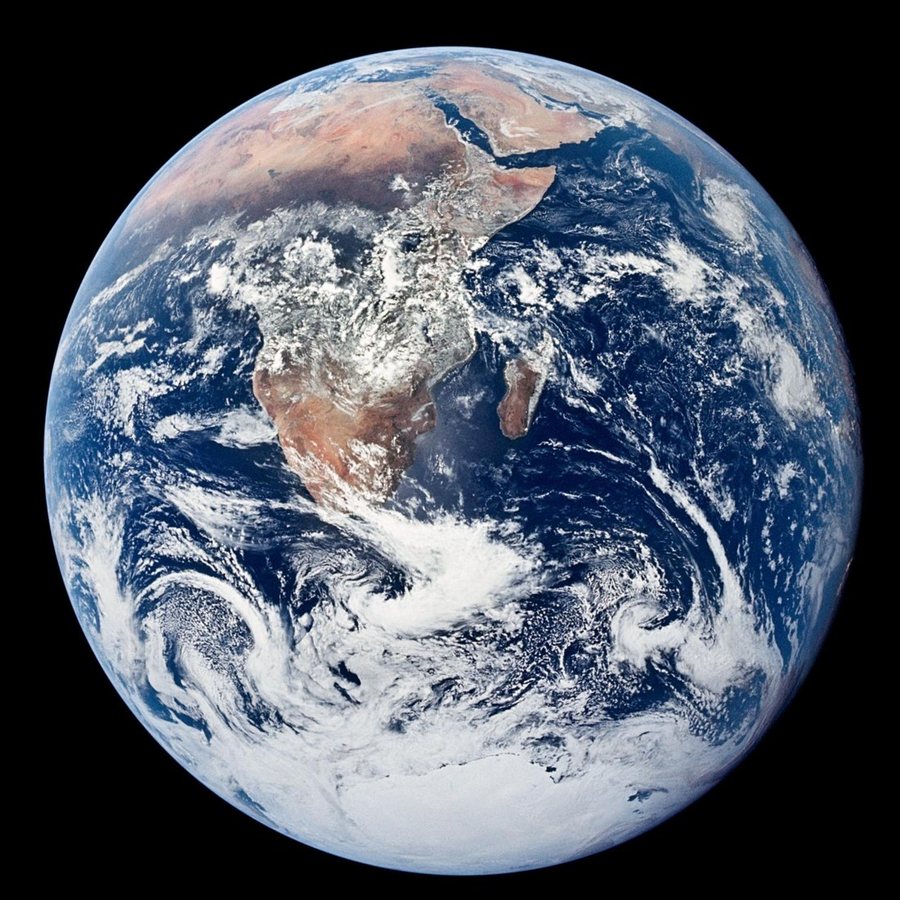
Come down through the cloud to open sea off O‘ahu.
Fall to the surfaceSee it in 3D
The whole Earth, photographed by the crew of Apollo 17 on 7 December 1972. Credit: NASA.
Rocky planet
Mars
A cold desert that used to have water.
- Width
- 6,779 km
- From the Sun
- 1.52 au
- Year
- 687 days
- Day
- 24.7 hours
- Moons
- 2
Land in Gale crater, under Mount Sharp, where Curiosity is working.
Fall to the surfaceSee it in 3D
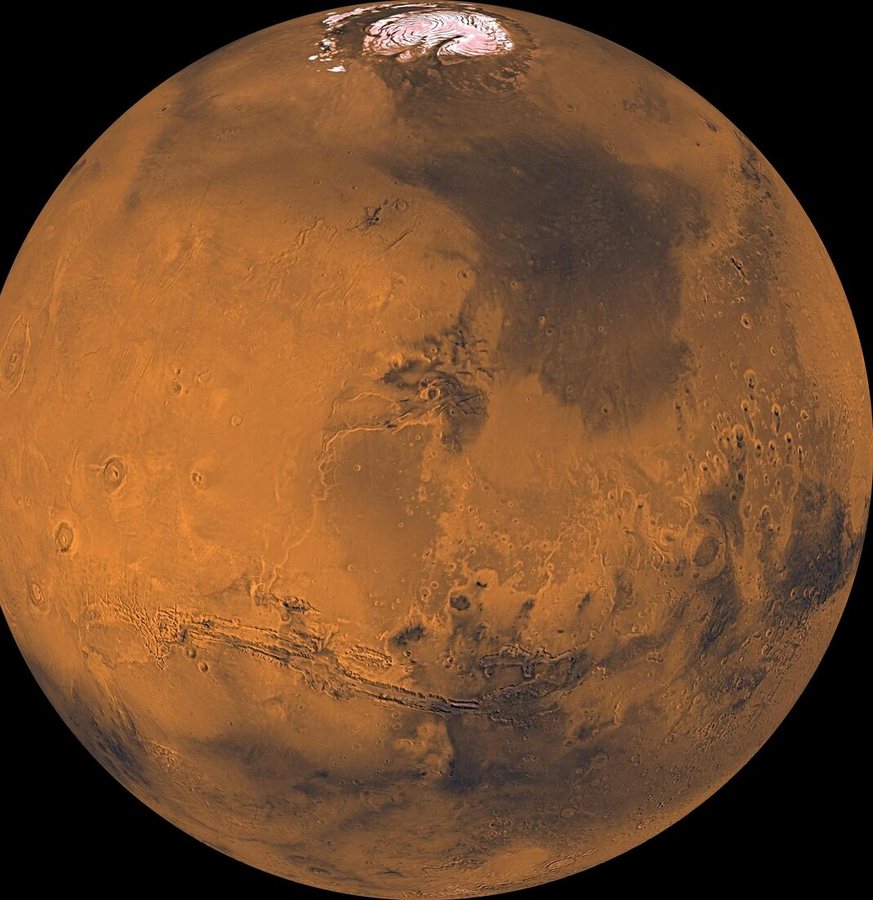
Mars, pieced together from about 1,000 pictures by NASA’s Viking 1 orbiter. Credit: NASA/JPL/USGS.
Gas giant
Jupiter
More massive than all the other planets put together.
- Width
- 139,822 km
- From the Sun
- 5.2 au
- Year
- 11.9 years
- Day
- 9.93 hours
- Moons
- 95
Skim the cloud tops beside the Great Red Spot, with Io overhead.
Fall to the surfaceSee it in 3D
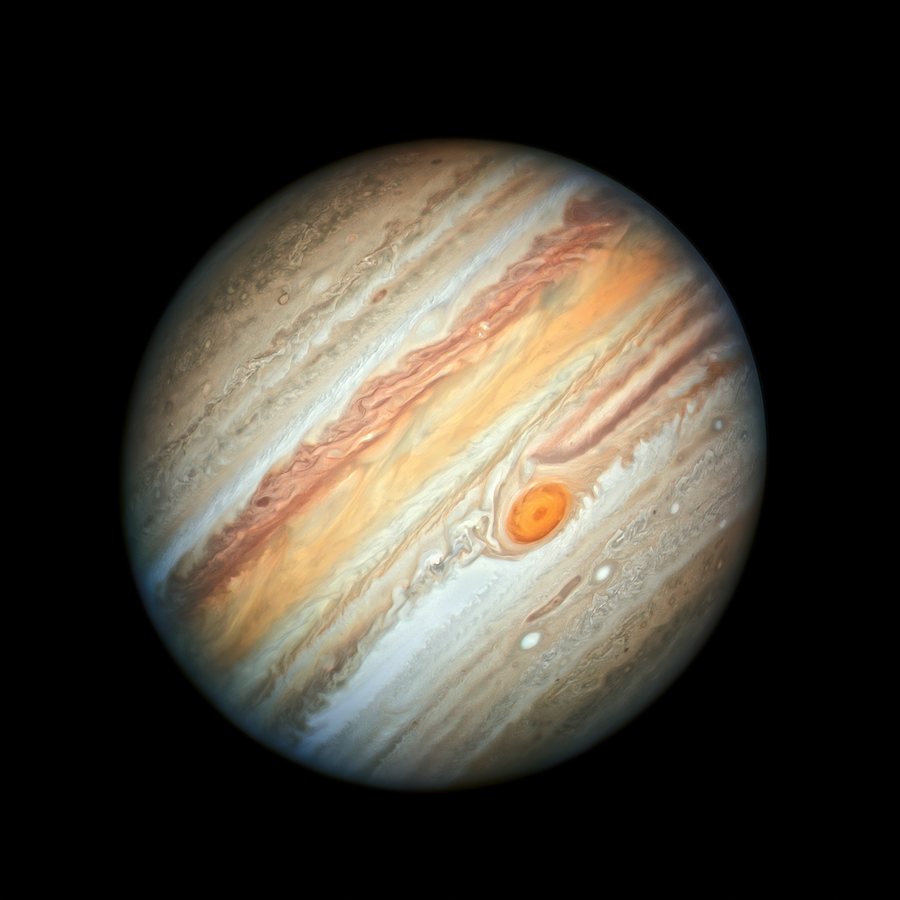
Jupiter by the Hubble Space Telescope on 27 June 2019. Credit: NASA, ESA, A. Simon (Goddard Space Flight Center) and M. H. Wong (University of California, Berkeley), CC BY 4.0.
Gas giant
Saturn
The ringed planet, light enough to float on water.
- Width
- 116,464 km
- From the Sun
- 9.54 au
- Year
- 29.4 years
- Day
- 10.7 hours
- Moons
- 274
Hang in the haze at 40° north, under the arch of the rings.
Fall to the surfaceSee it in 3D
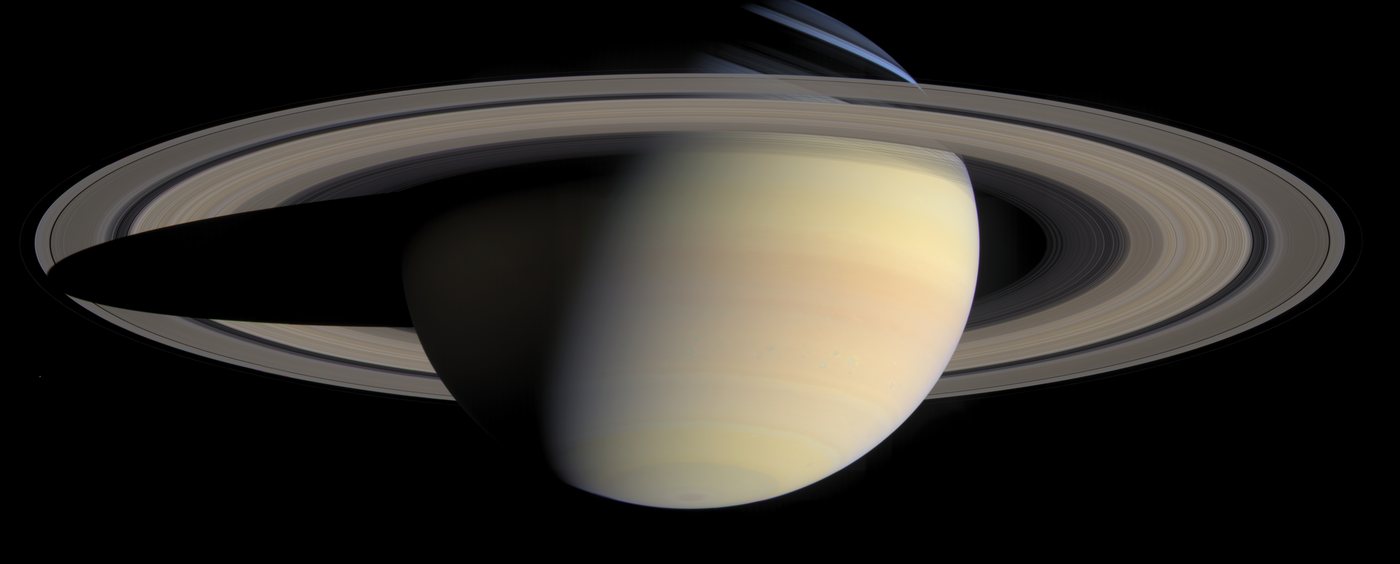
Saturn in natural colour, made from 126 pictures by NASA’s Cassini spacecraft in October 2004. Credit: NASA/JPL/Space Science Institute.
Ice giant
Uranus
The planet that rolls on its side.
- Width
- 50,724 km
- From the Sun
- 19.2 au
- Year
- 84 years
- Day
- 17.2 hours
- Moons
- 28
Midnight at 45° north. The Sun is still up, and five moons sit in a row.
Fall to the surfaceSee it in 3D
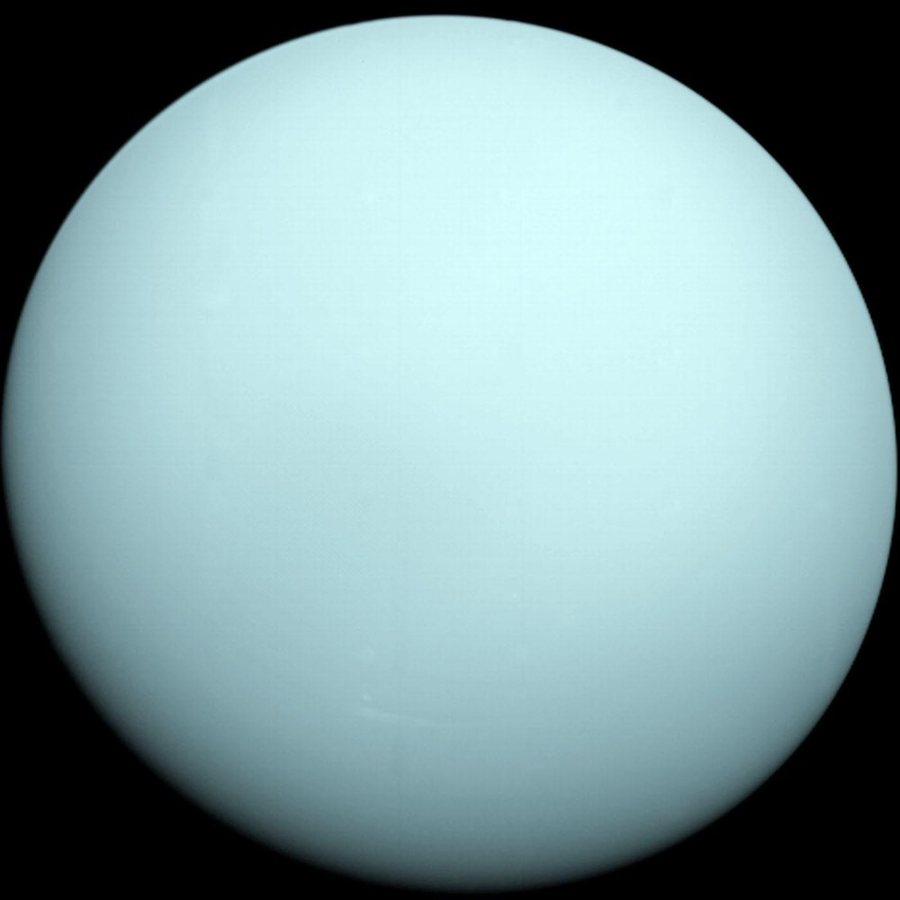
Uranus by NASA’s Voyager 2 in January 1986. Credit: NASA/JPL-Caltech.
Ice giant
Neptune
The farthest planet, found by maths before sight.
- Width
- 49,244 km
- From the Sun
- 30.1 au
- Year
- 165 years
- Day
- 16.1 hours
- Moons
- 16
Ride above the blue at 29° north, where white streaks cast their shadows.
Fall to the surfaceSee it in 3D
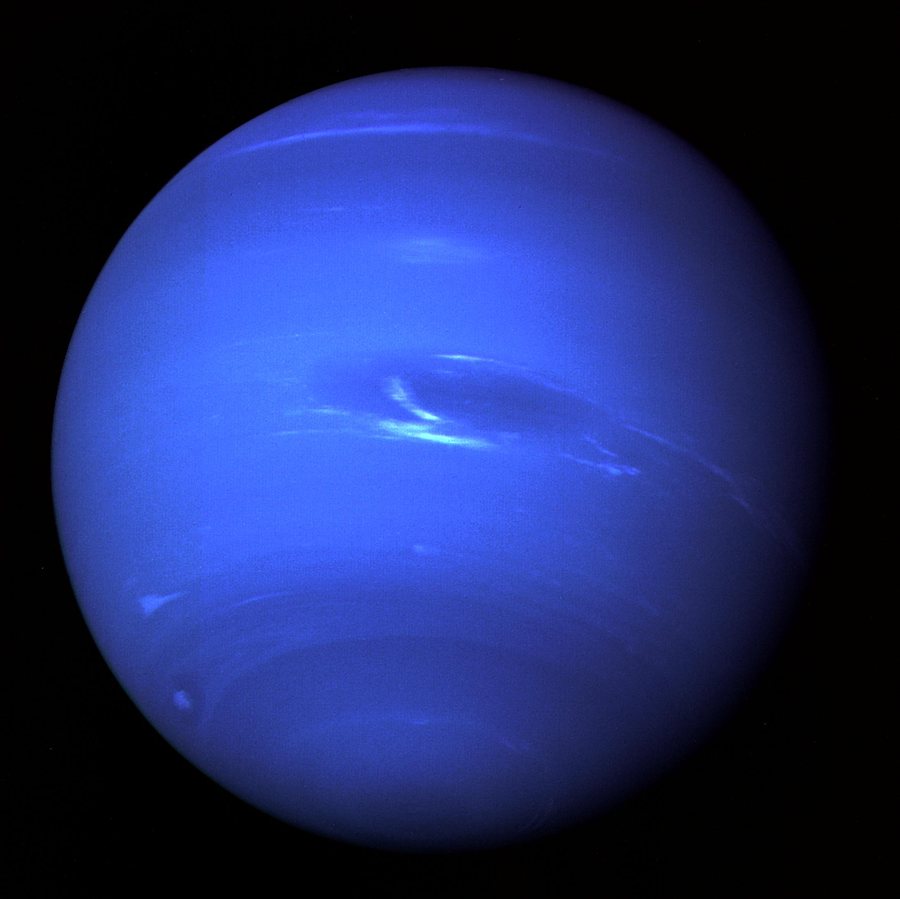
Neptune by NASA’s Voyager 2 in August 1989, from pictures taken through green and orange filters, with the Great Dark Spot. Credit: NASA/JPL.
And the rest
The dwarf planets, the moons, the asteroids and the comets are all in the 3D view and on the charts of the atlas. Distances are averages, in astronomical units: 1 au is the Earth’s distance from the Sun, about 150 million km. Figures are from NASA’s planetary fact sheets and JPL; the full list is on the sources page.