
Learn / Life
How it works
Cause and effect, with real numbers.
- First look
- How it works
- The physics, still to be written
- The frontier, still to be written
How it works
Cause and effect, with real numbers
Why water. Water dissolves the things a cell feeds on and lets the chemistry inside a cell go on. NASA’s list of what to look for on another world starts with it for that reason.
Why those six elements. Carbon atoms join to each other in chains and rings, and to the other five, in an endless variety of shapes. All six are made in stars and scattered through space when stars die. The lesson on where the elements come from tells that story.
Energy without the Sun. Plants take their energy from light. The microbes at a sea-floor vent take theirs from chemicals in the hot water instead, and the larger animals there live on the microbes. This matters a great deal for the search, because the oceans of moons such as Europa and Enceladus lie under kilometres of ice, where no sunlight reaches.
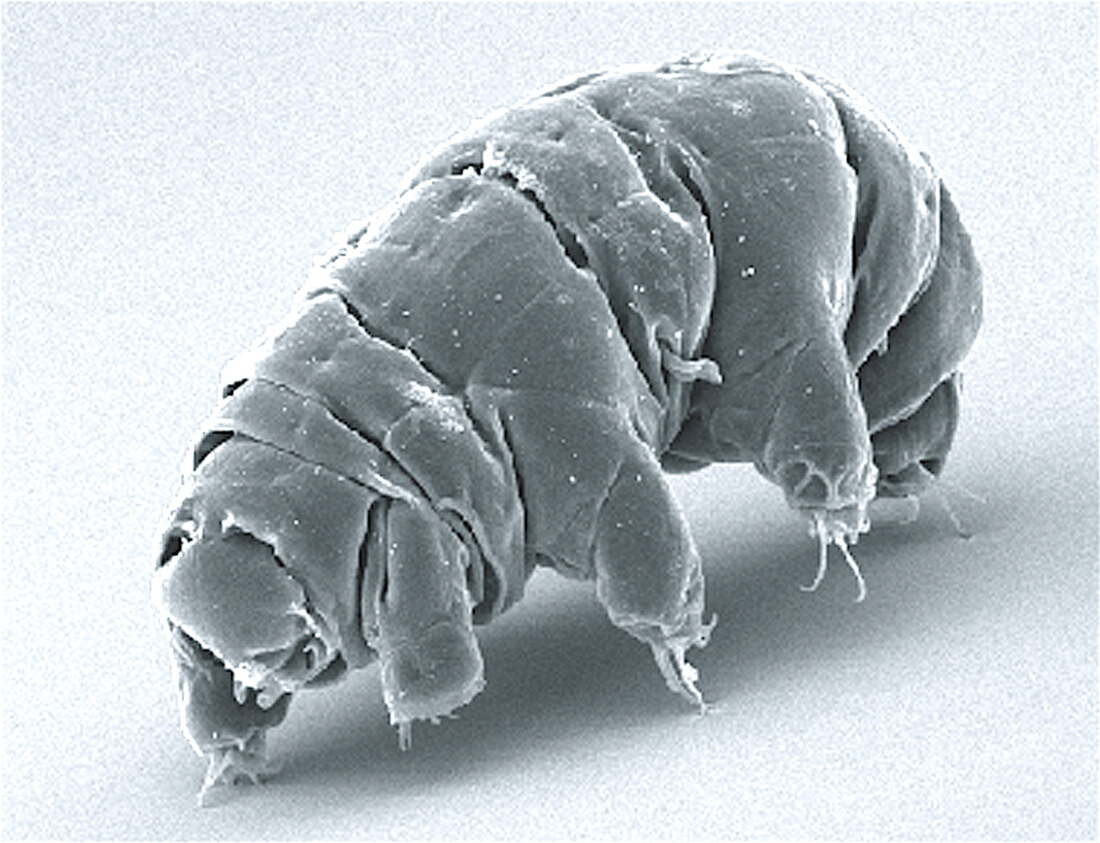
Lovers of extremes. Living things that need conditions which would kill most others are called extremophiles.
| Where | What lives there |
|---|---|
| Hot springs such as Yellowstone’s | Microbes that thrive above 80 °C, and others in strong acid |
| Sea-floor vents | Whole communities with no sunlight; one microbe grows at 122 °C |
| The dry valleys of Antarctica | Microbes, in a frozen desert |
| Open space, for 10 days | Water bears, which came home alive |
How hot is the vent water? NOAA gives “over 700 degrees Fahrenheit”, which is about 370 °C. Worked out here. It does not boil because of the pressure of the deep sea.
A caution. All of this is life as we know it, drawn from one example. Life elsewhere might use something else. But water, those elements and energy are things that can be searched for now, so that is where the search begins.
Where this comes from
- NASA, Europa: ingredients for life
- NOAA, What is a hydrothermal vent?
- US National Park Service, Life in extreme heat (Yellowstone)
- ESA, Tiny animals survive exposure to space
- Wikipedia, Methanopyrus (for Takai and others, 2008)
- NASA, Can we find life?
The words are written for this site. Sums in the text are worked from the figures in these sources.