
Learn / Planets
How it works
Cause and effect, with real numbers.
- First look
- How it works
- The physics, still to be written
- The frontier, still to be written
How it works
Cause and effect, with real numbers
The word planet comes from the Greek for wanderer, and for most of history it needed no definition. A planet was one of the lights that moved against the stars. The trouble began when telescopes started finding more and more things going round the Sun.
The three tests. The International Astronomical Union voted on them in Prague on 24 August 2006. To be a planet, a body in our Solar System has to do all three.
| The test | The Earth | Pluto | Ceres | A small asteroid |
|---|---|---|---|---|
| It goes round the Sun | Yes | Yes | Yes | Yes |
| Its own gravity has pulled it into a ball | Yes | Yes | Yes | No |
| It has cleared its path of other bodies | Yes | No | No | No |
| So it is | A planet | A dwarf planet | A dwarf planet | A small body |
A moon fails the first test, because it goes round a planet. That is why our Moon and the big moons of Jupiter and Saturn are not on the list, although several are bigger than Pluto.
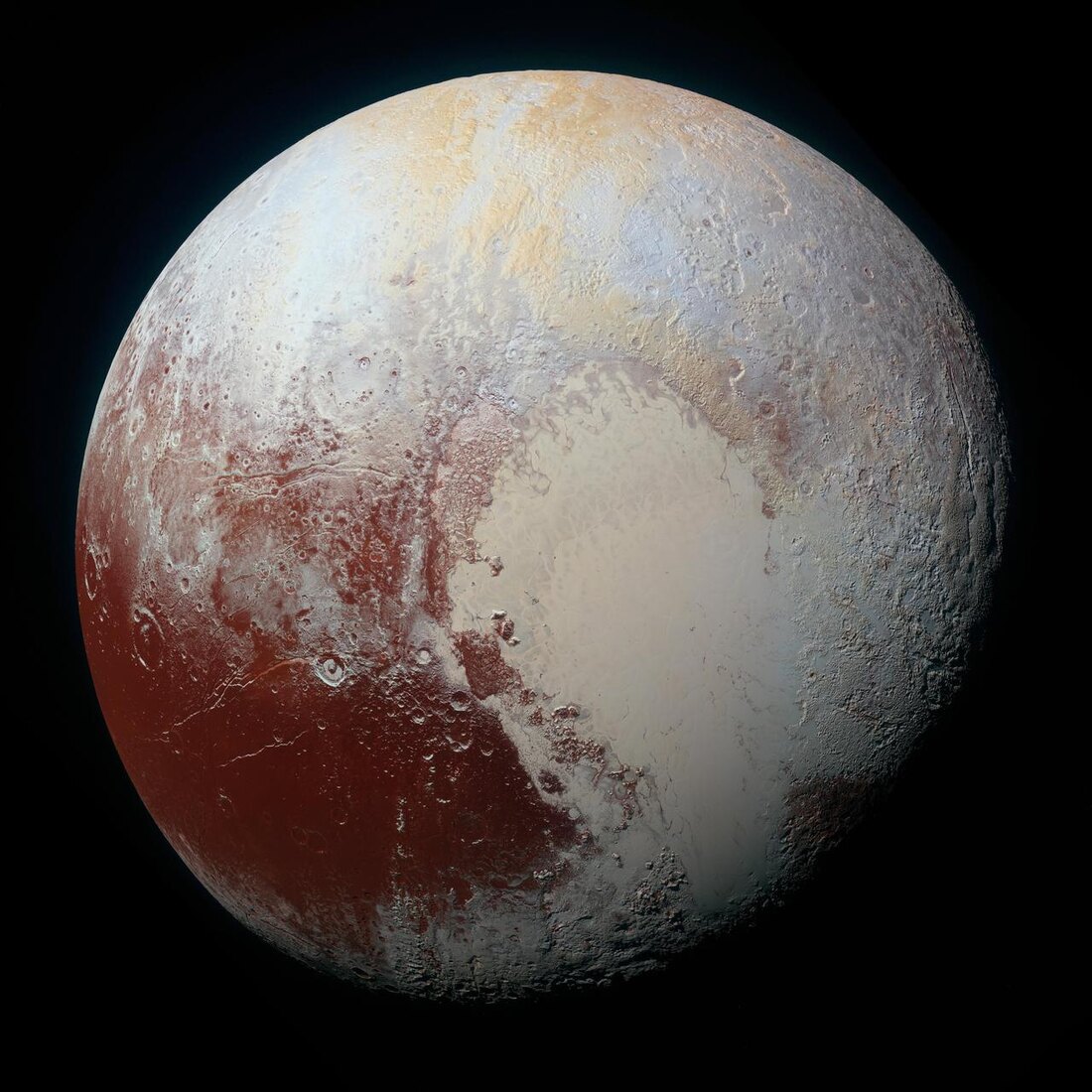
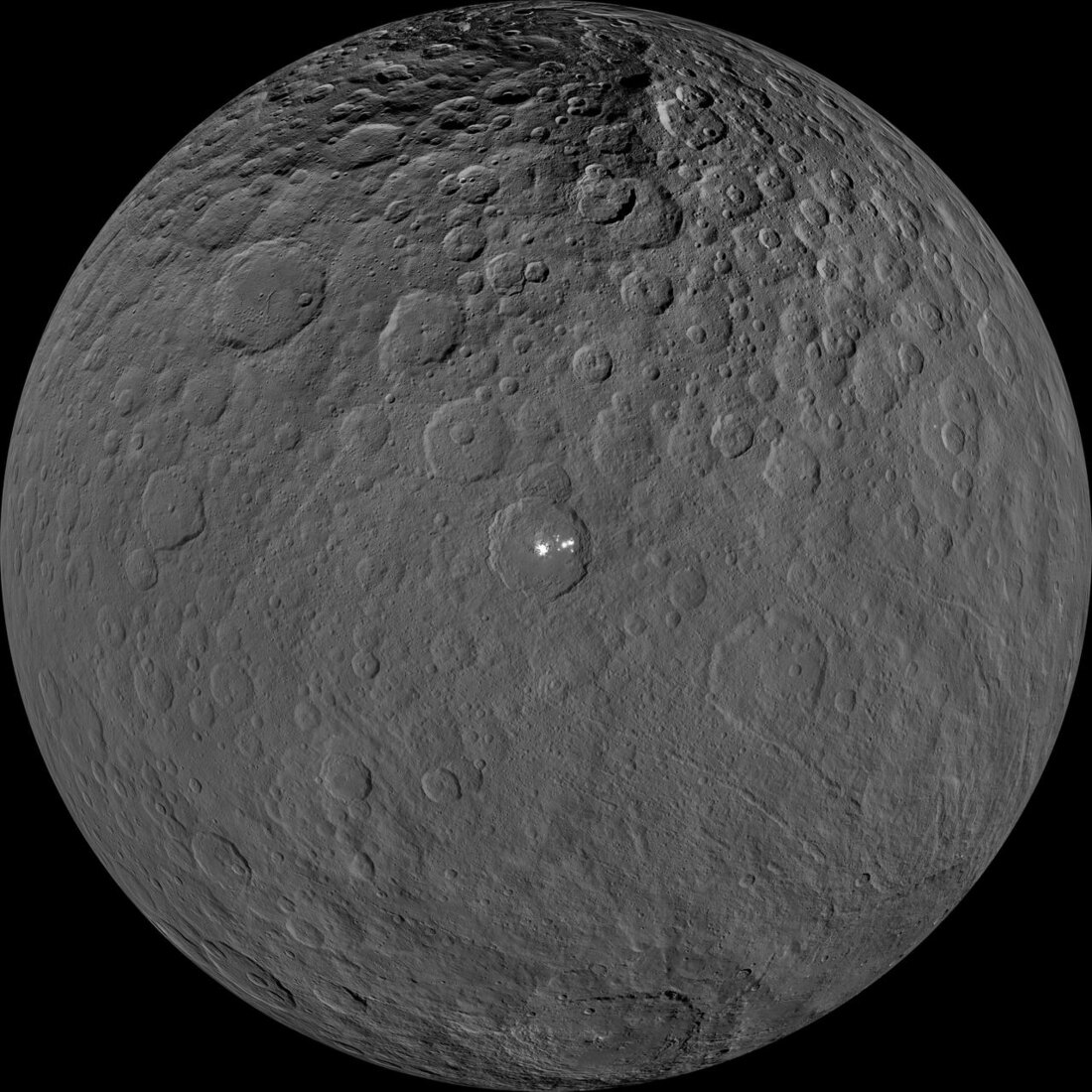
What “cleared its path” means. Each of the eight planets is by far the biggest thing anywhere near its own orbit. Over billions of years it has swept up the smaller bodies there, flung them away, or caught them as moons. Pluto has not. Its orbit runs from 30 to 49 times the Earth’s distance from the Sun, through a belt full of other icy bodies that it is much too small to shift. Ceres is in the same position in the asteroid belt, where it makes up about a quarter of all the mass.
The five dwarf planets. These are the ones the Union has named so far. It expects there to be many more, perhaps more than a hundred, still to be found or confirmed.
| Name | Where | Width | Found |
|---|---|---|---|
| Ceres | The asteroid belt, between Mars and Jupiter | About 950 km | 1801 |
| Pluto | Beyond Neptune | 2,377 km | 1930 |
| Haumea | Beyond Neptune | About 2,300 km at its longest, but shaped like an egg and only about 1,000 km through its shortest way | 2003 or 2004 (two teams claim it) |
| Makemake | Beyond Neptune | About 1,430 km | 2005 |
| Eris | Beyond Neptune, further out than Pluto | 2,326 km | 2005 |
For comparison, the Moon is 3,476 km wide and the Earth 12,742 km. The width of Ceres is twice the radius NASA gives, worked out here. The size of Eris was measured in 2010 by timing how long it hid a star, and Haumea’s in 2017 in the same way.
Eris. Eris was found on 5 January 2005 by Mike Brown, Chad Trujillo and David Rabinowitz, on pictures taken at Palomar Observatory in 2003. It is very nearly the size of Pluto, about 50 km narrower, and lies much further from the Sun. Its discovery is what forced the question.
The argument. The third test is the one people quarrel with. Some scientists who study planets would rather call anything a planet that is big enough to be round, which would bring in Pluto, Ceres and the large moons as well. The definition also speaks only of bodies that go round the Sun, so it says nothing about the thousands of planets now known round other stars. For now, the 2006 wording is the official one.
Where this comes from
- NASA, Dwarf planets
- NASA, Pluto facts
- NASA, Ceres facts
- ESO, Faraway Eris is Pluto’s twin (2011): the size of Eris
- Ortiz and others 2017, Nature 550, 219: the size, shape, density and ring of Haumea
- International Astronomical Union, result of the 2006 General Assembly votes
- NASA, The rich colour variations of Pluto (PIA19952)
- NASA, High resolution Ceres view (PIA21906)
The words are written for this site. Sums in the text are worked from the figures in these sources.