
Learn / Asteroids, comets and the far edge
How it works
Cause and effect, with real numbers.
- First look
- How it works
- The physics, still to be written
- The frontier, still to be written
How it works
Cause and effect, with real numbers
How often, and how bad. These are NASA’s rough figures. They are averages over a very long time, not a timetable.
| Size of the object | Arrives about once every | What it does |
|---|---|---|
| 10 metres | 10 years | A very bright fireball and a bang that can break windows |
| 50 metres | 1,000 years | Flattens the area round it |
| 140 metres | 20,000 years | Digs a crater 1 to 2 km wide |
| 1 kilometre | 700,000 years | Digs a crater about 10 km wide |
| 10 kilometres | 100 million years | Leaves a crater about 100 km wide and changes the whole world |
Four that we know about.
| When and where | What happened |
|---|---|
| About 66 million years ago, Mexico | The Chicxulub crater, about 180 km wide. Linked to the loss of more than 70 per cent of species |
| About 50,000 years ago, Arizona | Meteor Crater, 1.2 km wide and 180 m deep, from an object 30 to 50 m across |
| 1908, Tunguska, Siberia | An object less than 100 metres across probably burst in the air. Trees were knocked flat over hundreds of square miles |
| 15 February 2013, Chelyabinsk, Russia | A house-sized asteroid burst in the air with the force of about 440,000 tonnes of TNT. Hundreds were hurt, mostly by broken glass |
Why Chicxulub is hard to see. The crater is buried under later limestone, and its centre is just off the coast. What shows on the map in this lesson is a shallow curved trough only 3 to 5 metres deep and about 5 km wide, where the ground has sunk along the crater’s buried edge. Somebody walking across it would probably not notice. It was picked out by radar from the Space Shuttle Endeavour in February 2000.
The watch. A near-Earth object is an asteroid or comet whose path brings it within about 1.3 times the Earth’s distance from the Sun. On 11 November 2026 NASA’s database listed 43,238 of them. An asteroid is called potentially hazardous if it is at least 140 metres across and its path comes within 7.5 million km of the Earth’s, and 2,551 were on that list. The name is a label for the ones worth watching closely. It does not mean any of them is going to hit.
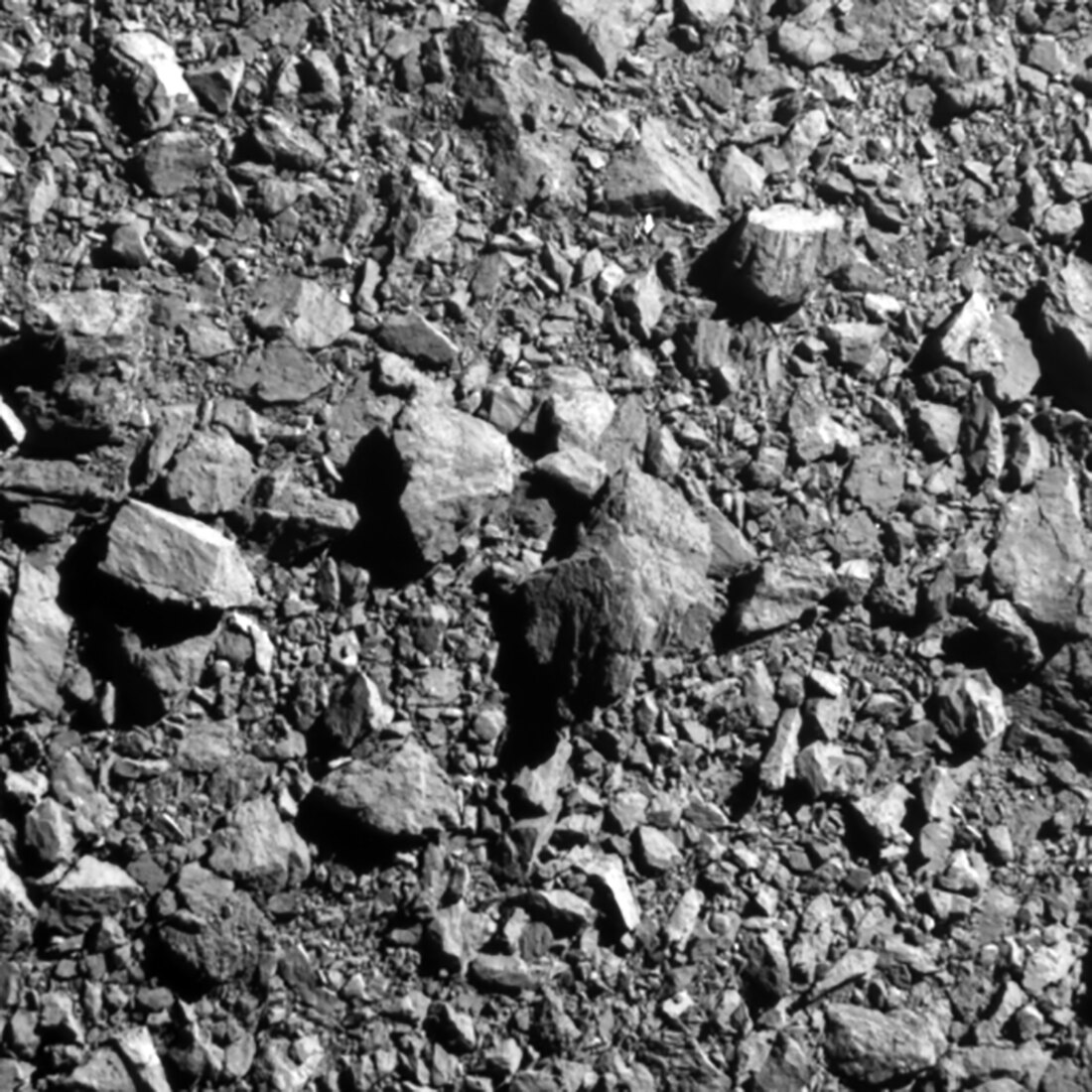
What DART did. DART weighed about half a tonne and hit at roughly 22,500 km an hour. NASA had said in advance that changing the orbit by 73 seconds would count as success. The change was 32 minutes, give or take 2, which is more than 25 times as much. A good part of the push came from the rubble that was blasted off the far side, which acted like the exhaust of a rocket.
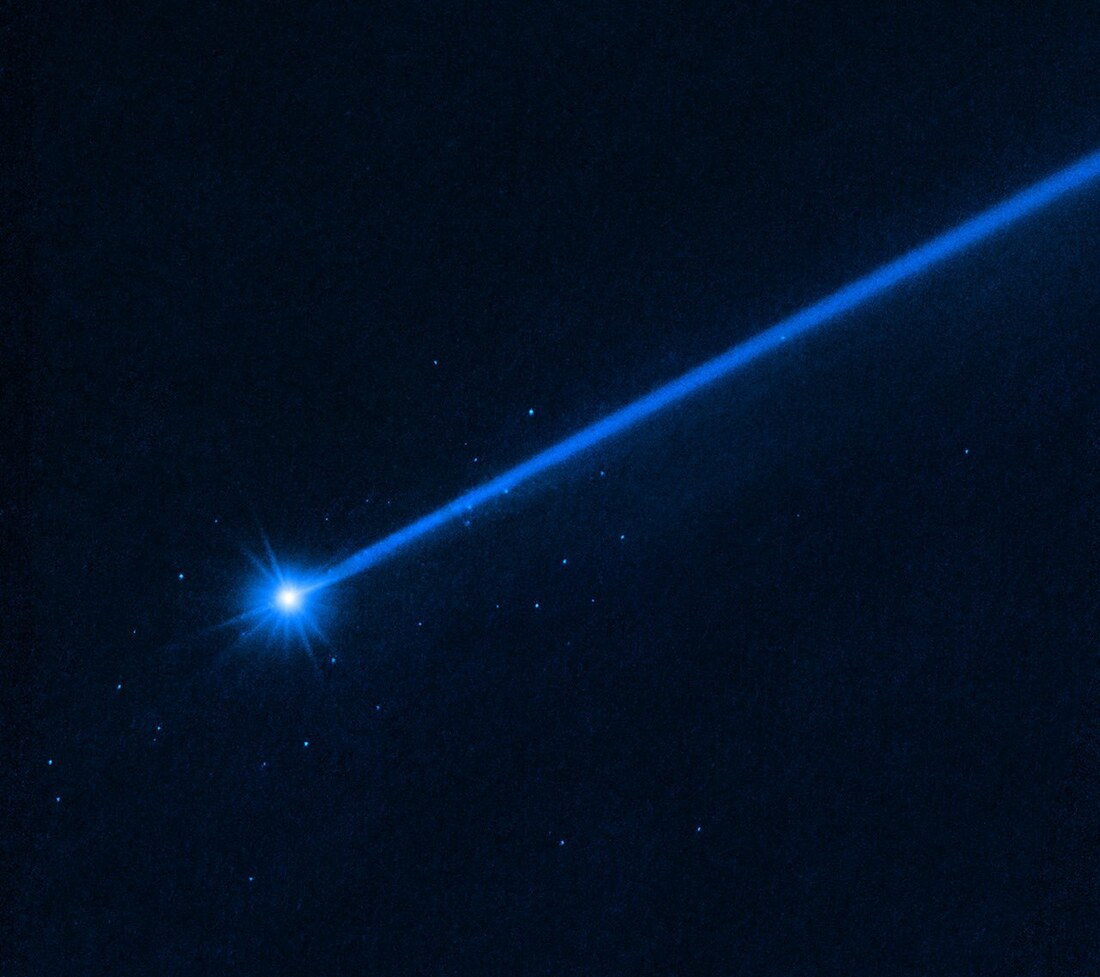
What comes next. The European Space Agency’s Hera spacecraft was launched on 7 October 2024 to go and look at the result. It is due to reach the two asteroids in late 2026, to measure the mass of Dimorphos and see what DART did to it.
A push like DART’s is small. It works only if the asteroid is found many years before it would arrive, so that a tiny change in its speed has time to grow into a miss. That is why the watching matters as much as the hitting.
Where this comes from
- NASA, Asteroid facts (past impacts, how often each size arrives, near-Earth objects)
- NASA, Shaded relief with height as colour, Yucatán Peninsula (PIA03379)
- NASA, DART’s final images prior to impact
- NASA, DART mission impact changed asteroid’s motion in space
- Renne and others 2013, Science 339, 684: the date of the Chicxulub impact, 66 million years ago
- NASA, Hubble sees boulders escaping from asteroid Dimorphos
- ESA, Hera
- NASA/JPL, Small-Body Database (counts on 11 November 2026)
The words are written for this site. Sums in the text are worked from the figures in these sources.