
Learn / Finding your way
How it works
Cause and effect, with real numbers.
- First look
- How it works
- The physics, still to be written
- The frontier, still to be written
How it works
Cause and effect, with real numbers
Four minutes a night. The Earth turns once against the stars in 23 hours and 56 minutes, four minutes less than the day on the clock. So each star rises four minutes earlier every night. That is two hours earlier each month, and after twelve months the stars are back where they started. A constellation that rises at midnight in October rises at ten in the evening in November and at eight in December.
What is up in the evening. These are for the northern half of the world, looking south an hour or two after dark. They are worked out from where each constellation lies compared with the Sun. The working was done for this lesson and is not a quoted list.
| Season | In the evening sky | Hidden behind the Sun |
|---|---|---|
| Winter | Orion, Taurus, Gemini | Scorpius, Sagittarius |
| Spring | Leo, Virgo | Pisces, Aquarius |
| Summer | Scorpius, Sagittarius, and the three bright stars of the Summer Triangle | Orion, Taurus, Gemini |
| Autumn | Pegasus, Andromeda, Pisces | Leo, Virgo |
The stars near the pole, such as the Plough and Cassiopeia, are not on this list. From Britain they never set, so they are there in every season.
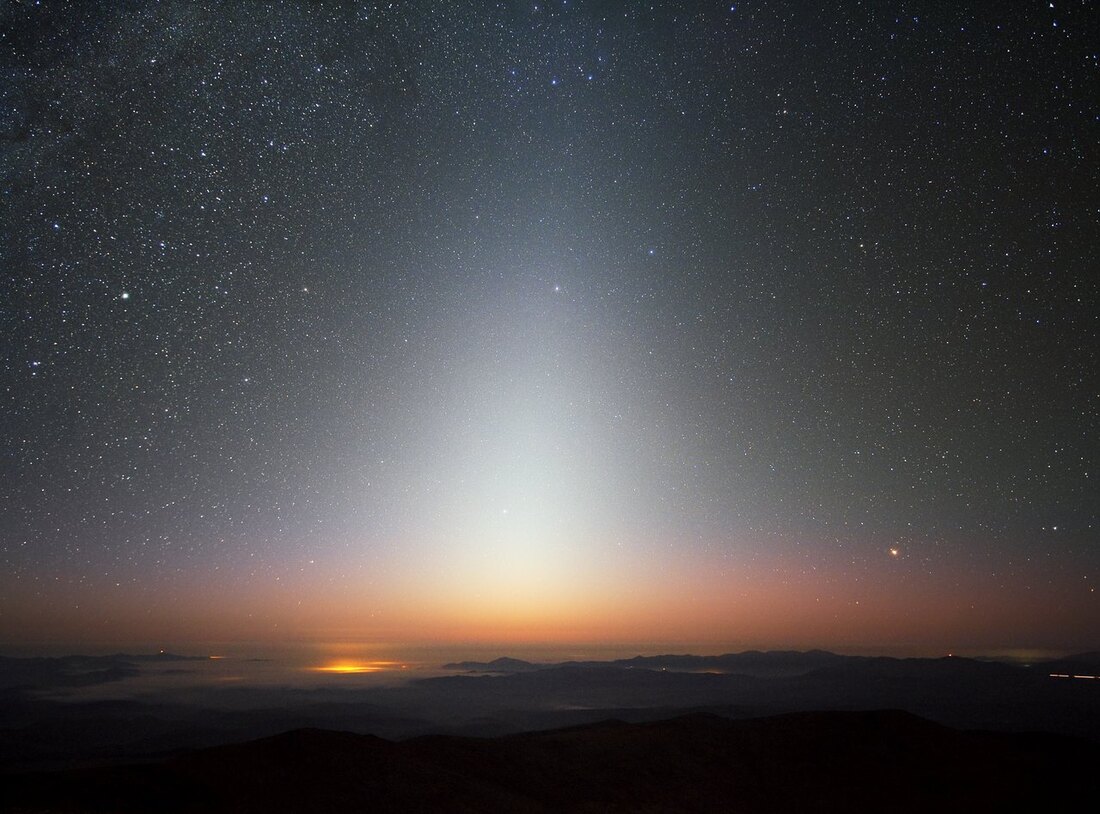
The ecliptic. The ecliptic is the plane of the Earth’s orbit, drawn on the sky. The planets all go round the Sun in nearly the same plane, so they never stray far from it. The Moon’s path is tilted to it by about 5 degrees and crosses it twice a month. An eclipse can happen only when the Moon is at one of those crossings, which is where the word ecliptic comes from.
The zodiac. The zodiac is the strip of sky along the ecliptic, about twelve constellations long. The Sun takes a year to go round it. To find which one the Sun is in, look for the last zodiac constellation to rise before dawn, or the first to set after dusk. The Sun is in the next one along.
The slow wobble. About 130 BC the Greek astronomer Hipparchus compared his own measurements with ones made more than a century before. The points where the Sun crosses the celestial equator had shifted by 2 degrees in 169 years. He had found what is now called the precession of the equinoxes.
The cause is the Earth’s shape. Its spin makes it bulge a little at the equator, and the pull of the Moon and the Sun on that bulge makes the axis swing slowly round, tracing a cone that leans about 23.5 degrees out from its middle line. One circuit takes about 26,000 years.
Two things follow. The first is that the pole star changes. For the ancient Egyptians the pole star was Thuban, in the Dragon. Polaris has the job now, and was at its closest to the pole in about 2017. The second is that the Sun’s place on a given date slides round the zodiac. At the March equinox it stood in Aries in ancient times. It moved into Pisces around the year 1, and it is now on its way into Aquarius. A horoscope still uses the ancient places.
Where this comes from
- NASA, From Stargazers to Starships: the path of the Sun, the ecliptic
- NASA, From Stargazers to Starships: precession
- NASA Space Place, Constellations and the night sky through the year
- ESO, Zodiacal light over La Silla
The words are written for this site. Sums in the text are worked from the figures in these sources.