
Learn / Moons
How it works
Cause and effect, with real numbers.
- First look
- How it works
- The physics, still to be written
- The frontier, still to be written
How it works
Cause and effect, with real numbers
| The Moon | Compared with the Earth | |
|---|---|---|
| Width | 3,476 km | A little over a quarter |
| Mass | About one eighty-first | |
| Pull of gravity at the surface | 1.62 metres per second, each second | One sixth |
| Distance from the Earth | 384,400 km on average | About 30 Earths side by side |
| Nearest and furthest | 363,300 km and 405,500 km | |
| One orbit, measured against the stars | 27.3 days | |
| From one full Moon to the next | 29.5 days | |
| In sunlight, and in the dark | About 127 °C, and about −173 °C |
The width is twice the radius NASA gives, and the fraction for the mass is one divided by NASA’s 0.0123. Both were worked out here.
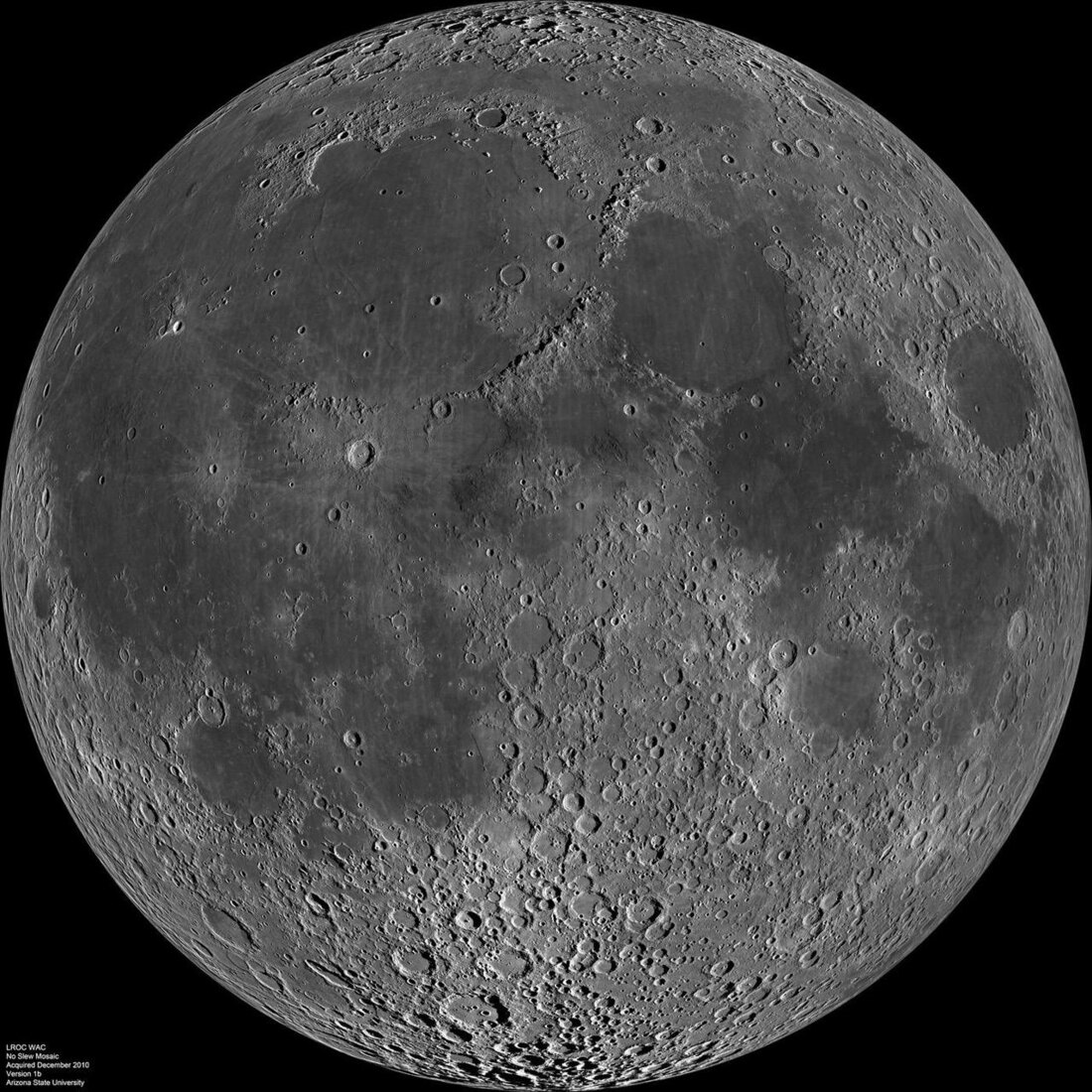
Seas and highlands. The seas are great hollows blasted out by impacts and later flooded with lava, which set into dark, smooth rock. That happened between about 4.2 and 1.2 billion years ago. The bright highlands are older. They are the Moon’s first crust, which set from an ocean of molten rock that once covered the whole Moon, about 4.4 billion years ago. The highlands have been collecting craters ever since, which is why they are so battered.
The collision. The body that hit the Earth has been given a name, Theia. The best evidence for it came back with the Apollo crews, who brought home 382 kilograms of rock and soil. The Moon’s rocks turned out to be very like the Earth’s, and one fine detail of their oxygen matches too closely to be chance. The Moon also has only a small iron core. Both make sense if the Moon was built from the outer, rocky layers of the Earth and of the body that struck it. Rocks from the Moon show that it formed about 60 million years after the Solar System began.
Why one face. The Earth’s gravity pulls a little harder on the near side of the Moon than on the far side. Long ago that pull slowed the Moon’s spin until one turn matched one orbit, and it has stayed that way. Many moons of other planets have ended up the same.
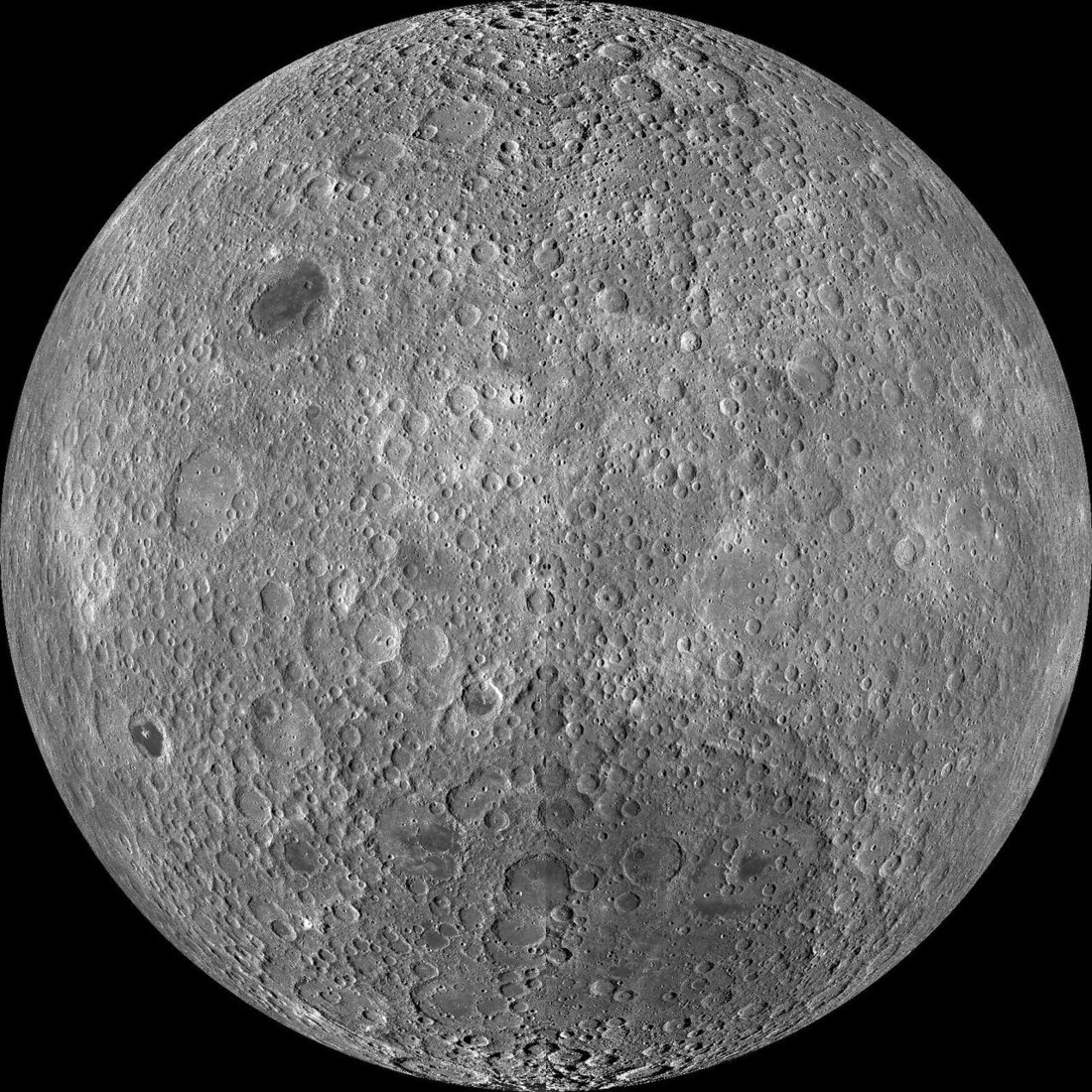
Two different faces. The crust is thicker on the far side than on the near side, and the near side has had far more volcanoes. That is why the seas are nearly all on the side that faces us. Why the two halves came to differ is still being worked out.
Slowly leaving. The Moon raises the tides in our seas, and the tides push back. The effect is to move the Moon away from us by 3.8 centimetres a year.
People on the Moon. Six Apollo missions landed, and two people from each walked on the surface. The first were Neil Armstrong and Buzz Aldrin, on 20 July 1969. The last left in December 1972.
Water. The Moon is very dry, but not completely. There is ice in craters near the poles whose floors never see the Sun.
Where this comes from
- NASA, Moon facts
- NASA, How the Moon formed
- NASA, Moon fact sheet
- NASA, Moonwalkers
- NASA Photojournal, Nearside spectacular (PIA14011)
- NASA Photojournal, Farside! And all the way around (PIA14021)
The words are written for this site. Sums in the text are worked from the figures in these sources.