
Learn / Planets round other stars
How it works
Cause and effect, with real numbers.
- First look
- How it works
- The physics, still to be written
- The frontier, still to be written
How it works
Cause and effect, with real numbers
Where the edges come from. Nobody has measured a habitable zone. The edges are worked out with a model of a planet’s air. At the inner edge, so much water evaporates that it climbs to the top of the air, where sunlight breaks it up and the hydrogen leaks away to space. Over time the planet loses its seas. At the outer edge, even the thickest blanket of carbon dioxide can no longer keep the ground above freezing. The estimate used in this lesson was published in 2013 and puts those two edges at 0.99 and 1.70 times the Earth’s distance for the Sun.
| Distance from the Sun (Earth = 1) | In the zone? | Average at the ground | |
|---|---|---|---|
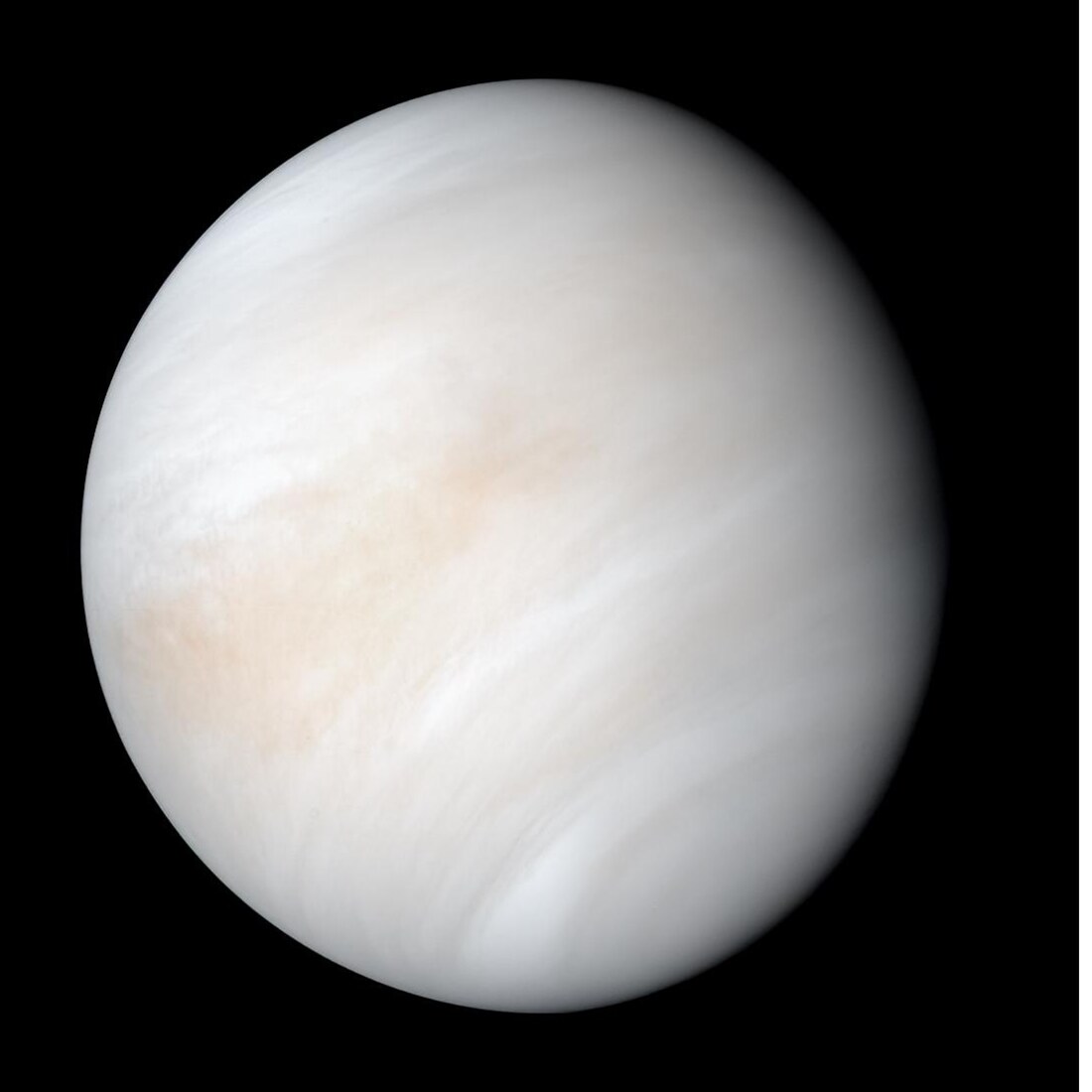
| Venus | 0.72 | No, too close | About 464 °C |
| Earth | 1 | Yes, only just | About 15 °C |
| Mars | 1.52 | Yes | About −65 °C |
Why the Earth looks so near the edge. The model has no clouds in it. Clouds reflect sunlight, so a real planet can probably sit a little closer to its star than the model says. Other estimates put the edges in slightly different places. The zone is best treated as a rough band, not a sharp line.
What the zone leaves out.
- How big the planet is. A small planet has weak gravity and loses its air. Mars is the example.
- What the air is made of. Too much carbon dioxide and a planet overheats inside the zone. Too little and it freezes.
- Heat from inside. Moons such as Enceladus and Europa are squeezed by the pull of their giant planets, and that keeps seas liquid under the ice, far outside the zone. See Ocean moons.
- The star itself. Small red stars flare, and planets in their zones are so close that one side may always face the star. See TRAPPIST-1.
- Time. Stars brighten as they age, so the zone creeps outwards.
So what is it for? It tells astronomers where to point their telescopes first. Among thousands of known planets, the ones in the zone and about the size of the Earth are the ones whose air is most worth trying to read.
Where this comes from
- Kopparapu and others 2013, Habitable zones around main-sequence stars: new estimates
- NASA, Venus facts
- NASA, Mars facts
- NASA, Enceladus
- NASA Photojournal, Venus from Mariner 10 (PIA23791)
The words are written for this site. Sums in the text are worked from the figures in these sources.