
Learn / Finding your way
How it works
Cause and effect, with real numbers.
- First look
- How it works
- The physics, still to be written
- The frontier, still to be written
How it works
Cause and effect, with real numbers
Before you go out.
| What to do | Why |
|---|---|
| Pick a night near new Moon | A full Moon in a dark sky is about as bright as a street lamp, and washes out the faint things. |
| Get away from lights | Even moving into the shadow of a building helps. A few miles out of town helps much more. |
| Wait 15 to 30 minutes | Your eyes go on gaining sensitivity for about half an hour. |
| Keep your phone dark, or red | Bright light undoes the wait. Many phones have a red screen setting. |
| Dress for standing still | You will be colder than you expect. |
| Know what is up | Use a star map, a planisphere, or the sky map here. |
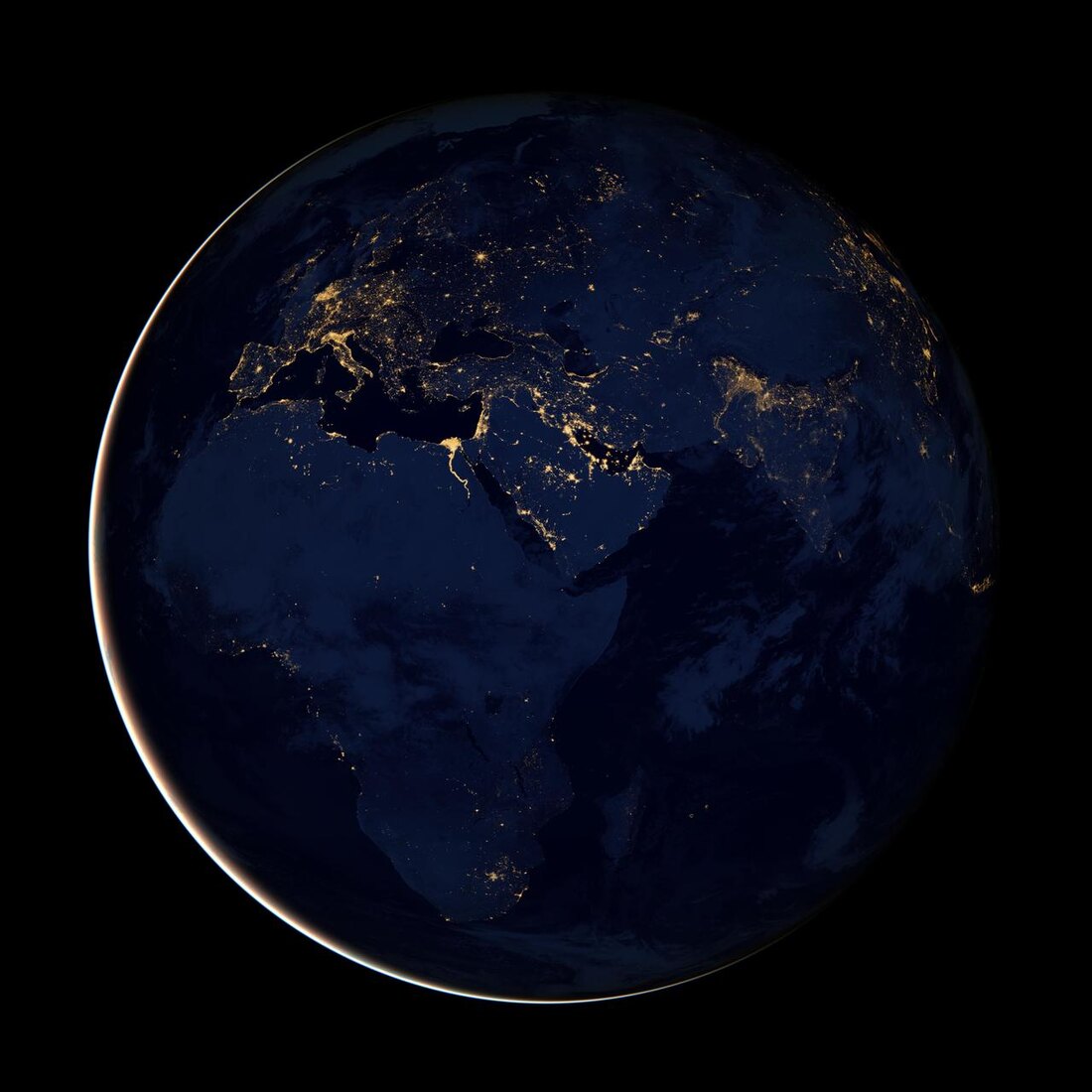
How dark is dark. Astronomers rate a sky on a scale of nine steps, named after John Bortle. Class 1 is as dark as the Earth gets. Class 9 is the middle of a great city, where only the Moon, the planets and a few of the brightest stars get through. Most people find class 3 or 4 dark enough for a very good night.
Why your eyes need time. The eye has two kinds of light-catching cell. The ones that work in daylight see colour and fine detail. The ones that work in the dark are far more sensitive but see no colour, which is why the Milky Way looks grey. Those night cells are nearly blind to deep red light, so a red torch lets you read a map without spoiling what they have gained.
There is a trick that goes with this. The night cells are thickest away from the centre of your gaze. To see something very faint, look a little to one side of it. Astronomers call it averted vision.
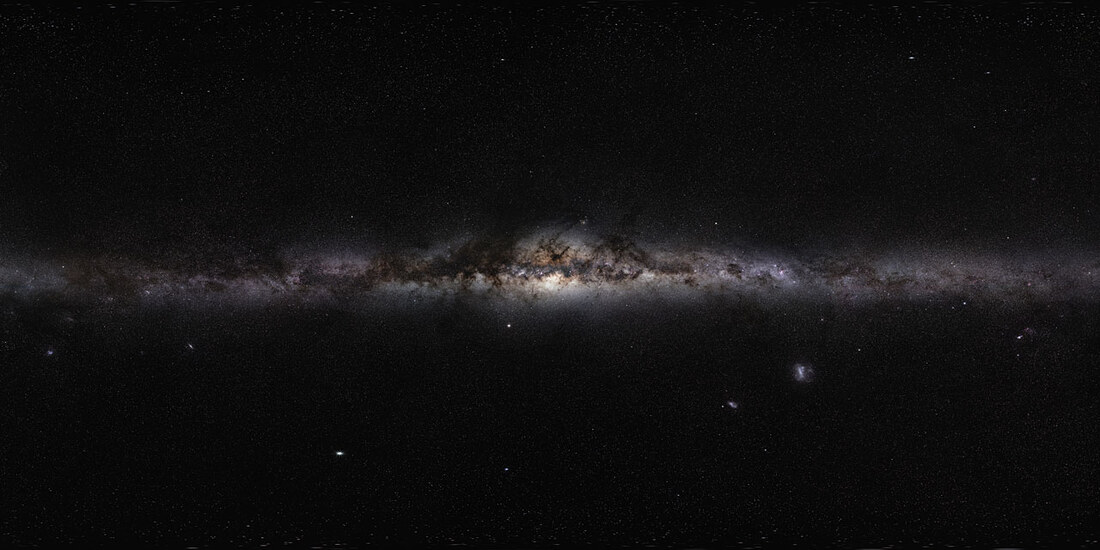
What you can see with no equipment.
| What | How to know it |
|---|---|
| The Moon | Its dark patches are plains of old lava. |
| Venus | The brightest thing in the night sky after the Moon. |
| Mars, Jupiter and Saturn | Bright and steady. Planets twinkle less than stars because each is a tiny disc and not a point. |
| The Plough and Cassiopeia | In the north, and from Britain they never set. |
| Sirius | The brightest star in the night sky, 8.5 light years away. |
| The Pleiades | A cluster of more than a thousand stars, of which the eye shows six or seven. |
| The Milky Way | A faint grey band, from a dark place. |
| The Andromeda Galaxy | A faint smudge, 2.5 million light years away, from a dark place. |
| The International Space Station | A bright, steady light crossing the sky in a few minutes. It is about 400 km up. |
| Meteors | The Perseids in August and the Geminids in December can each bring a hundred or more an hour at their best. |
Never look at the Sun, with your eyes or through anything else.
Binoculars. A telescope shows a tiny piece of sky, and learning to aim one takes practice. Binoculars show a wide piece, the right way up, and need no setting up. They will show you star clusters, double stars and the clouds of stars along the Milky Way.
Where this comes from
- NASA Night Sky Network, Stargazing for beginners
- Royal Museums Greenwich, Astronomy without a telescope
- Sky & Telescope, Why we can see in the dark
- ESO, The Milky Way panorama
- NASA, Black Marble: Africa, Europe and the Middle East at night
The words are written for this site. Sums in the text are worked from the figures in these sources.