
Learn / How we found out
Finding the size of everything
How it works
Cause and effect, with real numbers.
- First look
- How it works
- The physics, still to be written
- The frontier, still to be written
How it works
Cause and effect, with real numbers
The Moon. The average distance of the Moon is 384,399 km, which is 60.3 times the radius of the Earth. Hipparchus’s range of 62 to 73 was a remarkable result for a man with no telescope and no clock. Today the distance is measured by timing flashes of laser light bounced off mirrors that the Apollo crews and Soviet rovers left on the surface. It is known to within a few tenths of a metre, and the Moon is found to be moving away by 3.8 cm a year.
Why Venus? Edmond Halley proposed the method in 1691 and worked it out fully in 1716. Seen from two places far apart on the Earth, Venus crosses the Sun along slightly different lines and takes a slightly different time over it. From that difference and the distance between the two places, the distance of the Sun follows. Halley knew he would not live to see it tried. Venus crosses the Sun twice, eight years apart, and then not again for more than a century.
The expeditions. In 1761 observers went to Siberia, Newfoundland, Madagascar and the Cape of Good Hope. In 1769 Cook watched from Tahiti, at a place still called Point Venus. A French party travelled to Baja California in Mexico, and of its 28 members only 9 came home alive. Joseph Lalande combined the results in 1771 to get 153 million km, give or take a million. The true average distance is 149.6 million km. The timings were spoiled a little by an effect that makes the black edge of Venus seem to cling to the edge of the Sun.
The shift of a star. Bessel chose a star called 61 Cygni. It was known to drift across the sky faster than almost any other, which suggested it was close. The shift he measured was 0.31 of a second of arc. That is the width of a penny seen from 13 km away. Worked out here. Modern measurements from space put the star 11.4 light years away, so Bessel was within a tenth. Two other astronomers measured the shifts of the stars Vega and Alpha Centauri in the same year.
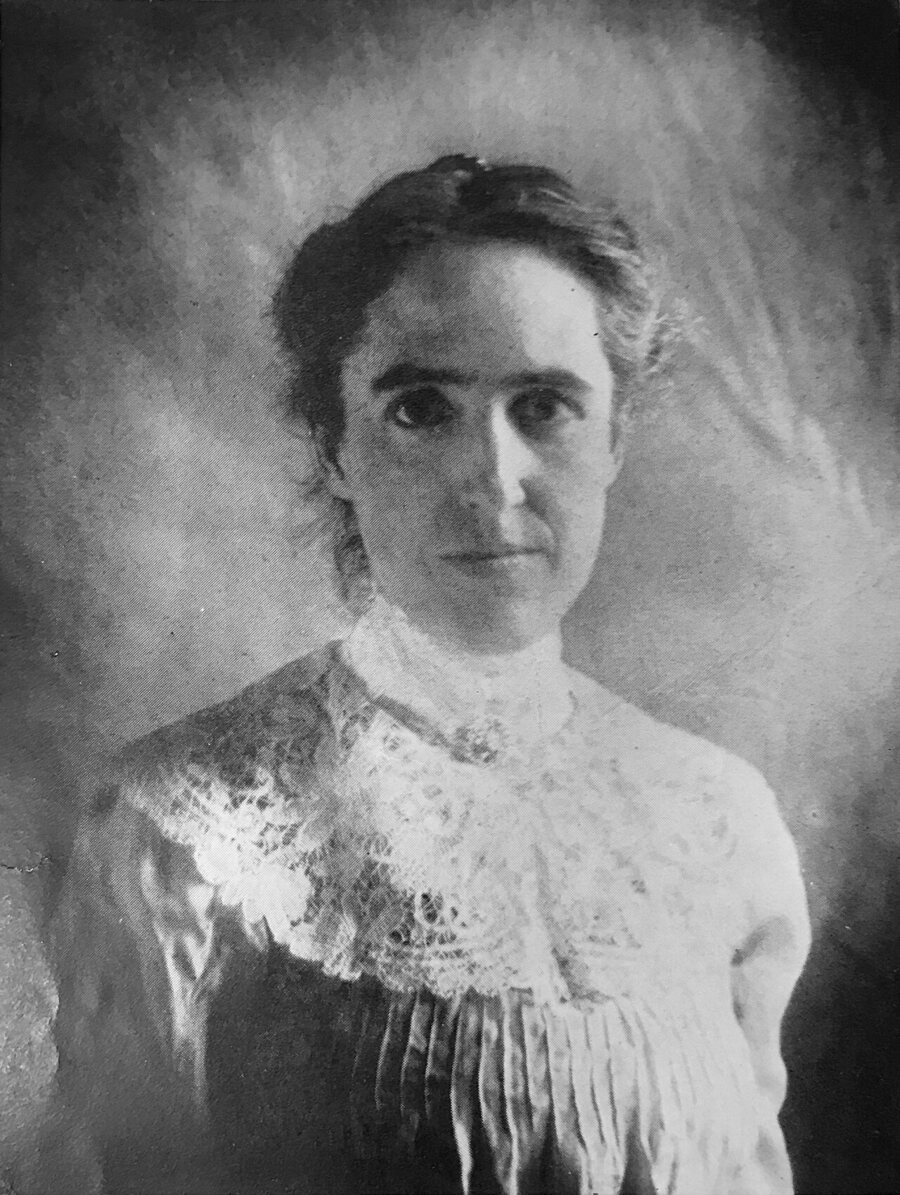
Leavitt’s law. Henrietta Leavitt was born in 1868 and joined the Harvard College Observatory as a volunteer. From 1902 she was paid to measure the brightness of stars on glass photographs. She was not allowed to use the telescopes, and she was losing her hearing. In 1908 she listed 1,777 stars that vary in the two Magellanic Clouds, and noted that the brighter ones took longer over each beat. In 1912 she proved it with 25 of them in the Small Cloud. Because all the stars in the Cloud are at nearly the same distance from the Earth, the ones that looked brighter really were brighter. The paper was signed by the director of the observatory, with a line saying that Miss Leavitt had prepared it. She died in 1921. Three years later a Swedish mathematician tried to put her name forward for a Nobel Prize, not knowing she was dead.
The argument of 1920. On 26 April 1920 two astronomers put the two sides in Washington. Harlow Shapley held that the Milky Way was vast, about 300,000 light years across, and was everything there is. Heber Curtis held that it was ten times smaller and that the spirals were other “island universes”. Each was partly right. Curtis was right about the spirals. Shapley was right that the Sun is far from the middle of the Milky Way, whose true size lies between their two figures.
Hubble’s star. Hubble used the telescope on Mount Wilson in California, whose mirror was 100 inches, or 2.5 metres, across, then the largest in the world. His result was reported in the New York Times on 23 November 1924 and read to a meeting of astronomers on 1 January 1925. His distances were too small, some by as much as seven times, mainly because there turned out to be two kinds of beating star with different rules. The correction made the universe bigger again.
Where this comes from
- Wikipedia, Lunar distance
- Wikipedia, Transit of Venus
- NASA image library, SDO view of the 2012 transit of Venus
- Wikipedia, 61 Cygni
- Wikipedia, Henrietta Swan Leavitt
- Wikipedia, Great Debate (astronomy)
- Wikipedia, Edwin Hubble
The words are written for this site. Sums in the text are worked from the figures in these sources.