
The people who changed the picture
Four astronomers of the 20th century, Henrietta Leavitt, Cecilia Payne, Jocelyn Bell and Vera Rubin, each saw something nobody expected, often with little credit at the time.
First look
The idea, in plain words
Most of what is known about the sky was not found in one flash by one genius. It was found by people sitting with photographs, charts and numbers for months, noticing something small that did not fit. Here are four of them. All four worked in the 20th century, and each one changed how the whole universe is pictured.
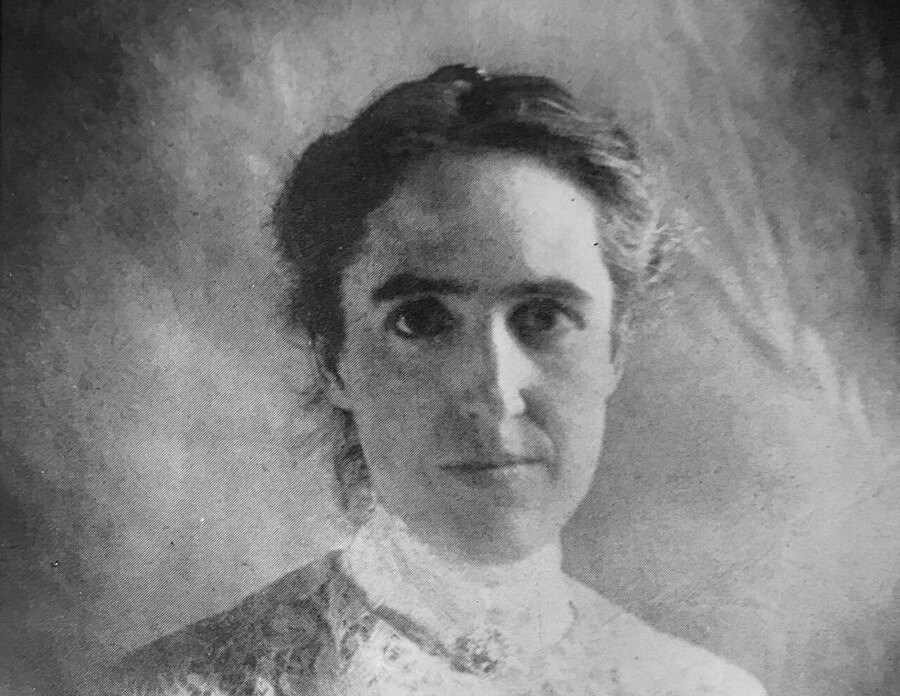
Henrietta Leavitt: how far away things are. Working life: the 1890s to 1921.
Leavitt worked at Harvard College Observatory as one of its “computers”: women paid by the hour, 30 cents an hour in her case, to measure stars on glass photographs. She was given photographs of the Magellanic Clouds, two small star clouds seen from the southern half of the world, and found 1,777 stars in them that brighten and fade over and over.
Then she noticed something. In the Small Cloud, the stars that took longer to brighten and fade were the brighter ones. All those stars are at about the same distance from us, so the difference had to be real. A star’s beat gives away how bright it truly is. Compare that with how bright it looks, and you know how far away it is. Her rule, published in 1912, became the first way to measure the distance to other galaxies. Leavitt died in 1921, before anyone used it to show that there are other galaxies at all.
Cecilia Payne: what the stars are made of. Working life: the 1920s to the 1960s.
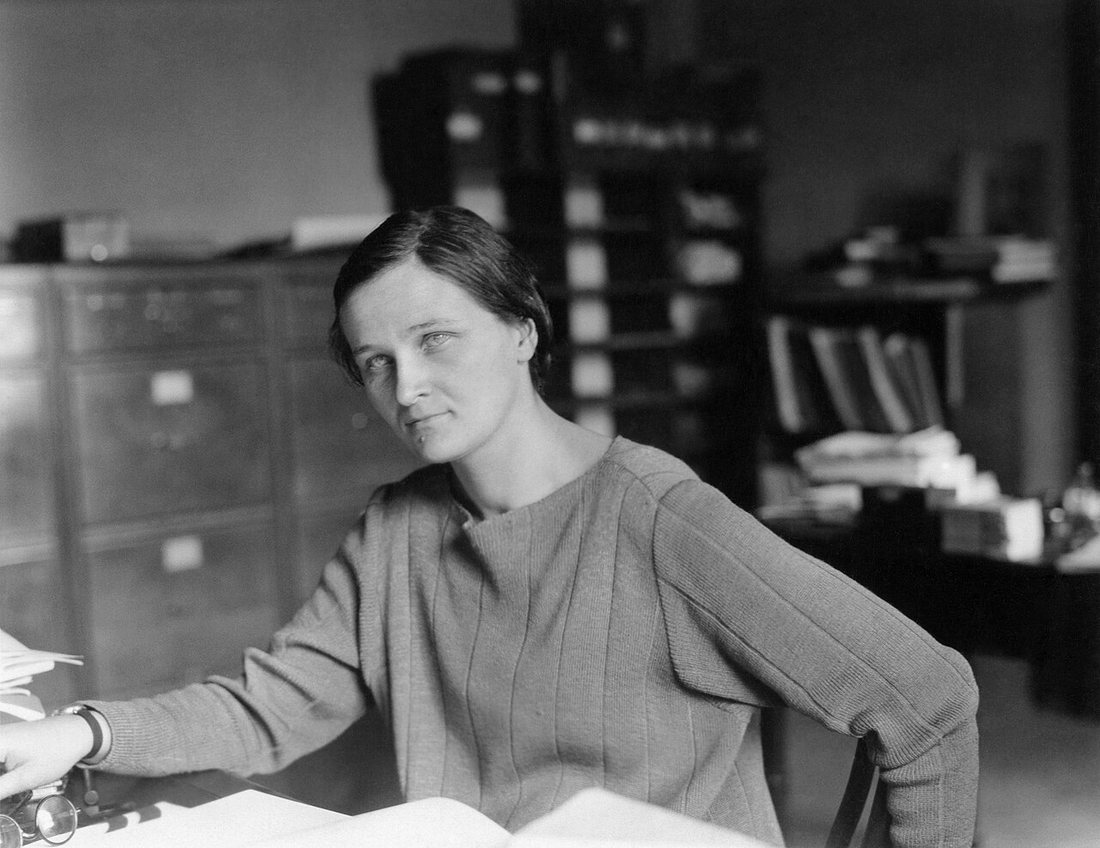
Payne grew up in England and studied at Cambridge, which did not then give degrees to women. She moved to Harvard in 1923. In 1925, aged 25, she worked out what the dark lines in starlight really mean. Everyone had assumed that the stars were made of much the same things as the Earth. Her answer was that they are almost all hydrogen and helium, the two lightest elements, with everything else a small trace.
It was so unexpected that a senior astronomer persuaded her to write that the result was almost certainly not real. Four years later he reached the same answer himself. She was right, and it is true of the Sun and of nearly every star.
Jocelyn Bell: stars that tick. Working life: the 1960s to now.
In 1967 Jocelyn Bell was a student at Cambridge. She had helped to build a radio telescope, a field of wires and poles, and her job was to read the long rolls of paper chart it drew, sometimes as much as 29 metres of it in a night. In among the noise she spotted a small mark she called “a bit of scruff”. It came back. Looked at closely, it was a run of pulses, one every 1.34 seconds, as steady as a clock.
For a while the team half joked that it might be a signal from someone else, and named it LGM-1, for “little green men”. Then she found a second one in a different part of the sky. They were pulsars: dead stars no bigger than a city, spinning and sweeping a beam past the Earth with every turn. In 1974 the Nobel prize for physics went to her supervisor, Antony Hewish, for the discovery, shared with Martin Ryle for other work. Her name was not on it.
Vera Rubin: the matter nobody can see. Working life: the 1950s to the 2010s.
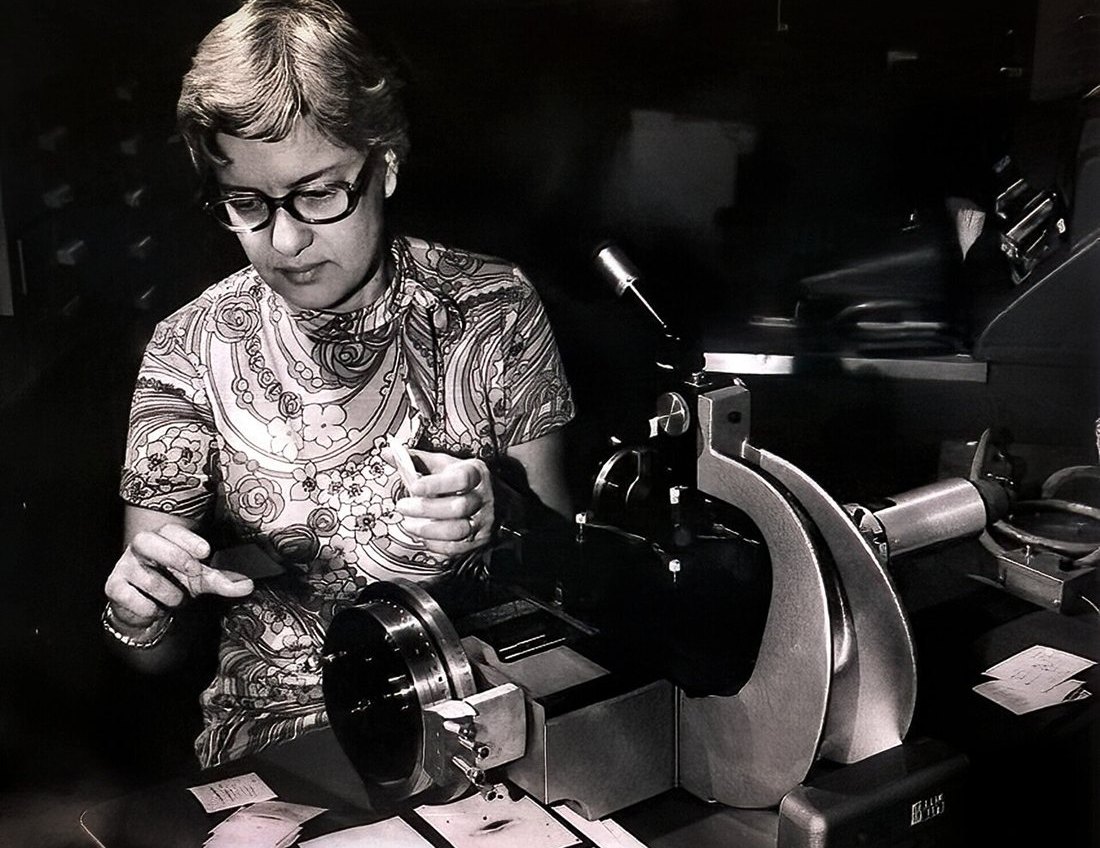
Rubin wanted to study astronomy at Princeton, which would not take women on its astronomy course. She studied elsewhere, and in the 1970s, with Kent Ford, she measured how fast stars and gas go round spiral galaxies. The outer parts should have gone round slowly, the way the outer planets go slowly round the Sun. They did not. They went round as fast as the inner parts. Something unseen, with far more mass than all the stars, must be holding them in. That is the best evidence for what is now called dark matter. A great telescope in Chile, the Vera C. Rubin Observatory, is named after her.
What they have in common. Each of them looked hard at ordinary data, believed what it said when it said something odd, and was proved right. Each of them also worked at a time when a woman’s name was easy to leave off the credit.
Not the whole list. These four are a small part of a long story. Earlier people who changed the picture appear elsewhere on this site: Copernicus and Galileo in From a still Earth to a moving one, Kepler in Kepler’s laws, Newton in What gravity is, and William Herschel, who found light beyond the red end of the rainbow in 1800, in The whole spectrum.
How it works
Cause and effect, with real numbers
Leavitt’s law, 1912. Leavitt had already listed 1,777 stars that change in brightness in the two Magellanic Clouds, in a paper of 1908. For 25 of those in the Small Cloud she worked out the period, the time each takes to brighten, fade and brighten again. The shortest took just over a day and the longest 127 days. When she set each star’s brightness against its period, the points fell along a line.
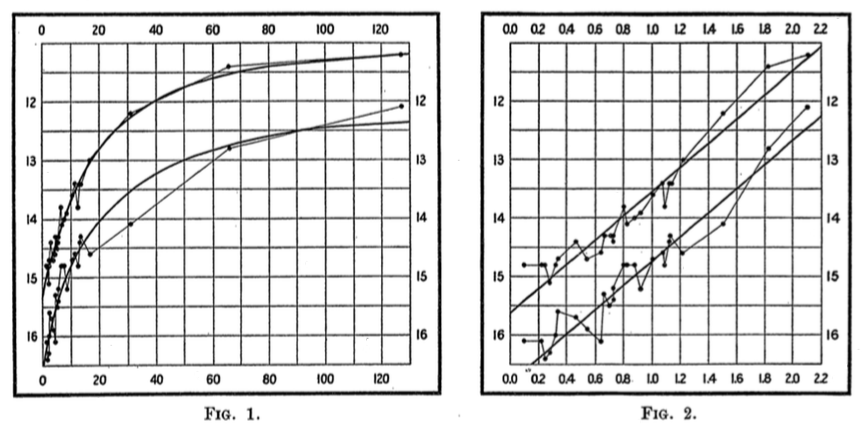
Why it works: all the stars in the Small Cloud are at about the same distance, so if one looks brighter than another, it really is brighter. The rule therefore says how bright a star of each period truly is. Light spreads out as it travels, so a star twice as far away looks four times fainter, and ten times as far away looks a hundred times fainter. Knowing how bright a star truly is and measuring how bright it looks gives its distance.
One step was missing: how far away the Small Cloud itself is, which sets the scale. In 1913 Ejnar Hertzsprung used nearby stars of the same kind to fix it roughly. In 1923 Edwin Hubble found one of these stars in the Andromeda “nebula”, with a period of 31.4 days, and showed it was far outside the Milky Way. Andromeda was a galaxy of its own. The paper of 1912 was signed by the observatory’s director, Edward Pickering, with a line saying that Miss Leavitt had prepared it.
Payne’s hydrogen, 1925. The dark lines in starlight had been sorted into classes, O, B, A, F, G, K and M, by Annie Jump Cannon and others at Harvard. Most astronomers read a strong line as meaning a lot of that element. Payne used a new idea from the Indian physicist Meghnad Saha, published in 1920: how hot a gas is decides how many of its atoms are in a state to make a given line. A cool star can show strong iron lines with little iron. A hot star can hide its hydrogen.
Allowing for the temperature of each class, the lines told a single story. The stars are made of the same mixture, and almost all of it is hydrogen and helium. Henry Norris Russell, the most senior astronomer in America, persuaded her to write that the amount of hydrogen she had found was “almost certainly not real”. In 1929 he reached the same result by another route. Measured today, the Sun’s surface is by weight about 74 per cent hydrogen, 25 per cent helium and a little over 1 per cent everything else.
Payne’s thesis was the first doctorate in astronomy from Radcliffe College, for work done at Harvard. In 1956 she became the first woman to be made a full professor at Harvard, and the first to head one of its departments.
Bell’s pulsar, 1967. The telescope Bell helped to build was made to watch distant radio sources twinkle as the solar wind crossed in front of them, which needed a fast recorder. That speed is what let it catch something flashing on and off. The first source she found, now called PSR B1919+21, pulses every 1.3373 seconds.
Nothing as big as an ordinary star could flash that fast: light takes 1.3 seconds to cross only 400,000 km, less than a third of the width of the Sun. The source had to be small. The team’s paper in February 1968 suggested a white dwarf or a neutron star. It turned out to be a neutron star, the collapsed core of a heavy star that has exploded: more mass than the Sun in a ball about 20 km across, spinning and sweeping a radio beam past the Earth like a lighthouse. The pulsar in the Crab Nebula, found in 1968, turns 30 times a second.
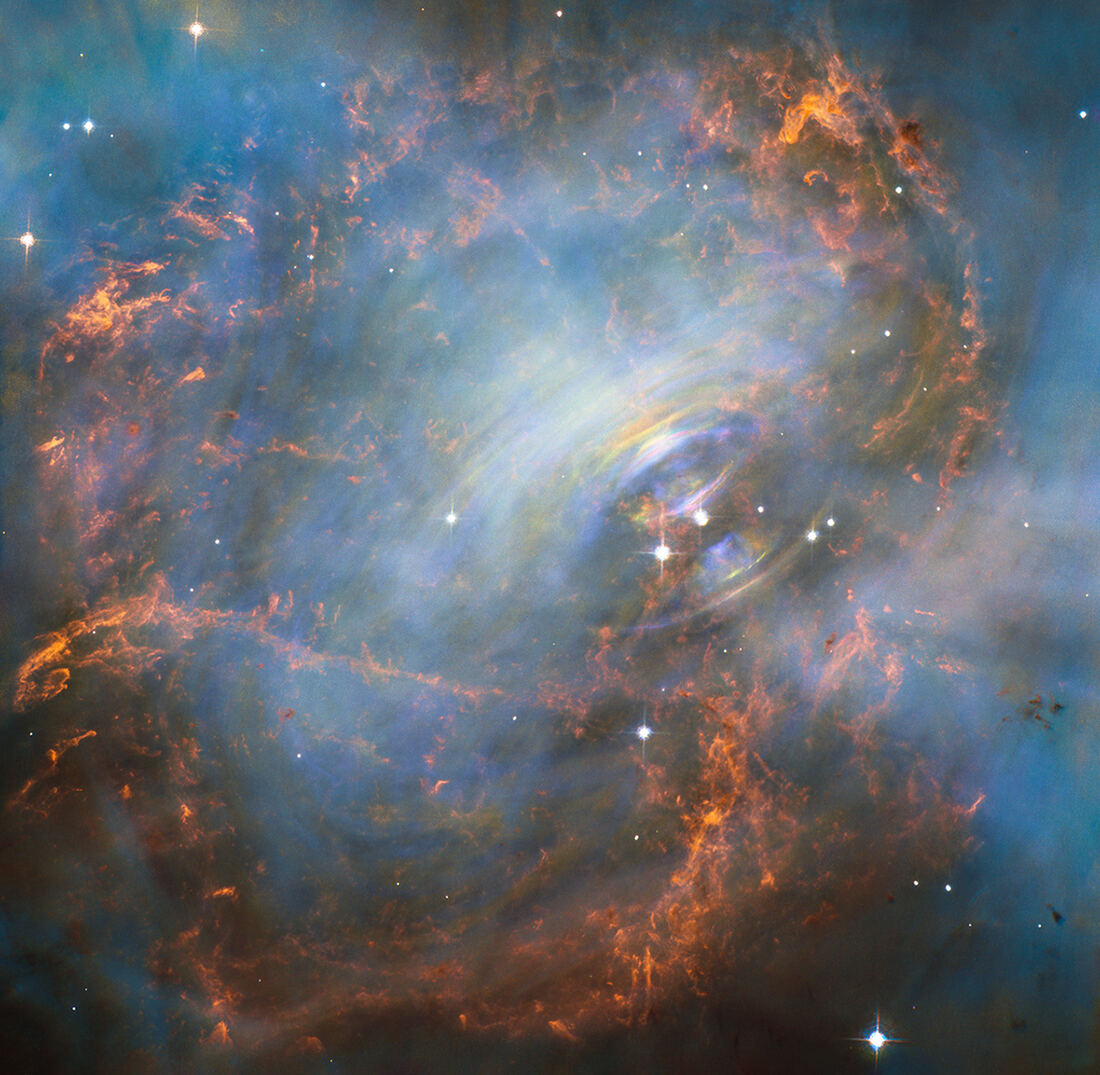
In 2018 Bell, by then Jocelyn Bell Burnell, was given a Special Breakthrough Prize of 3 million dollars. She gave all of it to a fund, run by the Institute of Physics, that helps women, students from minority ethnic groups and refugees to train as physics researchers.
Rubin’s flat curves, 1970 onwards. Things in orbit go more slowly the further out they are when nearly all the mass sits in the middle. The Earth goes round the Sun at 29.8 km a second. Neptune, 30 times further out, goes at 5.4 km a second.
Most of a spiral galaxy’s light comes from near its middle, so its outer stars and gas should behave like the outer planets. Rubin and Ford measured the speeds from the shift in the lines of glowing gas clouds, first across Andromeda in 1970 and then in many other spirals. Far out, beyond most of the light, the speeds stayed high, at about 200 to 250 km a second, instead of falling.
Speed that stays level means the mass keeps growing the further out you go, even where there are few stars. The Swiss astronomer Fritz Zwicky had seen a hint of the same thing in 1933, in how fast galaxies move inside a cluster. Rubin’s measurements made it hard to ignore. The best figures today, from the Planck spacecraft, put the unseen matter at about five times the ordinary matter in the universe. Nobody yet knows what it is.
The Vera C. Rubin Observatory in Chile, named after her, showed its first pictures on 23 June 2025. Over ten years it is to photograph the whole southern sky again and again.
Two common mistakes. None of these four worked alone: Leavitt had Pickering’s photographs, Payne built on Saha, Bell worked in Hewish’s team and Rubin with Ford. Being part of a team is not the same as being a helper. And “not believed at first” does not mean the others were foolish. A result that overturns what is known should be checked hard. What matters is that each of these was checked, and held.
In the 3D view
Real photographs of Henrietta Leavitt, Cecilia Payne and Vera Rubin at work, Leavitt's own graphs from 1912, the pulsar at the heart of the Crab Nebula, and a drawing of how fast stars go round a galaxy.
Not built yet. This lesson will be able to fly you there.
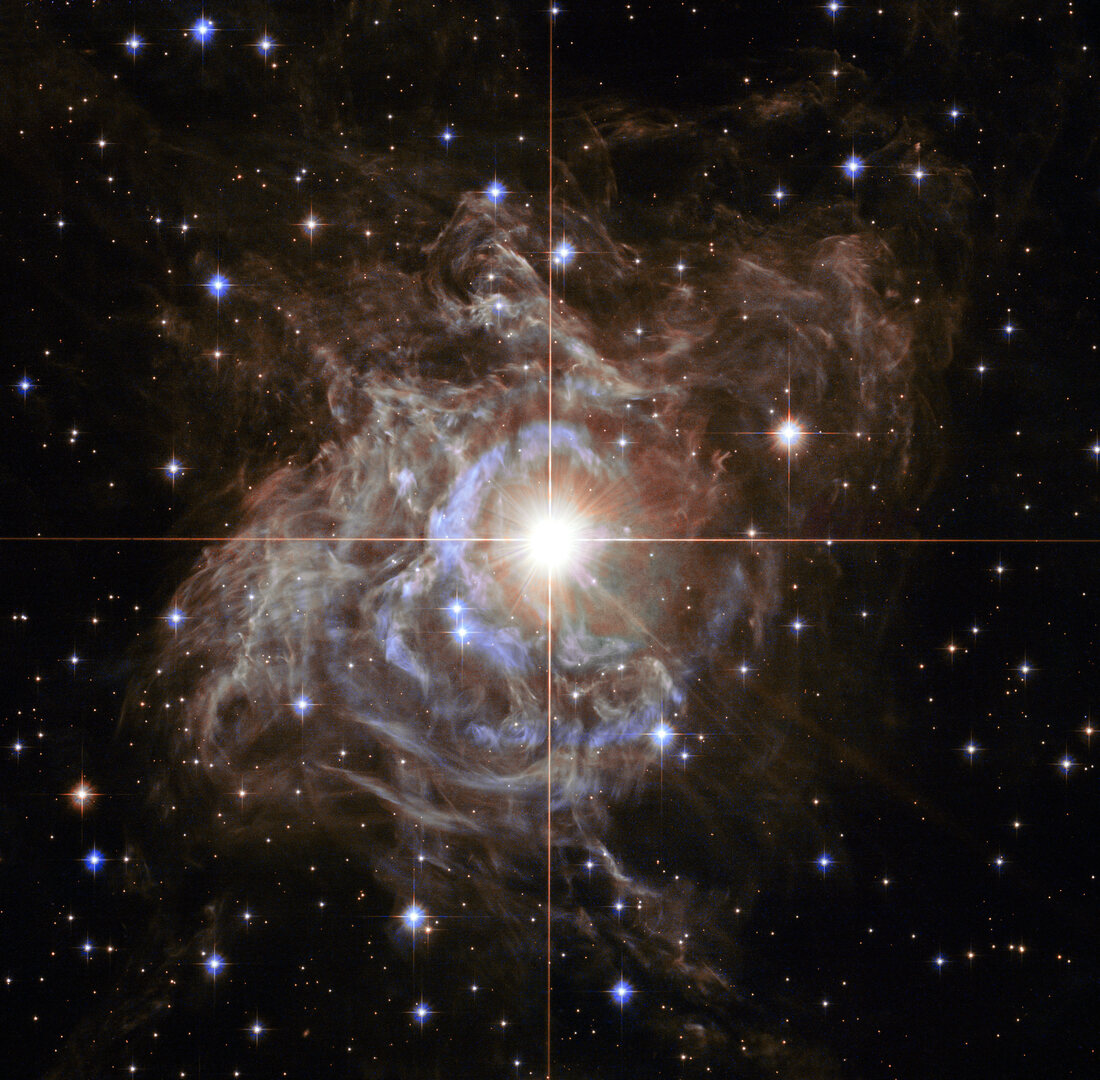 Next lessonVariable stars and the distance ladderSome stars brighten and fade on a steady beat, and the beat gives away how bright they truly are. That is how the distances to other galaxies were first measured.
Words used here
- Cepheid
- A supergiant star that pulses on a steady beat of days or weeks. The longer the beat, the more luminous the star, which makes Cepheids markers of distance.
- Variable star
- A star whose brightness changes, either because it swells and shrinks or because something passes in front of it.
- Spectral line
- A narrow dark or bright line in a spectrum, at a colour that one kind of atom takes in or gives out.
- Hydrogen
- The lightest and commonest element, a single proton with a single electron.
- Neutron star
- The crushed core left by an exploded star: more than the Sun's mass in a ball about 20 km across.
- Dark matter
- Matter that gives out no light at all and is known only by the pull of its gravity.
- Radio waves
- Light with the longest wavelengths, from about a millimetre to many kilometres.
Where this comes from
- Library of Congress, Henrietta Swan Leavitt
- Wikipedia, Henrietta Swan Leavitt
- Wikipedia, Cecilia Payne-Gaposchkin
- Wikipedia, Jocelyn Bell Burnell
- Wikipedia, Vera Rubin
- Wikimedia Commons, Henrietta Swan Leavitt (about 1898, public domain)
- Wikimedia Commons, Cecilia Payne-Gaposchkin, Smithsonian Institution/Science Service (public domain)
- NOIRLab, Vera Rubin measuring spectra, 1974 (CC BY 4.0)
- Leavitt and Pickering, Periods of 25 variable stars in the Small Magellanic Cloud (Harvard College Observatory Circular 173, 1912)
- Wikimedia Commons, Leavitt's 1912 figures (public domain)
- Payne, Stellar Atmospheres (Harvard Observatory Monographs 1, 1925)
- Asplund and others, The chemical composition of the Sun (Annual Review of Astronomy and Astrophysics, 2009)
- Hewish, Bell and others, Observation of a rapidly pulsating radio source (Nature, 1968)
- Wikipedia, PSR B1919+21
- Rubin and Ford, Rotation of the Andromeda Nebula from a spectroscopic survey of emission regions (Astrophysical Journal, 1970)
- NASA NSSDC planetary fact sheet
- Planck Collaboration, Planck 2018 results VI: cosmological parameters
- Vera C. Rubin Observatory, First Look (23 June 2025)


The words are written for this site. Sums in the text are worked from the figures in these sources.